Formulating Powder and Liquid Foundation with Rice Powder
Question
Could you please explain the components and formulation process for loose powder, pressed powder foundation, and liquid foundation? I am particularly interested in how ingredients like rice powder (e.g., Ricesorb™) are used, especially in Talc-free/Mineral makeup formulations, and how their texture compares to traditional ingredients like Mica and Sericite.
Answer
Understanding Powder and Liquid Foundation Formulation
Formulating loose powder, pressed powder foundation, and liquid foundation involves combining various ingredients to achieve the desired texture, coverage, color, and wear properties. Building on the previous discussion about Talc-free/Mineral makeup and the use of rice powder, here is a general overview of the components and process:
Key Components:
Base Powders (Fillers): These form the bulk of the powder or provide texture and oil absorption in liquid foundations. Common examples include:
- Mica: Provides slip and luminosity. (e.g., Mica Powder)
- Sericite: Offers a smooth, silky feel and good adhesion. (e.g., Sericite Powder)
- Silica: Used for oil absorption and blurring effects. (e.g., MatteSilica)
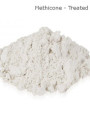
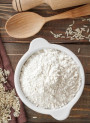
- Starch (like Rice Starch): Can absorb oil and provide a soft feel, often used in "natural" or "Talc-free" formulations, though typically not as the sole base due to texture differences compared to Mica/Sericite. (e.g., Ricesorb™)
- Talc: A traditional filler, avoided in "Mineral" makeup due to safety concerns.
Pigments: These provide color and coverage. They need to be dispersed evenly. Common pigments include:
- Titanium Dioxide: Provides white color and UV protection. (e.g., Titanium Dioxide)
- Iron Oxides: Provide yellow, red, black, and brown tones to match skin color. (e.g., Iron Oxides Red, Iron Oxides Yellow, Iron Oxides Black)
Binders (for Pressed Powder): Ingredients that help the powder particles stick together when pressed into a compact. Examples include Magnesium Stearate, Zinc Stearate, and certain oils or waxes.
Other Additives (Powder & Liquid):
- Oil Absorbers: (e.g., Silica, Starch)
- Skin Conditioners/Emollients: Oils, silicones (especially in liquid foundations) to provide slip, moisture, and spreadability.
- Preservatives: Essential for liquid formulations to prevent microbial growth.
- Emulsifiers: (for liquid foundations) To blend oil and water phases.
- Thickeners: (for liquid foundations) To achieve desired viscosity.
Formulation Process (General Steps):
For Loose Powder:
- Combine base powders (Mica, Sericite, Silica, Rice Starch, etc.).
- Grind and mix pigments (Titanium Dioxide, Iron Oxides) with a small amount of base powder or a dispersing agent to ensure even color distribution.
- Add the pigment mixture to the main powder blend.
- Add other desired additives (e.g., oil absorbers, skin conditioners).
- Blend thoroughly until homogeneous.
- Sieve the mixture to remove any clumps.
For Pressed Powder Foundation:
- Follow steps 1-5 for loose powder.
- Add a binder (e.g., Magnesium Stearate) to the powder mixture and blend well.
- Press the powder mixture into pans using a specialized press.
For Liquid Foundation:
- Prepare the oil phase (oils, silicones, oil-soluble ingredients).
- Prepare the water phase (water, water-soluble ingredients, preservatives).
- Disperse pigments (Titanium Dioxide, Iron Oxides) into a small amount of oil or silicone base using a high-shear mixer.
- Combine the oil and water phases with an emulsifier and mix to form an emulsion.
- Add the dispersed pigment mixture to the emulsion.
- Add thickeners and other additives.
- Homogenize the mixture to ensure stability and smooth texture.
Using Rice Powder:
As discussed, Rice Starch (like Ricesorb™) can be incorporated into powder formulations, particularly for a "natural" or "Talc-free" claim and for its oil-absorbing properties. However, its texture differs from traditional cosmetic powders like Mica and Sericite. It can feel slightly drier or less silky. While it can replace a portion of the traditional base powders, using it as the sole base powder (e.g., 60% or more) might result in a texture that is not as smooth or adherent as formulations primarily based on Mica or Sericite. The optimal percentage depends on the desired feel and performance, often requiring experimentation.
In summary, creating cosmetic powders and foundations requires a careful balance of base powders, pigments, binders (for pressed powder), and various additives to achieve the desired cosmetic properties. Rice powder can be a valuable component, especially for oil absorption and marketing claims, but its usage level should be adjusted based on the desired final product characteristics.
Related Products Mentioned
Magnesium Stearate