Formulating Retinal with Irritation Reducers and Stability Concerns
Question
Regarding Vitamin A in the form of Retinal (also called Retinaldehyde), I understand it may cause some irritation. Can I add other irritation-reducing ingredients to the same formula with Vitamin A, such as:
beta glucanPro-Niacin™Ceramide Complex (CeraTouch™)
Also, can Vitamin A be mixed with all ingredients sold by MySkin Recipes? Are there any ingredients that should not be mixed with Vitamin A cream formulations?
Answer
Subject: Vitamin A + Irritation Reducers
Hello,
Regarding your question about combining Retinal (Retinaldehyde) with irritation-reducing ingredients:
It is true that Retinal can potentially cause irritation, although using it at the manufacturer's recommended level (not exceeding 0.1%) is expected to cause very low irritation. We recommend testing it first. If irritation occurs, you can add irritation-reducing ingredients.
Regarding the specific ingredients you mentioned:
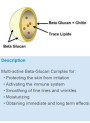
- Beta Glucan and Ceramide Complex (CeraTouch™) are suitable to add to your formula with Retinal to help reduce irritation.
- Pro-Niacin™ (Myristyl Nicotinate) is not typically used for irritation reduction; it is more suitable as an anti-aging ingredient.
In general, Retinal can be mixed with most ingredients sold by MySkin Recipes. However, there are some important considerations for formulating with Retinal:
- Avoid high heat and high/low pH levels.
- When mixing, if heat is needed for dissolving (e.g., in the oil phase), do not exceed 60°C and do not heat for more than 60 minutes.
- It is recommended to include Vitamin E Acetate at 0.1% in the formula to enhance the stability and shelf life of Vitamin A.
- The final formula should have a pH in the range of 3.5-6.5.
We hope this information is helpful.
Thank you,
MySkinRecipes Staff
Related Products Mentioned
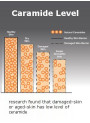
Ceramide Complex (CeraTouch™, Cream)
Vitamin E (Tocopheryl Acetate)