Formulating Serum/Emulsion: Actives, pH, Scale, and Percentage Calculation
Question
I am planning to formulate a serum or emulsion using the following active ingredients at these percentages:
Glucosamine (N-Acetyl-D): 4%Nanowhite: 5%Delentigo: 5%WaterLock™: 2%Repair Activator: 10%Argireline: 10%Matrixyl™ 3000: 8%Apple Stem Cell Extract: 5%
Could you please advise on the formulation process, including what kind of base and preservative I would need?
Additionally, I have a few questions regarding the necessary equipment and calculations:
- Is a pH meter required for this type of serum or emulsion formulation?
- Is a scale necessary for measuring ingredients when formulating by percentage?
- My understanding is that 4% of a 100-gram batch is 4 grams. Is this correct, and how does the percentage calculation work precisely when adding ingredients to a base (e.g., adding 4g to 100g of base)?
Thank you for your guidance.
Answer
Formulation for Serum or Emulsion
To create a serum or emulsion with the ingredients you listed, you will need a base and a preservative in addition to your active ingredients. Since most of your active ingredients are water-soluble, a water-based serum or an oil-in-water (O/W) emulsion would be suitable.
Recommended Components:
- Base: This forms the bulk of your product.
- For a Serum: A pre-made serum base like Silky Serum Base or Silky Serum Base Plus (if you want a slightly richer feel) is the easiest option. You can simply add your active ingredients to this base.
- For an Emulsion: You would need an emulsifier to combine water and oil phases, plus water and potentially some oils or emollients. Using a pre-made emulsion base or a cream maker like Sucrose Cream Maker™ can simplify this process.
- Active Ingredients: These are the specific ingredients you want to include at your desired percentages.
- Glucosamine (N-Acetyl-D) (e.g., GlucoBright™) - 4%
- Nanowhite - 5% (Note: A specific product named "Nanowhite" was not found in our search, but other whitening ingredients are available.)
- Delentigo - 5% (Note: A specific product named "Delentigo" was not found in our search, but other whitening/spot correcting ingredients are available.)
- WaterLock™ - 2%
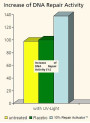
- Repair Activator (e.g., Repair Activator™ BG or Repair Activator™ WS) - 10%
- Argireline (e.g., Acetyl Hexapeptide-8) - 10%
- Matrixyl™ 3000 (e.g., Pal-GHK, Pal-GQPR) - 8%
- Apple Stem Cell Extract (e.g., Apple Stem Cell Extract (AppleCell™ Powder)) - 5%
- Preservative: Essential to prevent microbial growth in any product containing water. Choose a broad-spectrum preservative suitable for your formulation type and desired pH range, such as Mild Preserved Eco™ or PE 1090 Preservative. The usage rate will depend on the specific preservative; always follow the supplier's recommendations.
- Water: If not using a pre-made base, purified water is the main component of the water phase.
General Formulation Steps (Example using a Serum Base):
- Weigh your chosen serum base (e.g., Silky Serum Base).
- Accurately weigh each of your active ingredients according to your desired percentages based on the total batch size.
- Weigh your preservative according to its recommended usage rate.
- Combine the active ingredients and preservative with the serum base.
- Mix thoroughly until all ingredients are evenly dispersed.
Necessity of pH Meter and Scale
- pH Meter: For general moisturizing and anti-aging serums or emulsions like the one you described, a pH meter is typically not strictly necessary. The pH of these formulations usually falls within a skin-friendly range (around pH 4-7) when using common ingredients and bases. However, if you are formulating products with ingredients where pH is critical for stability or efficacy (like AHA/BHA exfoliants or Vitamin C derivatives), or if you encounter stability issues, a pH meter is essential for checking and adjusting the pH.
- Scale: A digital scale is absolutely necessary for accurate cosmetic formulation. Ingredients are measured by weight (grams) when working with percentages to ensure consistency and accuracy in your formula. Measuring by volume (like milliliters) is not accurate enough for precise formulations.
Percentage Calculation
Your understanding of percentage calculation is correct.
- 4% of a 100-gram batch is indeed 4 grams.
- When you add ingredients to a base, the total weight of the final product increases. For example, if you add 4 grams of an active ingredient to 100 grams of a base, the total batch size becomes 104 grams. The percentage of the active ingredient in the final batch is then (4 grams / 104 grams) * 100% = 3.84%.
- As noted in the previous reply, this difference is often very small and may not be significant for simple formulations, but it's important to understand that percentages are based on the total weight of the final product. For precise formulations, you would calculate the weight of each ingredient based on your desired total batch size (e.g., 100g total) and then weigh them out.
To make a 100g batch with your desired percentages:
- Glucosamine (N-Acetyl-D): 4g
- Nanowhite: 5g
- Delentigo: 5g
- WaterLock™: 2g
- Repair Activator: 10g
- Argireline: 10g
- Matrixyl™ 3000: 8g
- Apple Stem Cell Extract: 5g
- Total Actives: 4 + 5 + 5 + 2 + 10 + 10 + 8 + 5 = 49g
- Preservative: Calculate based on the recommended percentage for the preservative you choose (e.g., 1% of 100g = 1g).
- Base (Serum or Emulsion): The remaining percentage/weight to reach 100g. If total actives are 49g and preservative is 1g, you would need 100g - 49g - 1g = 50g of base.
Remember to always follow the maximum recommended usage rates for each ingredient provided by the supplier.
Related Products Mentioned
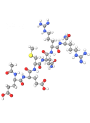
Acetyl Hexapeptide-8 (eq Argireline)
Pal-GHK, Pal-GQPR (eq Matrixyl 3000)
GlucoBright™ (Acetyl Glucosamine)
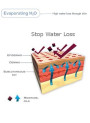
WaterLock™ (Polyquaternium-51)
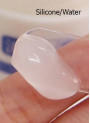
Silky Serum Base (Face/Eye)
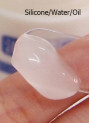
Silky Serum Base Plus (Face/Eye, Oil)