Formulating Shampoo for Seborrheic Dermatitis and Hair Loss with Zinc Pyrithione and Zinc PCA
Question
I want to formulate a gentle, natural shampoo to treat seborrheic dermatitis, reduce hair loss, and alleviate itching. I specifically want to use Zinc Pyrithione and Zinc PCA in the formula. Could you provide information on how to incorporate these ingredients into a shampoo base, including recommended usage percentages, mixing methods, and any precautions or incompatibilities, especially when using a shampoo base?
Answer
Information on Ingredients for Seborrheic Dermatitis and Hair Loss Shampoo
Hello! I understand you want to make a shampoo to treat seborrheic dermatitis, reduce hair loss, and itching, focusing on gentle and natural ingredients, and specifically want to use Zinc Pyrithione. Based on the information available, I have details on Zinc Pyrithione and Zinc PCA that might be helpful.
Zinc Pyrithione
(Product ID 7672)
This is a highly effective ingredient against fungi and bacteria, which are primary causes of dandruff and seborrheic dermatitis on the scalp.
- Usage in Shampoo: For rinse-off shampoos, Zinc Pyrithione can be used at a maximum concentration allowed by Thai and European FDA, which is 4% (equivalent to 2% active Zinc Pyrithione).
- Mixing Method: Zinc Pyrithione is insoluble in water and oil. It must be dispersed in the shampoo base by high-speed blending to ensure even distribution throughout the formula. The formula should have appropriate viscosity to prevent the powder from settling.
- Precautions:
- Avoid using with Disodium EDTA or other Chelating Agents in the formula.
- Incompatible with non-ionic surfactants.
- Avoid using with Oxidants like Peroxides.
Zinc PCA
(Product ID 252)
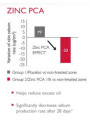
This is another ingredient that helps reduce scalp oiliness, which can contribute to hair loss and dandruff/sebderm. It also helps reduce DHT production, a cause of oily scalp and hair loss.
- Usage in Shampoo: For shampoo or dandruff treatment, use at a rate of 0.2-0.3%.
- Mixing Method: Dissolve in the water phase. It is heat resistant but should not be heated for prolonged periods. The optimum pH is in the range of 3-7 (ideally 4-6).
Other Natural and Gentle Ingredients
To enhance the effectiveness in caring for the scalp and hair as you wish, you can consider adding natural ingredients with soothing, anti-inflammatory, or scalp-nourishing properties, such as Aloe Vera extract, Chamomile extract, or Tea Tree Oil (use with caution and diluted in a very small amount).
General Mixing Steps (when using a shampoo base)
If you have a shampoo base, adding these ingredients can be done by:
- Prepare Zinc Pyrithione by dispersing it in a small amount of water or other compatible ingredients using a high-speed blender.
- Prepare Zinc PCA by dissolving it in a small amount of water.
- Gradually add the prepared ingredients (dispersed Zinc Pyrithione and dissolved Zinc PCA) into the shampoo base. Stir or blend until well combined. Ensure Zinc Pyrithione is evenly dispersed and does not settle.
- Adjust the pH of the shampoo to be suitable for Zinc PCA (4-6) and for shampoo in general (usually around 5.5).
- Other natural ingredients can be added at this stage, following the mixing instructions for each specific ingredient.
Limitation: I cannot provide a complete formula with percentages for all ingredients directly, but the information above should help you understand how to incorporate Zinc Pyrithione and Zinc PCA into your shampoo.
If you have further questions about specific ingredients or need information on other natural ingredients, feel free to ask.
Updated Review: May 2026
This section was added after reviewing the original answer against current product availability and formulation knowledge at the stated point in time.
Update as of 2026-05-24
The Zinc PCA guidance remains generally current: it can be dissolved in the water phase of a shampoo base, typically 0.2–0.3% for shampoo/dandruff-support use, with final pH preferably around 4–6. Its benefit for hair-loss formulas should be positioned only as support where excess scalp oiliness is part of the problem, not as a general hair-loss treatment.
Important regulatory update for Zinc Pyrithione: its status has changed in some markets. It is not permitted in cosmetic products in the EU from 1 March 2022 under Commission Regulation (EU) 2021/1902. Therefore, before using Zinc Pyrithione, check the current cosmetic regulation of the country where the product will be sold. Do not assume the supplier/catalog maximum is the legal maximum in every market.
If Zinc Pyrithione is legally permitted in the target market, the supplied liquid is 50% active, so 4% supplied liquid equals about 2% active Zinc Pyrithione. It should not be dissolved into shampoo; it is an insoluble active dispersion and must be well mixed, wetted, deagglomerated, and suspended in the shampoo base. Add slowly with high-speed mixing and ensure the final viscosity/suspending structure is sufficient to reduce settling. Avoid EDTA/strong chelators, oxidizing ingredients, and non-ionic surfactant systems, and perform compatibility and stability testing in the actual shampoo base.
Where Zinc Pyrithione is unsuitable or not permitted, Piroctone Olamine or Climbazole may be considered as anti-dandruff alternatives, subject to local regulations and the supplier’s recommended use levels. A cosmetic shampoo may help reduce dandruff, scalp oiliness, flaking, and itching sensation, but persistent seborrheic dermatitis or abnormal hair loss should be assessed by a physician.
References: Commission Regulation (EU) 2021/1902; SCCS/1614/19 Opinion on Zinc Pyrithione; Mangion SE et al., Pharmaceutics, 2021.