Formulating Tinted, Transfer-Proof, Waterproof Cream/Lotion for Face & Body
Question
I am seeking guidance on formulating a tinted, transfer-proof, and waterproof cream or lotion suitable for both face and body application. Could you provide detailed suggestions on the key ingredients and formulation considerations necessary to achieve these properties, specifically focusing on:
- Tinting and Coverage (Waterproof Titanium Dioxide): What types of treated Titanium Dioxide are recommended for waterproof and long-lasting makeup, and what are their typical usage rates and dispersion methods in a cream/lotion?
- Transfer-Proof and Waterproof Film Formation: Which high molecular weight polymers are effective for creating a long-lasting, waterproof, and sweat-resistant film, and what are their recommended usage rates and integration considerations, especially if they are alcohol-soluble?
- Skin Adherence and Water Retention: What ingredients can improve skin adherence and prevent trans-epidermal water loss (TEWL), while also contributing to a smooth application and long-lasting wear? What are their recommended usage rates and solubility?
- General Formulation Considerations: What emulsion types are preferred for waterproof and transfer-proof products? How should pigment dispersion and film former integration be managed? What factors should be balanced for texture and feel, and what stability testing is recommended for such a product?
Answer
To create a tinted, transfer-proof, and waterproof cream or lotion for both face and body, you'll need to focus on film-forming polymers and treated pigments. Here's a starting point using our products:
Key Ingredients for Your Formulation
For Tinting and Coverage (Waterproof Titanium Dioxide):
- Titanium Dioxide 300nm WaterProof™ (Triethoxycaprylylsilane Treated): This is ideal for makeup products that need to be waterproof and long-lasting. It has an average particle size of 300nm and is coated to adhere well to the skin.
- Titanium Dioxide 250nm WaterProof™ (Dimethicone Treated): Similar to the 300nm version, this one has a 250nm particle size and is dimethicone-coated for excellent skin adherence and waterproof properties, suitable for long-lasting makeup.
- Titanium Dioxide 400nm WaterProof™ (Super Coverage): If you're looking for maximum coverage, this type is developed specifically for high coverage in makeup formulas like compact or pressed powders, and it also adheres well to the skin.
These Titanium Dioxide variants are designed for makeup applications and contribute to both the tint and the waterproof nature of your product. You can use them at a rate of 1-25% depending on the desired whiteness and coverage. For best results in a cream/lotion, ensure they are well-dispersed in the oil phase or other suitable carriers in your formula.
For Transfer-Proof and Waterproof Film Formation:
- WaterGuard™ Spray (Acrylates / Octylacrylamide Copolymer): This high molecular weight polymer is excellent for creating a long-lasting, high-efficiency film on the skin, making your product waterproof and sweat-resistant. While its name suggests "spray," it can be incorporated into creams and lotions. For makeup that needs to be waterproof/sweat resistant, a usage rate of 1.0-10.0% is recommended. It dissolves in alcohol, so consider your formulation's solvent system.
For Skin Adherence and Water Retention:
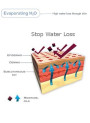
- WaterLock™ (Polyquaternium-51): This ingredient is structurally similar to skin phospholipids, allowing it to adhere quickly and last long on the skin or hair. It helps prevent trans-epidermal water loss (TEWL) and can make the product feel slippery, contributing to a smooth application and long-lasting wear. It's water-soluble and can be used at 1-2% (2% recommended for dry skin).
Formulation Considerations:
- Emulsion Type: For a waterproof and transfer-proof product, a W/O (water-in-oil) emulsion or a silicone-based emulsion is often preferred as the external oil phase can provide better water resistance.
- Pigment Dispersion: Ensure proper dispersion of the Titanium Dioxide pigments to achieve an even tint and avoid streaking. They are typically blended into the oil phase of your formulation.
- Film Former Integration: WaterGuard™ Spray, being alcohol-soluble, will require careful integration into your formula. If your cream/lotion is an emulsion, you might need to incorporate it into a phase where it can be properly solubilized or dispersed to form an effective film upon application.
- Texture and Feel: Balance the film-forming properties with a pleasant skin feel. Ingredients like WaterLock™ can help with slip, but you may need to adjust emollients and thickeners to achieve the desired texture for an all-over body and face product.
- Stability: Conduct thorough stability testing (e.g., heat/cold cycles, centrifuge) to ensure the emulsion remains stable and the pigments do not settle over time.
By combining these specialized ingredients, you can develop a robust tinted, transfer-proof, and waterproof cream or lotion.