Formulating Tooth Whitening Powder with Activated Charcoal and Clay
Question
I am planning to formulate a tooth whitening powder using the following ingredients:
- Activated Charcoal
- Kaolin clay
- Guava leaf extract powder
- Alpha-Bisabolol
I would like guidance on the appropriate ratio of Activated Charcoal to Kaolin clay for use in a tooth powder, considering their abrasive properties and suitability for dental enamel. Additionally, is a 1% concentration suitable for the herbal extracts (guava leaf and Alpha-Bisabolol) in this type of formulation?
Answer
Tooth Whitening Powder Formulation
You are planning to create a tooth whitening powder using Activated Charcoal and Kaolin clay as the main components, along with herbal extracts like guava leaf and chamomile (Alpha-Bisabolol).
Activated Charcoal and Clay
Activated Charcoal is known for its ability to adsorb impurities and stains, which is why it's used in some tooth whitening products. Kaolin clay also has absorbent properties and can help with the texture of a powder.
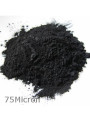
Regarding the ratio of charcoal to clay, the product descriptions for Activated Carbon (ID 1062, 75 micron) and Kaolin (ID 32599, 2.5-3.5 micron; ID 31741, 400nm) provide general usage rates for cosmetics (e.g., Kaolin up to 100% in powder products). However, they do not provide specific ratios or guidance for use in a dental product like tooth powder.
It's important to consider that traditional tooth powders often rely on abrasive agents like Silica or Calcium Carbonate to physically polish the teeth and remove stains. As noted in the staff's reply, the abrasive nature and particle size are critical for effective cleaning without damaging tooth enamel. While charcoal and clay can contribute to stain removal through adsorption, their abrasive properties and suitability for dental enamel need careful consideration. The particle sizes provided (75 micron for Activated Carbon, 2.5-3.5 micron and 400nm for Kaolin) are relevant, but without specific dental safety data for these particular grades, it is difficult to recommend a precise ratio for a tooth powder formulation.
Developing a safe and effective tooth powder requires careful balancing of abrasive and adsorbent components, considering particle size and hardness to ensure it cleans without causing abrasion to the enamel. Specific ratios for dental applications are typically determined through specialized testing.
Herbal Extracts
You asked if 1% is a suitable concentration for the herbal extracts.
For Bisabolol (Alpha Bisabolol) (ID 1587), the product description states a recommended usage rate of 0.5-1%, with 1% being recommended. This suggests that 1% is a suitable concentration for this ingredient in cosmetic applications.
For guava leaf extract powder, I was unable to find a specific product description or recommended usage rate using the available tools. Therefore, I cannot confirm if 1% is suitable based on the information I have.
In summary, while Activated Charcoal and Kaolin clay can be components in tooth powders for their adsorbent properties, determining a safe and effective ratio for dental use requires careful consideration of particle size and abrasive properties, which is not fully detailed in the cosmetic product descriptions. A 1% concentration for Bisabolol appears suitable based on its product information.
Related Products Mentioned
Kaolin (400nm High Whiteness)