Formulating Vitamin A, C, E Scar Treatment Oil
Question
I would like to replicate a scar treatment oil product. The product claims to contain Vitamin A, C, and E in a dry, non-comedogenic base. The listed ingredients include:
- Squalane (Olive)
- Propanediol
- Simmondsia Chinensis (jojoba) seed oil
- Polyglyceryl-4-oleate (olive-derived Emulsifier)
- Ethyl ascoribc acid (stable non-polar Vitamin C)
- Retinyl palmitate (stable retinol)
- Tocopherol (Vitamin E, natural)
The product claims 2% Vitamin A Retinoid.
I have attempted to formulate a similar product with the following proposed formula:
- Propylene Glycol 5%
- Ascorbyl Palmitate 15% (Will it fully dissolve?)
- palmitate retinol 2%
- tocopheryl Vitamin E 0.1%
- The rest is Olive CLEAR to replace oils and provide a texture similar to Cyclomethicone.
Based on this, I have the following questions:
- Is this proposed formula feasible? Specifically, will Ascorbyl Palmitate fully dissolve at 15%?
- What active ingredients should be added, removed, or changed?
- What Emulsifier should be used to help combine the ingredients?
- I want to avoid using Squalane and Jojoba Oil due to their high cost. Could you suggest alternatives? I believe Olive CLEAR might be a suitable replacement and provide a better texture. Is this correct?
I have searched previous forum posts but haven't found any formulas containing Vitamin A, C, and E together. Are there any recommended formulas?
Answer
Vitamin A, C, E Scar Treatment Oil Formulation Advice
Based on your analysis of the original product and your proposed formula, here is some advice for creating a Vitamin A, C, and E scar treatment oil.
The original product appears to use a combination of oil-soluble and potentially water-soluble ingredients (like Propanediol and Ethyl Ascorbic Acid) with a water-in-oil emulsifier (Polyglyceryl-4 Oleate). This suggests it might be a W/O emulsion or a dispersion, even if it feels like an oil.
Your proposed formula uses Propylene Glycol and Ascorbyl Palmitate in an Olive CLEAR base with Retinyl Palmitate and Tocopheryl Acetate.
Analysis of Your Proposed Formula:
- Ascorbyl Palmitate Solubility: Using Ascorbyl Palmitate at 15% in an oil base is problematic. Ascorbyl Palmitate has very low solubility in natural oils (around 0.03-0.12%) and Propylene Glycol (around 0.48%). It is highly unlikely to fully dissolve at 15%, which will result in a grainy texture and reduced effectiveness.
- Propylene Glycol: Propylene Glycol is water-soluble. In a predominantly oil formula without a suitable emulsifier, it will not integrate well and could cause instability.
- Emulsifier: For a pure oil serum (no water phase), an emulsifier is not necessary to create an emulsion. If you include water-soluble ingredients, an emulsifier would be needed to prevent separation, but this changes the product type.
- Retinyl Palmitate Concentration: Your proposed 2% Retinyl Palmitate is above the generally recommended maximum usage rate of 1.0%. It is safer and recommended to use between 0.5% and 1.0% to minimize the risk of skin irritation.
Alternatives to Squalane and Jojoba Oil:
You are correct that Olive CLEAR (Hydrogenated Olive Oil) is an excellent and more affordable alternative to Squalane and Jojoba Oil. It provides a light, dry, non-greasy feel similar to silicones like Cyclomethicone and is very stable, making it a suitable base for your oil serum.
Recommended Revised Formula Concept (Oil Serum):
To create a stable and effective oil serum, it is best to use oil-soluble ingredients in an oil base. For Vitamin C, a more oil-soluble and effective derivative is recommended for higher concentrations.
- Base Oil: Use Olive CLEAR (Hydrogenated Olive Oil) as your primary base oil (up to 100%).
- Vitamin A: Use Vitamin A Palmitate (Retinyl Palmitate) at a concentration of 0.5% to 1.0%.
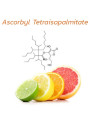
- Vitamin C: Replace Ascorbyl Palmitate with Perfect-C™ (Ascorbyl Tetraisopalmitate). This oil-soluble Vitamin C derivative has much better solubility in oil and higher efficacy for skin benefits. Use at a concentration of 5% to 10% (5% is a good starting point).
- Vitamin E: Use Vitamin E (Tocopheryl Acetate) at 0.1% to 0.5%. This provides antioxidant benefits for both the skin and the formula.
- Stability Boosters: To protect the vitamins from degradation, especially if not using opaque packaging, add antioxidants and UV absorbers:
- Protec™ OX at 0.01% - 0.05% (antioxidant).
- Protec™ UV at 0.03% - 0.1% (UV absorber).
Conceptual Revised Formula:
- Vitamin A Palmitate (Retinyl Palmitate): 0.5 - 1.0%
- Perfect-C™ (Ascorbyl Tetraisopalmitate): 5.0 - 10.0%
- Vitamin E (Tocopheryl Acetate): 0.1 - 0.5%
- Protec™ OX: 0.01 - 0.05%
- Protec™ UV: 0.03 - 0.1%
- Olive CLEAR (Hydrogenated Olive Oil): q.s. to 100%
Mixing Instructions (General):
- Combine Olive CLEAR and Protec™ OX. Gentle warming (around 70-80°C) may be needed to dissolve Protec™ OX. Stir well.
- Add Vitamin A Palmitate and Protec™ UV to the warm oil phase. Stir to dissolve. If Retinyl Palmitate is solid, ensure it melts and disperses.
- Allow the mixture to cool below 40°C.
- Add Perfect-C™ and Vitamin E (Tocopheryl Acetate). Stir until fully blended.
- Package in opaque containers to protect the light-sensitive ingredients.
This revised formula avoids the solubility issues of Ascorbyl Palmitate at high concentrations and uses Olive CLEAR as an effective and economical base, providing a stable and beneficial scar treatment oil.
Related Products Mentioned
Vitamin E (Tocopheryl Acetate)
Jojoba Oil (Golden - Deodorized)
Squalane (Olive)
Vitamin E (dl-alpha tocopherol)
Propylene Glycol (USP)
Olive CLEAR (Hydrogenated Olive Oil)