Formulation Adjustment and Preservation for Oil/Wax Balm
Question
I have a formula consisting of Shea Butter (67%), Beeswax (16%), Coconut Oil (8.5%), and Fragrance (1.5%). How can I reduce the cost by replacing Shea Butter? Also, what preservative should I add for long-term storage?
Answer
Formulation Adjustment and Preservative Advice
Regarding your second formula (Shea butter 67%, Beeswax 16%, Coconut oil 8.5%, Fragrance 1.5%) and your questions about reducing cost and adding a preservative:
1. Reducing Shea Butter Cost
To reduce the cost by replacing Shea Butter, you can substitute it with other, less expensive oils. Some options include:
- Mineral Oil (Paraffinum Liquidum) Light (26cst): This is a cost-effective emollient that adds softness and smoothness. It is very stable and has a long shelf life.
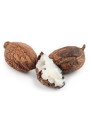
- Babassu Oil (Refined): A natural oil that is quickly absorbed and provides moisturizing properties.
Keep in mind that Shea Butter is a semi-solid fat at room temperature, contributing significantly to the texture. Replacing a large percentage of it with a liquid oil will likely result in a softer product. You may need to slightly increase the percentage of Beeswax to help maintain the desired consistency.
2. Preservative for Long-Term Storage
Your formula is primarily composed of oils and waxes, with very little to no water phase (except potentially trace amounts in the fragrance). In such formulas, the main concern for long-term storage is typically oxidation (rancidity) of the oils rather than microbial growth (bacteria, mold, yeast), which requires water to thrive.
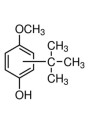
- Preventing Oxidation: To prevent the oils from going rancid and extending the shelf life, adding an antioxidant is highly recommended. An example of an oil-soluble antioxidant is Butylated Hydroxyanisole (BHA).
- Preventing Microbial Contamination: While less likely in an oil-dominant formula, contamination can occur through repeated use (e.g., dipping fingers into a jar). If you are concerned about this, especially if making a large batch or sharing, you might consider adding a broad-spectrum preservative. However, most broad-spectrum preservatives are water-soluble. Based on the search, options like Global Guard™ 221, Coco-Preserve™, or NaturePreserve™ LB2 are available, but their effectiveness in a predominantly oil-based system might be limited compared to formulas with a significant water phase. If using these, ensure they are compatible with your formula and follow the recommended usage rates and mixing instructions (e.g., temperature limits).
For an oil-dominant formula like yours, focusing on an antioxidant for rancidity prevention is generally the primary need for extending shelf life. Maintaining good hygiene when using the product is also crucial to prevent contamination.
Related Products Mentioned

Babassu Oil (Refined)
Butylated Hydroxyanisole
Global Guard™ 221 (pH 2-7, Natural)