Formulation Advice and Ingredient Usage Questions
Question
Formulation Questions
I have several questions regarding formulation and ingredient usage:
- Glycerin Bar Soap: I am making glycerin bar soap, but it has low foam. Which foaming agent can I add to increase foam, and should I use the recommended percentage?
- Glycerin Bar Soap Hardness: Can AminoWash make the soap texture harder? The glycerin base becomes softer when adding more ingredients. I recall seeing another foaming agent that could also increase soap hardness besides AminoWash, but I only see AminoWash now.
- PEG-40 Hydrogenated Castor Oil: Is PEG-40 Hydrogenated Castor Oil used to dissolve oils added to the formula for their properties? The mixing instructions say to dissolve it in water by mixing with the oil phase first. What is the recommended usage percentage?
- Anti-Glycation Ingredients: Can Orange Peel Extract replace Ume Extract for anti-glycation properties and reducing yellow skin tone on the face?
- Sunscreen Emollients: Which is better for improving spreadability and reducing the greasy/shiny feel of sunscreen, LipidSoft Lite or LipidSoft Dry?
Answer
Formulation Advice
Orange Peel Extract vs Ume Extract for Anti-Glycation and Yellow Skin Tone
Regarding whether Orange Peel Extract can replace Ume Extract for anti-glycation and reducing yellow skin tone on the face, each ingredient has unique properties and mechanisms of action.
- Ume Extract is specifically known for its anti-glycation properties, which directly addresses the yellowing of skin that can occur with age due to this process. Its description highlights its ability to stop the glycation process through multiple mechanisms and reduce AGEs (advanced glycation end products). It is recommended for anti-aging formulas and is used at 1-4% (recommended 2-3%), mixed in water below 40°C.
- Orange Peel Extract (specifically Hesperidin Methyl Chalcone) also has an anti-glycation effect, but its description emphasizes stimulating blood flow, particularly for reducing dark circles around the eyes. While it can be used in various product forms for the face, its primary described benefit is related to circulation. It is used at 1-5%, mixed in the final step below 40°C.
While both have anti-glycation benefits, Ume Extract's action is more directly focused on preventing the yellowing effect of glycation. As previously advised, testing both ingredients in your specific formulation is the best way to determine which provides the desired results for reducing deep yellow skin tone on your face.
LipidSoft Lite vs LipidSoft Dry for Sunscreen
For improving the spreadability and reducing the greasy/shiny feel of sunscreen, both LipidSoft Lite and LipidSoft Dry are lightweight emollients that can help.
- LipidSoft Lite is described as having a very light texture that doesn't clog pores and provides a light, soft, smooth feel. It is low gloss and suitable for matte formulas or reducing shine. It is noted as being similar to LipidSoft Dry but more hydrating and spreading more easily.
- LipidSoft Dry II focuses on providing a dry feel to reduce stickiness and add smoothness. It is suitable for sunscreen or thick creams to make them light, smooth, and dry. It is described as less soft/smooth than other types but provides a notable dryness with softness, making it suitable for oily skin and makeup where a matte finish is desired.
Based on the descriptions, LipidSoft Dry II is specifically highlighted for its "dry" feel and suitability for reducing stickiness and shine in formulations like sunscreen. LipidSoft Lite also reduces shine and is lightweight but is more hydrating. If reducing greasiness and achieving a less shiny finish is the primary goal, LipidSoft Dry II might be more suitable.
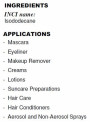
If you find that using these emollients still doesn't provide sufficient spreadability, you might consider incorporating Isododecane, which is known for its excellent spreadability and non-sticky, quick-evaporating properties, as previously suggested.
Adding Foaming Agents to Glycerin Bar Soap
To increase the foam in glycerin bar soap, Creamy Foamer (Sodium Methyl Cocoyl Taurate) is a recommended foam booster.
- Creamy Foamer creates a soft and smooth foam and is suitable for soaps. It is typically used at a rate of 3-30%, with 10-15% being a recommended starting point, which can be adjusted based on your desired foam level. It should be mixed in water, stirring gently, and can be warmed slightly (below 50°C) if needed for easier incorporation.
- Regarding hardening the soap base, AminoWash (Sodium Lauroyl Glutamate) is not recommended for this purpose due to its cost. Sodium Lactate is the ingredient that can help solidify glycerin bar soap and make it harder. Sodium Lactate (60% Liquid) is used at 2-10% (recommended 3-5%) and is mixed in the water phase.
Therefore, use Creamy Foamer to increase foam and Sodium Lactate if you need to harden the soap base.
PEG-40 Hydrogenated Castor Oil
PEG-40 Hydrogenated Castor Oil is a solubilizer used to help incorporate small amounts of oil, such as fragrances or essential oils, into water-based formulations. It works by dissolving the oil first, and then this mixture can be dispersed into the water phase of your formula.
It is not typically used to dissolve large quantities of beneficial oils in a water-based product. The amount needed depends on the specific oil you are trying to solubilize and the desired concentration of that oil in the final product. If you can provide details about the oil you wish to add and your formula composition, more specific guidance on the usage percentage can be provided.
Related Products Mentioned
Sodium Lactate (60% Liquid, Natural)
Isododecane (Germany)
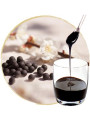
Ume Extract (Anti-Glycation)