Formulation Advice: Combining Lemon Peel Bioferment and Ascorbyl Palmitate
Question
I am formulating a product using Lactobacillus/Citrus Medica Limonum (Lemon) Peel Ferment Extract and Ascorbyl Palmitate. I have the following questions:
- Can both ingredients be used together?
- Is it true that Ascorbyl Palmitate preparation does not require pH control?
- Can this product be layered with other skincare products?
I also have a proposed mixing procedure and would like feedback:
- Warm Ethoxydiglycol with Laureth-23, wait for it to cool, then add Vitamin E.
- Add distilled water to the mixture from step 1 (Is it necessary to add Ferulic acid?).
- Add Ascorbyl Palmitate and stir to dissolve.
- Add Lemon Peel Ferment Extract to the mixture from step 3.
- Add Phenoxyethanol as a preservative.
Please advise on the feasibility and correctness of these steps.
Answer
Formulation Advice for Lemon Peel Bioferment and Ascorbyl Palmitate
Thank you for your question regarding the combination of Lactobacillus/Citrus Medica Limonum (Lemon) Peel Ferment Extract and Ascorbyl Palmitate in your formulation.
Here is the advice based on your questions and proposed mixing steps:
Compatibility of Ingredients
Yes, you can use Lemon Peel Bioferment and Ascorbyl Palmitate together in a formulation. However, as noted by the staff, one is water-soluble (Lemon Peel Bioferment) and the other is oil-soluble (Ascorbyl Palmitate). To combine them effectively into a stable product like a cream or lotion, you will need to use an emulsifier to create an emulsion (like an oil-in-water or water-in-oil system) that keeps the oil and water phases mixed.
Ascorbyl Palmitate pH Sensitivity
Ascorbyl Palmitate is an oil-soluble form of Vitamin C that is generally more stable than L-Ascorbic Acid, especially regarding pH sensitivity. It is not as sensitive to pH changes as L-Ascorbic Acid. While it's stable across a broader pH range, it's still best to avoid extremely acidic or alkaline conditions to maintain its integrity over time. The typical pH range for cosmetic formulations is usually suitable.
Layering with Other Products
Yes, a product containing these ingredients can typically be used in a skincare routine and layered with other products as you normally would apply serums, creams, etc.
Necessity of Ferulic Acid
Adding Ferulic acid is not strictly necessary for combining Lemon Peel Bioferment and Ascorbyl Palmitate. However, Ferulic acid is a powerful antioxidant that is known to work synergistically with Vitamin C (like Ascorbyl Palmitate) and Vitamin E, enhancing their stability and photoprotective benefits. If you are aiming for a potent antioxidant serum, including Ferulic acid can be very beneficial. There are different forms of Ferulic acid available, such as Pure-Ferulic Acid™ which requires dissolution in solvents like Ethoxydiglycol, or Micromul™ Ferulic Acid which is a water-soluble microemulsion form that is easier to incorporate into water-based formulas.
Critique of Proposed Mixing Steps
Your proposed mixing steps have some issues because they do not properly account for the solubility and temperature requirements of the ingredients:
- Step 1 & 2: Heating Ethoxydiglycol and Laureth-23, cooling, adding Vitamin E, then adding water. This starts to form an emulsion base. Vitamin E is oil-soluble and can be added here.
- Step 3: Adding Ascorbyl Palmitate: Ascorbyl Palmitate is oil-soluble and typically requires heating (around 70°C as per product information) to dissolve properly in the oil or solvent phase before it is combined with the water phase and emulsified. Adding it after water has been introduced and the mixture has cooled will likely result in it not dissolving or dispersing correctly.
- Step 4: Adding Lemon Peel Ferment Extract: Lemon Peel Bioferment is water-soluble and sensitive to heat. It should be added to the water phase or, more commonly, to the final emulsion during the cool-down phase (below 40°C) to preserve its efficacy. Adding it at this stage after attempting to dissolve Ascorbyl Palmitate is not the correct procedure.
- Step 2 (Ferulic Acid): If you were using Pure-Ferulic Acid™, it is not water-soluble and cannot be dissolved by just adding it to water or a water/solvent mix at this stage. It needs to be dissolved in a suitable solvent (like Ethoxydiglycol) or the oil phase with heat before emulsification. If using Micromul™ Ferulic Acid, it is water-soluble and should be added to the water phase or cool-down phase.
Correct Approach (General Idea):
A typical approach for an emulsion containing oil-soluble and water-soluble ingredients would involve:
- Phase A (Oil Phase): Combine oil-soluble ingredients (like Ascorbyl Palmitate, Vitamin E) and oil-soluble solvents/emulsifiers (like Ethoxydiglycol, Laureth-23 if used in the oil phase). Heat this phase to the required temperature (e.g., 70°C for Ascorbyl Palmitate) to ensure dissolution.
- Phase B (Water Phase): Combine water-soluble ingredients (like water, potentially Micromul™ Ferulic Acid). Heat this phase to a similar temperature as the oil phase if required by other ingredients or the emulsification process.
- Emulsification: Slowly add the water phase to the oil phase (or vice versa, depending on the emulsifier) while mixing vigorously to form the emulsion.
- Cool-down Phase: Continue mixing while the emulsion cools. Add heat-sensitive ingredients (like Lemon Peel Bioferment) and preservatives (like Phenoxyethanol) when the temperature is below their stability limit (e.g., below 40°C for Lemon Peel Bioferment).
This ensures all ingredients are properly dissolved or dispersed in their correct phases before being combined into a stable emulsion.
I hope this detailed explanation helps with your formulation!
Related Products Mentioned
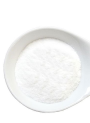
Pure-Ferulic Acid™