Formulation Advice for AHA Peeling Gel and Nourishing Serum
Question
Formulation Questions for Peeling Gel and Nourishing Serum
I have two cosmetic formulation questions:
AHA Peeling Gel:
- For a 200g peeling gel formulation using AHA (Glycolic Acid) at 10% (20g), how much water and gelling agent should I use?
- What are the differences in texture between
Pro Polymer™andXanthan Gum (clear gel type, smooth texture)when used as gelling agents in this formula? - Can
Perfect-C™be included in this AHA peeling gel formula?
Nourishing Serum:
- Can
Tranexamic Acid,Alpha Arbutin,Vitamin B3, andPerfect-C™be combined in the same nourishing serum formula?
- Can
I previously heard that Alpha Arbutin and Vitamin C cannot be mixed due to pH differences, and I want to ensure compatibility and stability for these ingredients.
Answer
Formulation Advice for Peeling Gel and Nourishing Serum
Thank you for your questions regarding your cosmetic formulations. Based on the ingredients you plan to use and the previous discussion, here is some guidance for your two formulas:
Skin Peeling Gel Formula (200g with AHA)
For a 200g peeling gel formula using AHA (Glycolic Acid) at 10% (20g), you will need to determine the amounts of water and gelling agent.
- Water and Gelling Agent Amounts: The exact amount of water and gelling agent depends on the desired texture and the specific gelling agent used. For a gel that is not too thick or sticky, you would typically use a gelling agent at a concentration between 0.5% and 1.0% of the total formula weight.
- If you use Pro Polymer™ (recommended usage 0.8% for general gel), you would use approximately 0.8% of 200g, which is 1.6g. The remaining amount would primarily be water (200g - 20g AHA - 1.6g Pro Polymer - other minor ingredients like preservative, pH adjuster). Water will be the largest component, making up the balance of the formula.
- If you use Xanthan Gum (clear gel type, smooth texture) (recommended usage 1%), you would use approximately 1% of 200g, which is 2g. Water would make up the balance.
- Start with a lower percentage (e.g., 0.5% Pro Polymer or 0.8% Xanthan Gum) and gradually increase if you need a thicker gel.
- Gelling Agent Texture:
- Pro Polymer™ is suitable for low pH formulas like AHA gels. It can sometimes feel slightly sticky, especially at higher concentrations. The description mentions it can give a sticky feeling in the first 30 seconds before drying to a thin coating.
- Xanthan Gum is also acid-stable. The standard type can feel stringy or sticky. However, the Xanthan Gum (clear gel type, smooth texture) is specifically noted to have a smooth, non-stretching texture, which might be preferable if you want to avoid a sticky feel.
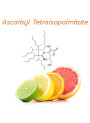
- Perfect-C™ Compatibility: As discussed and confirmed by the product description, Perfect-C™ (Ascorbyl Tetraisopalmitate) is not compatible with Vitamin B3 (Niacinamide) and requires a pH range of 5.0-5.5 for optimal stability. A peeling gel with 10% AHA will have a much lower pH (typically below 4.0, ideally 2.5-3.5 for effectiveness). Therefore, Perfect-C™ should not be included in your AHA peeling gel formula as it will degrade and lose effectiveness, and it is incompatible with B3 which you might use in other formulas.
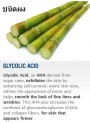
- Other Peeling Acids: Besides Glycolic Acid (found in products like Glycopure™, Ampho-Glycolic™, and ActiveRelease™ Glycolic Acid), Salicylic Acid (a BHA) is another common exfoliant, particularly good for oily/acne-prone skin. However, for general skin peeling, AHA like Glycolic Acid is standard. Different forms of Glycolic Acid like Ampho-Glycolic™ are designed to reduce irritation, and ActiveRelease™ Glycolic Acid offers a timed release for gentler exfoliation.
Nourishing Serum Formula
For your nourishing serum containing Tranexamic Acid, Alpha Arbutin, and Vitamin B3, let's consider the compatibility with Perfect-C™.
- Ingredient Compatibility (Tranexamic Acid, Alpha Arbutin, Vitamin B3, Perfect-C™):
- Tranexamic Acid (Trans-White™) is stable in formulas with a pH between 3 and 8.
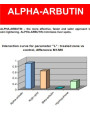
- Alpha Arbutin (Switzerland) is stable in formulas with a pH between 3.5 and 6.5.
- Safe-B3™ (Vitamin B3, Niacinamide) is stable in formulas with a pH between 3 and 8 (optimal range 4.0-7.0).
- Perfect-C™ (Ascorbyl Tetraisopalmitate) is stable in formulas with a pH between 5.0 and 5.5. However, the product description explicitly states not to use Perfect-C™ with Vitamin B3.
- Recommendation for Nourishing Serum: Based on the product information, you cannot combine Perfect-C™ and Safe-B3™ in the same formula due to incompatibility. You can create a nourishing serum containing Tranexamic Acid (Trans-White™), Alpha Arbutin (Switzerland), and Safe-B3™ (Vitamin B3, Niacinamide). To ensure stability for all three, aim for a final pH in the range of 4.0 to 6.5, which is within the optimal or stable range for all three ingredients.
- If you wish to use Perfect-C™, you would need to formulate a separate serum that does not contain Safe-B3™. This serum would ideally have a pH between 5.0 and 5.5 and could potentially include Tranexamic Acid and Alpha Arbutin as they are compatible with this pH range.
In summary, focus on using an acid-stable gelling agent like Pro Polymer™ or Xanthan Gum (clear gel type) for your AHA peeling gel, excluding Perfect-C™. For your nourishing serum, you can combine Tranexamic Acid, Alpha Arbutin, and Vitamin B3 by adjusting the pH appropriately, but avoid combining Perfect-C™ and Vitamin B3 in the same product.
Related Products Mentioned
Alpha Arbutin (Switzerland)
Safe-B3™ (Vitamin B3, Niacinamide)
Pro Polymer™ (Gel Maker)
Glycopure™ (Glycolic Acid (AHA) Powder)