Formulation and Ingredient Compatibility in Aloe Vera Gel Base
Question
I want to create a serum/gel using an Aloe Vera gel base for my oily but dehydrated skin, potentially for use with a dermaroller. I plan to mix the following ingredients into the base:
- Copper Peptide 3%
- Safe-B3 5%
- Centella Asiatica Extract 2%
- Vitamin E 1%
- Wrinkle-Fill™ 2%
- Vitamin B12 2%
- Licorice Extract 1%
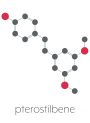
- Blueberry Pterostilbene 3%
Could you please advise on the compatibility of these ingredients when mixed together in an Aloe Vera gel base? Are there any specific formulation challenges or interactions I should be aware of? Also, I previously asked about Disodium EDTA in relation to Sym-White™ - does Disodium EDTA help with the stability of Sym-White™, and how does this relate to the other ingredients, particularly Copper Peptide?
Answer
Aloe Vera Gel Differences and Ingredient Compatibility
Regarding the difference between Aloe Vera Gel (Lite) and Aloe Vera Gel (Heavy), the primary difference lies in the gelling agent used, which affects the skin feel. Aloe Vera Gel (Lite) uses Pro Polymer Silk, resulting in a lighter, smoother, and less sticky texture that absorbs quickly. Aloe Vera Gel (Heavy) uses standard Pro Polymer, giving it a slightly heavier feel that is closer to natural aloe gel and can feel a bit sticky initially. For oily skin, Aloe Vera Gel (Lite) is generally recommended due to its lighter feel.
Regarding mixing the list of ingredients you provided into an Aloe Vera gel base (Copper Peptide 3%, Safe-B3 5%, Centella Asiatica Extract 2%, Vitamin E 1%, Wrinkle-Fill™ 2%, Vitamin B12 2%, Licorice Extract 1%, Blueberry Pterostilbene 3%), these ingredients can generally be combined, but there are important compatibility and formulation considerations, especially given your skin type (oily but dehydrated) and intended use with a dermaroller.
Compatibility and Formulation Notes:
- Copper Peptide and Disodium EDTA: A critical point is the incompatibility between Copper Peptide and Disodium EDTA. Copper Peptide's effectiveness is reduced by Disodium EDTA. Your list includes Copper Peptide, and you also asked about Disodium EDTA in relation to Sym-White™. The description for Sym-White™ states that Disodium EDTA helps increase its stability. Therefore, you must choose between including Copper Peptide (and omitting Disodium EDTA) or including Sym-White™ with Disodium EDTA (and omitting Copper Peptide). Since you listed Copper Peptide in your desired formula, you should omit Disodium EDTA from this specific mixture.
- Vitamin E: As previously advised, using Vitamin E (Tocopheryl Acetate) at 1% can feel sticky, especially for oily skin. It is recommended to reduce the concentration to no more than 0.1% for a lighter feel. Also, Vitamin E (Tocopheryl Acetate) is oil-soluble, so it would need to be pre-mixed with an oil or emulsifier before adding to the water-based Aloe Vera gel base. Since the Aloe Vera gels are oil-free, this requires an extra step or modification of the base.
- Pure-Pterostilbene™: This ingredient requires ethanol or propylene glycol to dissolve. These would need to be added to the formula or the Pterostilbene pre-dissolved before mixing into the gel base.
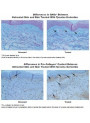
- Wrinkle-Fill™: This ingredient is acidic and will lower the pH of the final mixture. You will need to adjust the pH of the final formula to ensure the stability and efficacy of all ingredients. The optimal pH ranges for ingredients like Vitamin B12 (4.0-6.5, optimal 5.8), Copper Peptide (4.5-7.4), and Sym-White™ (4-5) are important to consider.
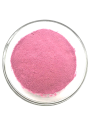
- Vitamin B12: This ingredient is sensitive to light and other vitamins. The final product should be stored in an opaque container.
- Sym-White™ and Disodium EDTA: Regarding your separate question, Disodium EDTA helps improve the stability of Sym-White™. While it might not be strictly necessary in all cases, especially if using distilled water and proper storage, omitting it could potentially reduce the long-term stability of Sym-White™ in the formula, particularly if metal ions are present in the water.
Given that you plan to use this mixture with a dermaroller, it is crucial that the final formula is sterile and non-irritating. Careful consideration of ingredient concentrations, solubility, pH, and potential interactions is necessary.
In summary, while the ingredients can be combined, the formula requires careful preparation, pH adjustment, and a decision regarding the use of Copper Peptide versus Disodium EDTA (and its impact on Sym-White™ stability). Reducing Vitamin E is also recommended for oily skin.
Related Products Mentioned
Vitamin E (Tocopheryl Acetate)
Safe-B3™ (Vitamin B3, Niacinamide)
Disodium EDTA
Aloe Vera Gel (Heavy)

Wrinkle-Fill™ (Acetyl-Tyrosine)

Aloe Vera Gel (Lite)
Vitamin B12 (Cyanocobalamin 1%)