Formulation and Mixing Questions for Sensitive Skin Serum
Question
I have several questions about formulating skincare products, particularly a serum for sensitive skin.
- Why are some active ingredients not available in ready-to-use bases?
- Besides pH and solubility, what other factors affect ingredient compatibility? Can I add many active ingredients to a formula?
- Is it possible to be allergic to Niacinamide (Vitamin B3)? How can I test for sensitivity?
- I've developed a formula for sensitive skin focused on reducing irritation and hydration, using the following ingredients: Hyaluronic Acid (Standard HA, Nano HA), Allantoin, Sea Kelp Bioferment, Sodium PCA, Sodium Lactate, Calendula Extract, Green Tea Extract EGCG, and Aloe Vera Extract.
- Are the ingredient percentages appropriate?
- Is boiling clean drinking water necessary for mixing?
- Will the amount of active ingredients make the product too thick or reduce their efficacy?
- What is the correct mixing procedure for this formula, especially regarding Hyaluronic Acid dissolution?
- Can I add Ectoin powder to a finished product later? How should I do this? Will it significantly dilute the formula? What is the optimal concentration for Ectoin?
- How can I use Xanthan Gum to increase viscosity? Are there any types of formulations where it shouldn't be used?
- Does formulating a product as a cream base allow for a higher concentration of water-soluble active ingredients compared to a gel base without increasing viscosity?
- Are dark glass bottles with pump heads currently available for purchase?
- I encountered issues during mixing:
- Hyaluronic Acid formed lumps. How can I prevent this?
- Adding Ectoin resulted in black sediment. What could cause this? Is it safe to use?
- How should I use the finished sensitive skin product? Why might it feel sticky compared to commercial products like Hada Labo?
Answer
Answer to Formulation Questions
1. Active Ingredients in Ready-to-Use Bases
The reason certain active ingredients are not available for selection in the ready-to-use bases is not necessarily due to incompatibility with the base, but primarily because the process of incorporating some ingredients, such as Beta Glucan which requires specific heating and mixing times, is complex and time-consuming for the lab to perform for every order. Information regarding the compatibility of individual ingredients can usually be found on their respective product detail pages.
2. Principles of Ingredient Compatibility
You are correct that pH and solubility are key factors in determining ingredient compatibility. However, simply meeting these criteria does not mean you can add an unlimited number of active ingredients. Adding too many active ingredients or using them at very high concentrations can lead to undesirable textures (like stickiness) and may not significantly increase efficacy. Formulation also involves balancing ingredients for optimal feel and performance, which is described as an "art" in addition to science. Using too many actives at high concentrations may not always result in better outcomes but will certainly increase cost unnecessarily. It's best to use moderate amounts; if you want to include several, use lower percentages of each.
3. Niacinamide (Vitamin B3) Allergy
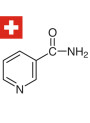
It is possible, though uncommon, to experience a reaction or sensitivity to topical Niacinamide, even though Vitamin B3 is naturally present in the body. Since Niacinamide is generally not considered a primary skin irritant, the likelihood of a true allergy is low. You can test for a reaction by mixing Niacinamide powder with clean water to a concentration of about 4% and applying a small amount to a less sensitive area like your inner arm before applying it to your face.
4. Evaluation of Your Sensitive Skin Formula
Your proposed formula, focusing on reducing irritation and providing hydration, is considered good and not overly complex. It is suitable for sensitive, redness-prone skin. The quantities you specified for each ingredient are within acceptable ranges. The staff suggested considering adding 4% Niacinamide to the formula after performing a patch test for sensitivity, as it is a highly beneficial ingredient for strengthening the skin barrier, reducing inflammation, and improving redness.
Regarding the water, boiling clean drinking water and letting it cool before use is a good practice to ensure purity, especially since your formula does not contain a preservative. However, it may not be strictly necessary if your water source is already very clean.
The amount of active ingredients in this formula is unlikely to make the product excessively thick or significantly reduce the efficacy of the individual ingredients.
Mixing Procedure (Revised based on advice):
- Prepare the clean water (you can boil it and let it cool if desired).
- Add all powder ingredients (except Hyaluronic Acid and Allantoin) to the water. Stir or shake until they are fully dissolved.
- Add both Standard HA and Nano HA powders. Close the container and shake vigorously for 1-3 minutes. Then, place the mixture in the refrigerator (at 4-10°C) for at least 5 hours, or until the HA powder is completely dissolved and a uniform gel is formed (may need to take out and shake again if lumps remain). Do not put it in the freezer.
- Once the HA gel is uniformly formed, add all the other liquid ingredients: Sea Kelp Bioferment, Sodium PCA, Sodium Lactate, Calendula Extract, Green Tea Extract EGCG, Aloe Vera Extract, and Allantoin. Stir or shake until well combined.
- The product is ready.
5. Adding Ectoin Later
You can add Ectoin to a portion of your finished formula later. Dissolve the Ectoin powder in a small amount of clean water (e.g., 10ml) first until it's fully dissolved, then add this solution to the existing product. Stir or shake well to combine. Since your formula has a high water content, adding the dissolved Ectoin directly is feasible.
Adding Ectoin will slightly dilute the overall concentration of the original ingredients in that portion. According to the staff, a small variation in concentration (e.g., 1.8% or 2.2% instead of exactly 2%) is not critical for efficacy, although 2% is considered the most cost-effective concentration for optimal results. Mixing it separately in another container is also an option, depending on your preference.
6. Increasing Viscosity with Xanthan Gum
Generally, you can add Xanthan Gum to products to increase viscosity by stirring or shaking until it is fully incorporated and the desired gel or thickness is achieved. Xanthan Gum is compatible with most water-based formulations.
However, there are some exceptions. Xanthan Gum may not perform well or could cause issues in formulations with very high alkalinity, such as some liquid soaps made with Sodium Hydroxide. If you plan to use it in a specific type of formula, it's best to check compatibility guidelines.
7. Cream Base vs. Gel Base and Active Concentration
The main difference between a cream base and a gel base (water-gel) is that a cream base contains oil, forming an emulsion, while a water-gel base is primarily water with gelling agents. Making a base into a cream does not inherently allow you to incorporate a higher concentration of water-soluble active ingredients without increasing viscosity compared to a gel. The maximum concentration of actives you can add without making the product too thick depends on the properties of the specific active ingredients and the gelling/thickening agents used in the formula. There is no fixed percentage that applies universally.
8. Dark Glass Bottles with Pump
The information regarding the availability of dark glass bottles with pump heads starting the following year, mentioned in the forum thread, is from 2013 and is therefore outdated. I cannot provide current information on the availability of such packaging based on that source.
9. Mixing Issues (HA Lumps, Ectoin Sediment)
- HA Lumps: Hyaluronic Acid powder requires cold water and time to hydrate and dissolve completely. Refrigeration helps this process. Shaking or stirring periodically is also necessary. As the staff advised, adding HA after dissolving other powders but before adding other liquid extracts can facilitate dissolution. If lumps persist after chilling and shaking, it indicates incomplete dissolution. While the staff mentioned that the remaining liquid portion is still usable even if lumps are discarded, they also noted that with sufficient chilling and time, the lumps should eventually dissolve.
- Ectoin Sediment: The black sediment observed after adding Ectoin was a concern for potential contamination or spoilage, especially without a preservative. However, since you observed that the sediment did not increase over 10 days, the staff concluded it was likely not microbial growth (which would multiply rapidly without a preservative). It could be other impurities or sediment from one of the ingredients (like the dark Green Tea Extract EGCG). For peace of mind, the staff recommended trying to remove the sediment if possible.
10. How to Use Your Homemade Product
The product you formulated should be used as a serum. Apply it after cleansing and toning (if you use toner), and before applying a moisturizer.
The sticky feeling you experienced compared to some commercial products like Hada Labo might be due to the absence of "slip agents" commonly used in commercial formulations to improve the glide and feel of the product. It could also be related to the specific combination and concentration of humectants in your formula. Additionally, Sea Kelp Bioferment if used at concentrations above 10% can leave a residue or feel sticky (your formula uses 10%).
Related Products Mentioned
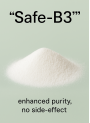
Safe-B3™ (Vitamin B3, Niacinamide)

Allantoin

Sea Kelp Extract

GlucoBright™ (Acetyl Glucosamine)

Calendula Extract (Water Soluble)
Sodium Lactate (60% Liquid, Natural)
Urea (High Purity, Cosmetics, Powder)
Sodium PCA 50%
Hi-EGCG™ (Green Tea Extract)
Ectoine (Ectoin, from Bio-fermentation)
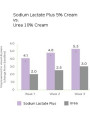
Sodium Lactate Plus