Formulation and Stability Questions for Silicone-Based Makeup Fixing Spray
Question
I am developing a makeup fixing spray using the following ingredient list, focusing on the use of Trimethylsiloxysilicate (Silicone Film) for long-wear and waterproofing. I have several questions regarding formulation and stability:
Makeup Fixing Spray Ingredient List:
Water, C9-12 Alkane, Glycerin, Butylene Glycol, Pvp, Cucumis Sativus (Cucumber) Fruit Extract, Camellia Sinensis (Green Tea) Leaf Extract, Chamomilla Recutita (Matricaria) Extract, Tocopheryl Acetate, Caffeine, Isononyl Isononanoate, Ppg-26-Buteth-26, Panthenol, Arginine, Trimethylsiloxysilicate, Peg-40 Hydrogenated Castor Oil, Polydextrose, Hydrogenated Lecithin, Citric Acid, Fragrance (Parfum), Bht, Disodium Edta, Chlorphenesin.
- Is the ingredient Trimethylsiloxysilicate suitable for this type of fixing spray formula? How should it be incorporated?
- Regarding the full ingredient list, could you provide typical usage percentage ranges for the key components and general instructions on how to incorporate them into the formula?
- Can I use Polysorbate 20 or Polysorbate 80 instead of PEG-40 Hydrogenated Castor Oil as the primary solubilizer?
- Are the listed extracts (Cucumber, Green Tea, Chamomilla) necessary for the primary function, and can they be replaced with other extracts like Calendula?
- Is Arginine the same as L-Arginine? Given that L-Arginine raises pH, why is it included in a facial product where the pH should ideally be between 4.5-5.6?
Answer
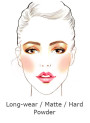
Here are the answers to your questions regarding the formulation of your makeup fixing spray, focusing on the pre-selected product, Silicone Film (Powder, Hard Film, Comfort-Wear) (Trimethylsiloxysilicate) (ID: 1350).
1. Is this ingredient suitable for this type of formula?
Yes, the Silicone Film (Trimethylsiloxysilicate) is highly suitable.
Its primary function is to create a durable, waterproof, and long-lasting film over makeup, which is the exact purpose of a fixing spray. The specific type you selected (Comfort-Wear) is designed to be light enough for use in face products like foundation, making it a good choice for a spray that covers the entire face.
Incorporation Note: Trimethylsiloxysilicate is a non-polar powder. It must be dissolved or fully dispersed in the oil/silicone phase of your formula (e.g., C9-12 Alkane and Isononyl Isononanoate) before being emulsified into the water phase using your solubilizers (PEG-40 Hydrogenated Castor Oil, PPG-26-Buteth-26).
2. Recommended Usage Percentage and Incorporation
As a general rule, we cannot provide exact, tested formulation percentages. However, here are the typical usage ranges and incorporation methods for the key components in your list:
| Ingredient | Function | Typical Usage Range | Incorporation Method |
|---|---|---|---|
| Trimethylsiloxysilicate (ID: 1350) | Film Former, Waterproofing | 1.0% - 3.0% | Dissolve/Disperse in the oil phase (C9-12 Alkane, Isononyl Isononanoate) with heat if necessary. |
| PVP | Water-Soluble Film Former | 0.5% - 3.0% | Dissolve in the water phase. Works synergistically with TMS. |
| Glycerin, Butylene Glycol | Humectants | 2.0% - 10.0% (Total) | Dissolve in the water phase. |
| PEG-40 Hydrogenated Castor Oil (ID: 738) / PPG-26-Buteth-26 | Solubilizers / Emulsifiers | 3.0% - 10.0% (Total) | Used to solubilize the oil phase (containing TMS, C9-12 Alkane, Tocopheryl Acetate, Fragrance) into the water phase. The ratio of solubilizer to oil/fragrance is critical (often 3:1 or 4:1). |
| Extracts | Skin Conditioning, Marketing | 0.1% - 5.0% (Total) | Add to the cooled water phase. |
| Water | Solvent | QS to 100% | Main solvent. |
3. Can I use Polysorbate 20 or 80 instead of the PEG-40?
Yes, you can generally use Polysorbate 20 (ID: 175) or Polysorbate 80 (ID: 176) as alternatives.
All three ingredients (PEG-40 Hydrogenated Castor Oil, Polysorbate 20, and Polysorbate 80) are non-ionic solubilizers used to disperse oil-soluble ingredients (like fragrance, Tocopheryl Acetate, and your oil phase) into a water base. They have similar HLB values (around 15-17), which are suitable for this type of system.
However, be aware:
- You will need to test the formula, as the required concentration of Polysorbate may be different from the PEG-40 HCO to achieve a clear, stable solution.
- PEG-40 Hydrogenated Castor Oil is often preferred for solubilizing complex systems or higher-molecular-weight ingredients like the oil phase containing Trimethylsiloxysilicate.
4. Are these extracts necessary and can they be replaced?
The extracts are not structurally necessary for the primary function of the fixing spray.
They are included for secondary benefits (soothing, antioxidant) and marketing claims.
Yes, they can be replaced. You can easily substitute the existing extracts (Cucumber, Green Tea, etc.) with other water-soluble extracts like Calendula Extract (Water Soluble) (ID: 123) or other soothing botanicals, provided the new extracts are compatible with the formula's pH and preservative system.
5. The Arginine is that the same as the L-Arginine?
Yes, in cosmetic ingredient lists, "Arginine" is almost always the same as L-Arginine.
L-Arginine is an alkaline amino acid and is commonly used as a pH adjuster to raise the pH of a formulation.
Why it's in the list:
Your formula also contains Citric Acid, which is an acid used to lower the pH. The Arginine is included to:
- Buffer the pH: It helps stabilize the pH of the formula, preventing large swings.
- Adjust the final pH: It is used to gently raise the pH to the desired range (4.5-5.6) for skin compatibility and product stability, acting as a gentler alternative to ingredients like Sodium Hydroxide.
It is a very common and safe practice to use both an acid (Citric Acid) and a base (Arginine) to fine-tune the final pH of a cosmetic product.
Related Products Mentioned

Calendula Extract (Water Soluble)
Polysorbate 20 (Tween 20)