Formulation and Usage of Salicylic Acid and Retinaldehyde for Clogged Pores
Question
I have questions regarding acne treatment, specifically clogged pores, and formulation:
- How does Benzoyl Peroxide (BP) compare to Salicylic Acid for dissolving clogged pores?
- Is it possible to create a homemade gel with properties similar to BP?
I have two proposed formulations:
- Gel Formulation (with Retinaldehyde)
water 89.05 Sodium PCA 3 Any Gel 1 Retinaldehyde 0.05 FloraSolve 6 Vit E 0.1 Phenoxyethanol SA 0.8- Toner Formulation (with Salicylic Acid EZ)
water   81.5
Salicylic Acid EZ™ 10% (เท่ากับ Active Salicylic Acid 2%)   10
Vitamin B5 (ให้ความชุ่มชื้นผิว ลดการระคายเคืองจาก Salicylic Acid)   3
Vitamin B3 (ให้ผิวแข็งแรง ลดความมันผิว ลดการสร้าง sebum ของผิว) 5
Phenoxyethanol SA   0.5
Could you please review these formulations and provide guidance on the mixing procedure, particularly for the Retinaldehyde gel to prevent precipitation? Would using the Salicylic Acid toner followed by the Retinaldehyde gel be a complementary approach?
Could you clarify why Encapsulated Salicylic Acid is recommended for wash-off use, while regular Salicylic Acid (like Salicylic Acid EZ) can be left on, especially considering that encapsulation is often associated with gentler, time-release effects?
Answer
BP vs Salicylic Acid for Clogged Pores
Regarding the difference between Benzoyl Peroxide (BP) and Salicylic Acid for treating clogged pores:
Based on the information provided, Benzoyl Peroxide is generally considered more effective than Salicylic Acid for dissolving existing clogged pores (comedones). While both ingredients work to dissolve comedones, BP's efficacy is highlighted as being clearly greater in ideal conditions. However, BP has significant limitations regarding stability and potential for irritation depending on the formulation base or solvent (like Ethyl Alcohol).
Salicylic Acid also works to dissolve comedones, and its effectiveness in practice can be influenced by the overall formulation, similar to BP.
Homemade Gel Similar to BP
It is not possible to create a gel with properties closely resembling BP for personal use. The staff advises that controlling clogged pores requires a comprehensive approach involving multiple steps and ingredients, not just a single topical application. They mention the importance of incorporating ingredients like Vitamin A derivatives (such as Retinaldehyde) to help prevent the formation of new comedones.
Review of Proposed Formulations
1. Gel Formulation (with Retinaldehyde)
Your proposed gel formula using Retinaldehyde is reviewed. The staff recommends a slight adjustment to the method:
When mixing phase C (containing Retinaldehyde and FloraSolve) at no more than 60°C, also warm phase AB (water and Sodium PCA) to a similar temperature. Then, add C into AB while both phases are at similar temperatures and mix or stir until combined. This helps ensure proper emulsification/dispersion and prevents precipitation of ingredients like Retinaldehyde when exposed to a cooler phase AB, leading to better efficacy.
2. Toner Formulation (with Salicylic Acid EZ)
Your proposed toner formula with Salicylic Acid EZ, Vitamin B5, and Vitamin B3 is reviewed. To prevent precipitation of Salicylic Acid, the staff suggests adding a gelling agent, such as AnyGel, at 1% concentration. A gel texture will help stabilize the Salicylic Acid and make the formula easier to use.
Using the toner (with Salicylic Acid) followed by the gel (with Retinaldehyde) would be a complementary approach. Salicylic Acid helps exfoliate and clear existing blockages, while Retinaldehyde helps regulate skin cell turnover to prevent new comedones from forming.
Salicylic Acid vs. Encapsulated Salicylic Acid Usage
You asked for clarification on why Encapsulated Salicylic Acid is recommended for wash-off use while regular Salicylic Acid can be left on.
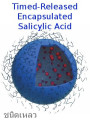
The reason is that Encapsulated Salicylic Acid is encapsulated using a type of surfactant (specifically, a cationic surfactant, similar to those found in hair conditioners). Leaving this surfactant on the skin for extended periods is not recommended by the manufacturer. Even after rinsing, some of the positively charged Salicylic Acid can remain on the skin, similar to how hair conditioner coats hair after rinsing.
Therefore, for leave-on applications, Salicylic Acid EZ is more suitable. It is also generally less expensive and does not leave surfactant residue on the skin. Encapsulated Salicylic Acid is best suited for wash-off products like cleansers where the contact time is short but some residual effect is desired.
Related Products Mentioned

SNAP-8®
Safe-B3™ (Vitamin B3, Niacinamide)
Salicylic Acid (BHA, Pharma Grade)

Salicylic Acid EZ™ (ชนิดละลายน้ำ)
Retinal (Retinaldehyde)