Formulation for Acne/Oil Control Serum: Solubilization, Texture, and Actives
Question
I am creating a water-based formula with the following ingredients:
- Calcium Pantothenate 0.15%
- Niacinamide 1.5%
- Hyaluronic Acid (JP) 0.4%
- Tea Tree Oil 0.25%
- Mild Preserved Eco™ 0.52%
- Dl-Water 97.18%
I plan to use PEG-40 Hydrogenated Castor Oil to dissolve the Tea Tree Oil. I would like advice on the following:
- Please check if my proposed mixing method is correct:
- Mix A and B into F, stir until dissolved.
- Mix C into F, stir until dissolved.
- Mix D into G (PEG-40 Hydrogenated Castor Oil), stir until mixed.
- Mix step 3 into the water phase (F).
- Mix E into the final step, stir until clear.
- What percentage of PEG-40 Hydrogenated Castor Oil should I use? (Reducing the water percentage accordingly)
- Should I add antioxidants or sunscreen to the chemical ingredients?
- If the ingredients cannot be mixed without a base, I would like recommendations for a natural, non-comedogenic gel base. (If the ingredients are compatible, you can skip this question).
- Should any additional ingredients be added for preservation or to make the formula more effective?
The intended product is for reducing acne, healing acne wounds, controlling oil, and tightening the face.
Answer
Formulation Review and Recommendations
Based on the ingredients you plan to use and your goals (reducing acne, healing acne wounds, controlling oil, and tightening skin), here is a review and some recommendations:
1. Mixing Method
Your proposed mixing method is generally correct for creating a water-based solution containing both water-soluble ingredients and an oil (Tea Tree Oil) that needs to be solubilized.
- Steps 1 and 2 correctly dissolve the water-soluble powders (Calcium Pantothenate, Niacinamide) and the liquid Hyaluronic Acid into the water phase.
- Step 3 correctly pre-mixes the oil (Tea Tree Oil) with the solubilizer (PEG-40 Hydrogenated Castor Oil).
- Step 4 correctly adds the solubilized oil phase to the water phase.
- Step 5 correctly adds the preservative (Mild Preserved Eco™) in the final step.
This sequence ensures that the water-soluble ingredients are fully dissolved and the oil is properly dispersed in the water phase using the solubilizer before the preservative is added.
2. Percentage of PEG-40 Hydrogenated Castor Oil
Tea Tree Oil is an essential oil and requires a solubilizer like PEG-40 Hydrogenated Castor Oil to disperse evenly in a water base. The amount of solubilizer needed depends on the specific oil and the desired clarity of the final product. A common starting ratio for solubilizing essential oils with PEG-40 Hydrogenated Castor Oil is typically between 1:1 and 1:5 (Tea Tree Oil : PEG-40 Hydrogenated Castor Oil).
Since you are using 0.25% Tea Tree Oil, you could start by trying PEG-40 Hydrogenated Castor Oil at a ratio of around 1:3 to 1:4. This would mean using approximately 0.75% to 1.0% PEG-40 Hydrogenated Castor Oil.
You should test this range and adjust the percentage slightly until the mixture of Tea Tree Oil and PEG-40 Hydrogenated Castor Oil dissolves clearly in the water phase without cloudiness. Remember to reduce the percentage of Dl-Water accordingly to keep the total formula at 100%. For example, if you use 1.0% PEG-40 Hydrogenated Castor Oil, your Dl-Water percentage would become 96.18%.
3. Antioxidants or Sunscreen
- Antioxidants: Adding an antioxidant is a good idea. It can help protect the ingredients in your formula from degradation due to oxidation, which can extend the shelf life and maintain the efficacy of the product. For a water-based formula, consider water-soluble antioxidants like water-soluble Vitamin E (Tocopheryl Acetate Water-Soluble) or a stable Vitamin C derivative such as Sodium Ascorbyl Phosphate or Ascorbyl Glucoside.
- Sunscreen: Sunscreen is essential for protecting the skin from UV damage, which can worsen acne, cause hyperpigmentation (dark spots), and lead to premature aging. However, incorporating effective sunscreen filters into a simple water-based solution is difficult as most require emulsion bases. It is highly recommended to use a separate, dedicated sunscreen product as the last step in your morning skincare routine after applying this serum.
4. Gel Base Recommendation
Your current formula is designed as a water-based solution. If you find that the ingredients don't stay uniformly mixed, or if you desire a thicker, gel-like texture, you would need to add a gelling agent.
For a natural, non-comedogenic gel base in a water formula, Xanthan Gum is a widely used and suitable option. It is a natural polysaccharide that creates a clear gel texture in water and is generally well-tolerated and non-comedogenic. You would typically add a small percentage (e.g., 0.2% - 0.5%) to the water phase and mix thoroughly until a gel forms before adding the other ingredients.
5. Additional Ingredients for Efficacy or Preservation
Your current selection of Calcium Pantothenate, Niacinamide, Hyaluronic Acid, and Tea Tree Oil already targets several concerns (hydration, oil control, anti-inflammatory, antibacterial). To further enhance the formula for your stated goals:
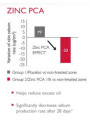
- For enhanced acne treatment and oil control: Consider adding Zinc PCA. It is known for its sebum-regulating and antibacterial properties, making it effective for acne-prone and oily skin.
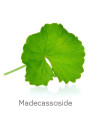
For wound healing and soothing: Ingredients like Centella Asiatica Extract (CICA) or Allantoin are excellent for promoting skin healing, reducing redness, and soothing irritation, which would be beneficial for healing acne lesions.
For reducing post-acne marks and brightening: A stable Vitamin C derivative (like Sodium Ascorbyl Phosphate or Ascorbyl Glucoside) or Licorice Extract can help fade dark spots and improve overall skin tone.
- For preservation: You are using Mild Preserved Eco™ at 0.52%. The recommended usage rate for general cosmetic formulas is 1.0-1.5%. Given that this is a water-based formula and contains natural ingredients like Tea Tree Oil, increasing the concentration of Mild Preserved Eco™ to at least 1.0% would provide more robust preservation against microbial growth.
By incorporating some of these additional ingredients and potentially adjusting the Mild Preserved Eco™ level, you can create a more comprehensive and effective product for your specific skin concerns.
Related Products Mentioned

Safe-B3™ (Vitamin B3, Niacinamide)
Allantoin
Tea Tree Oil (Extra Grade, Terpinen‑4‑OL >43%, Australian)
Zinc PCA
Double Hyaluron Liquid
Mild Preserved Eco™ (Preservative-Free)