Formulation for Glitter Base (Eye Product) - Mixing, Usage, Preservatives
Question
Based on the following ingredients, I have reverse-engineered a formula and have all the ingredients available:
Water\Aqua\Eau, Glycerin, Butylene Glycol, Chamomilla Recutita (Matricaria) Extract, Xanthan Gum, Phenoxyethanol, Caprylyl Glycol, Hexylene Glycol.
My proposed mixing steps are:
- Water soluble part: Water + Butylene Glycol + Hexylene Glycol + Caprylyl Glycol (1,2-Octanediol) + Phenoxyethanol (Extra Low Phenol)
- Create gel texture with remaining parts: Xanthan Gum + Glycerin + step 1)
I am unsure about the Chamomilla Recutita (Matricaria) Extract and how it should be mixed. I see two options available. I would like assistance with the mixing procedure, including the approximate percentage to use for each ingredient. If any ingredients should be changed to be more suitable, please advise.
Regarding the preservative system, since the product is for the eye area, can I switch to Polyaminopropyl Biguanide instead? Thank you.
Answer
Suggested Mixing Procedure
Your proposed steps are a good starting point. We just need to ensure all ingredients are added correctly based on their solubility.
- Water Phase: Combine Water, Butylene Glycol, Hexylene Glycol, Caprylyl Glycol, Phenoxyethanol, and Ethylhexylglycerin in a container. Stir or mix until all components are fully dissolved and the phase is clear.
- Gelling Phase: In a separate container, measure out the Glycerin and Xanthan Gum. Add the Xanthan Gum to the Glycerin and mix well to create a smooth, lump-free slurry. This helps disperse the Xanthan Gum evenly and prevents clumping when added to water.
- Combine Phases: Slowly add the Gelling Phase (Xanthan Gum/Glycerin slurry) to the Water Phase while stirring vigorously. High-speed mixing is recommended at this stage to properly hydrate the Xanthan Gum and form a uniform gel. Continue mixing until the gel is clear and smooth.
- Add Extract: Add the Chamomilla Recutita (Matricaria) Extract (Natural Bisabolol) to the formed gel and mix until it is fully incorporated and dispersed.
Suggested Usage Rates
Here are some suggested starting usage rates for each ingredient. These are typical ranges, and you may need to adjust them based on the desired texture, feel, and performance of your final product.
- Water: Quantity Sufficient (QS) to 100%
- Glycerin: 5%
- Butylene Glycol: 5%
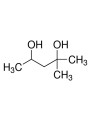
- Hexylene Glycol: 3%
- Caprylyl Glycol: 1%
- Phenoxyethanol: 0.5% (Note: For eye products, the recommended maximum usage rate for Phenoxyethanol is typically 0.5%)
- Ethylhexylglycerin: 0.5%
- Xanthan Gum (clear gel type): 0.8% (Adjust between 0.1-2% for desired viscosity)
- Chamomilla Recutita (Matricaria) Extract (Natural Bisabolol): 1% (Recommended usage rate is 0.5-1%)
This would total approximately 16.8% active ingredients, with Water making up the remaining 83.2%.
Chamomilla Recutita (Matricaria) Extract
You mentioned being unsure about which Chamomilla Recutita (Matricaria) Extract to use as there seem to be two options. Based on the botanical name "Chamomilla Recutita (Matricaria)", this typically refers to German Chamomile. The ingredient matching this description that contains Bisabolol (known for soothing properties) is Natural Bisabolol (from German Chamomile). This ingredient is oil-soluble and is best incorporated as described in the mixing steps above (added after the gel is formed, or potentially dispersed in the glycol/glycerin phase).
There is also Chamomile Water (from Roman Chamomile, Anthemis Nobilis), which is a water-soluble ingredient and already contains a preservative. While also beneficial, it is a different ingredient than the one listed in your formula. Based on your ingredient list, Natural Bisabolol is the appropriate choice.
Preservative System for Eye Products
Your current preservative system uses Phenoxyethanol, Ethylhexylglycerin, and Caprylyl Glycol. Phenoxyethanol is a common preservative, but its usage is restricted to 0.5% in eye products. Ethylhexylglycerin and Caprylyl Glycol act as preservative boosters and also provide emollient and humectant properties.
You asked if Polyaminopropyl Biguanide can be used instead, especially for an eye product. Polyaminopropyl Biguanide is a broad-spectrum antimicrobial agent that is considered relatively mild and is often used in products for sensitive areas, including contact lens solutions. Its typical usage rate is 0.1-1.0%.
It is possible to replace your current preservative system with Polyaminopropyl Biguanide. However, it is crucial to perform a challenge test on your final formulation to ensure that the chosen preservative system (whether your original one or Polyaminopropyl Biguanide) is effective at preventing microbial growth throughout the product's shelf life, especially since it is intended for use around the eyes. The appropriate usage rate for Polyaminopropyl Biguanide in your specific eye product formulation would need to be determined through testing, but it would likely be within the 0.1-1.0% range.
In summary, your proposed mixing method is largely correct and can be refined slightly to ensure proper incorporation of all ingredients. The suggested usage rates provide a good starting point for your experiments. Natural Bisabolol is the appropriate Chamomile extract based on your list. Polyaminopropyl Biguanide is a potential alternative preservative for eye products, but its efficacy in your specific formula must be confirmed with a challenge test.
Let me know if you have any more questions as you develop your formulation!
Related Products Mentioned
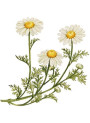
Natural Bisabolol (Brazil Chamomile)
Glycerin (USP/Food Grade)
Phenoxyethanol (Extra Pure)
Butylene Glycol
Ethylhexylglycerin
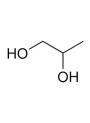
Caprylyl Glycol (1,2-Octanediol)
Chamomile Water (Anthemis Nobilis)