Formulation Issue with Warp Cream Maker™: Mixing Method and Stability
Question
I am using Warp Cream Maker™ in a hot process formulation. I encountered issues when following the recommended usage instructions:
Recommended Usage Instructions for Warp Cream Maker™:
- Mixing requires a blender with a speed of at least 1000 RPM.
- Mix the oil phase, silicone, and
Warp Cream Maker™thoroughly first, then gradually add the water phase while blending. - If the formula contains wax that requires melting with heat, melt it with the oil phase, silicone, and
Warp Cream Maker™using heat until well combined. Once well combined, gradually add the water phase to the oil phase, blending thoroughly.
When I followed these instructions, the water and oil phases often did not combine well, or took a long time to combine, resulting in a cream texture that was not smooth. After leaving the cream for 2-3 days, the cream would become thinner and separate.
However, I tried reversing the mixing process by gradually adding the oil phase to the water phase. The water and oil combined quickly, forming a smooth cream texture. After leaving the cream for 2-3 days, there was no thinning or separation.
Could you please review my formula and explain the reason for this issue and why the alternative mixing method worked?
My Formula:
- Water = 51.50%
- Safe B3 = 5%
- Pro Vitamin B5 = 2%
- Butylene Glycol = 5%
- Glycerin = 5%
- สารกันเสีย = 1%
- Warp Cream Maker = 5%
- Glyceryl Stearate SE = 2.50%
- Cetearyl Alcohol = 2%
- LipidSoft CC = 5%
- Titanium 200nm = 1%
- Cyclomethicone = 5%
- isohexadecane = 2.5%
- Isododecane = 2.5%
- Mineral Oil ชนิดเบา = 3%
- Perfume = 2%
Answer
Formulation Feedback for Warp Cream Maker™ Formula
Thank you for reaching out and providing details about your experience with Warp Cream Maker™. It's interesting that you found success by reversing the mixing process.
The instructions for Warp Cream Maker™ indicate it is a water-in-oil (W/O) emulsifier, designed to create emulsions where tiny water droplets are dispersed within an oil or silicone phase. The recommended method of adding the water phase to the oil/silicone/emulsifier phase is standard for forming a W/O emulsion.
However, your formula contains several ingredients that are more commonly used in or contribute to oil-in-water (O/W) emulsions, where oil droplets are dispersed in a water phase. These include Glyceryl Stearate SE and Cetearyl Alcohol, which are often used as co-emulsifiers or thickeners in the oil phase of O/W emulsions and require heating to incorporate. Additionally, your formula has a relatively high percentage of water (51.50%).
When you followed the recommended W/O method (adding water to oil phase), the high water content and the presence of O/W favoring ingredients likely made it difficult for the Warp Cream Maker™ to effectively create and stabilize a W/O emulsion, leading to instability, poor texture, and separation over time.
Your successful method of gradually adding the oil/silicone/emulsifier phase to the water phase is the typical procedure for creating an oil-in-water (O/W) emulsion. It appears that despite using Warp Cream Maker™ (a W/O emulsifier), the overall composition of your formula, particularly the high water percentage and the inclusion of Glyceryl Stearate SE and Cetearyl Alcohol, is more conducive to forming a stable O/W emulsion. By using the O/W mixing method, you are likely forming an O/W emulsion that is more stable given the ingredients present.
Regarding the Titanium 200nm, ensure it is properly dispersed in the oil or silicone phase before combining the phases, as recommended for this type of ingredient.
While your current method is working, it's worth noting that the manufacturer of Warp Cream Maker™ recommends adding 1% Magnesium Sulfate for water-in-oil formulas to improve stability. However, since your formula appears to be forming a stable O/W emulsion with your modified method, this might not be necessary.
In summary, the instability with the recommended method is likely due to the formula's composition being more suited for an oil-in-water emulsion. Your alternative method works because it facilitates the formation of a stable oil-in-water emulsion, which is better aligned with the majority of your ingredients and water content.
Related Products Mentioned
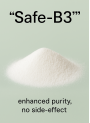
Safe-B3™ (Vitamin B3, Niacinamide)
Glycerin (USP/Food Grade)
Isododecane (Germany)
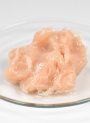
Warp Cream Maker™ (e.q. Nikkomulese wo)
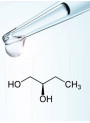
Butylene Glycol
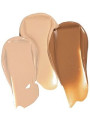
LipidSoft™ CC (Cetyl Ethylhexanoate)
Cetearyl Alcohol (50/50, e.q. Lanette O)