Formulation of Reef-Friendly Foundation Sunscreen

Asked by: sarisa.200347 On: May 17, 2026 Product Type: Cosmetics Answered

Question

Hello,

Currently, I have a sunscreen formula as attached. The client wants to adjust it into a “Foundation Sunscreen” that can serve as a makeup base, while incorporating a more “Reef Friendly / Coral Friendly” concept.

Current Formula:

Part A

  • Water — 42.45%
  • Disodium EDTA — 0.20%
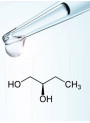
  • Butylene Glycol — 0.20%

Part B

Part C

  • Multicare MP40KC — 5.00%

Part D

  • Water — 5.00%
  • Allantoin — 0.20%
  • Niacinamide — 1.00%

Part E

  • Extract — 0.25%

Part F

  • Water — 2.00%
  • Isododecane — 2.00%
  • AminoSil™ (Lauroyl Lysine) — 2.60%
  • Sicare 2215 — 2.60% (Thinking of using SiliSolve™ instead)
  • Sicare 9900 — 15.00%

Part G

Questions for MySkinRecipes:

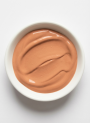
  1. From the current formula, can I use only ReadyMix™ Beige Iron Oxides (Isononyl Isononanoate Based) to create the foundation shade? If used alone, will it provide sufficient coverage and color stability, or should I mix additional Iron Oxides to balance the skin tone?
  2. If I want to add the following nourishing ingredients, can they be included in the formula, and at what percentage?
  1. In the current formula, are there any ingredients that should be adjusted, reduced, or changed to make the formula:
  • More Reef Friendly
  • Easier to spread
  • Reduce creasing/streaking
  • More suitable as a foundation sunscreen
  1. If I want the formula to have good SPF Protection with a lightweight feel, does MySkin have additional advice on:
  • Silicone balance
  • Pigment dispersion
  • Emulsifier
  • Film former
  • Or other ingredients?

Please also provide guidance on the formulation process. Thank you very much.

Answer

To adjust your sunscreen formula into a "Foundation Sunscreen" with a Reef Friendly concept and improved texture, here are the technical recommendations:

1. ReadyMix™ Beige Iron Oxides and Coverage

  • Shade Matching: ReadyMix™ Beige Iron Oxides (Isononyl Isononanoate Based) is an excellent starting point for a consistent beige tint. However, using a single pre-mixed color may not be sufficient for full shade balancing across different skin tones. It is recommended to have separate yellow, red, and black iron oxide dispersions available for fine-tuning the undertone.
  • Coverage: While ReadyMix™ Beige provides color, it does not provide high opacity. The Titanium Dioxide Transparent (15nm, Dimethicone Coated) in your formula is designed to be translucent to avoid a white cast. For a foundation-like coverage, you would typically need to incorporate a pigment-grade Titanium Dioxide (larger particle size, e.g., 200nm) to provide the necessary opacity.
  • Stability: Iron oxides and Titanium Dioxide do not dissolve; they must be wetted and dispersed. Poor dispersion leads to streaking, speckling, and uneven color.

2. Active Ingredients and Usage Rates

  • Aloe Vera Extract (10:1 FullAssay™): Can be added to the water phase at 0.5–3.0%. Note that it is an electrolyte and may reduce the viscosity of certain emulsion systems.
  • Vitamin B3 (Niacinamide): Your current 1.0% is a good start. For stronger skincare claims, you can trial 2.0–4.0%. Ensure the final pH remains stable (ideally 5.0–6.0) to prevent irritation or degradation.
  • Hyaluronic Acid: If using a standard powder or concentrated solution, trial 0.05–0.20% (active matter). Excessive amounts can lead to a tacky feel or "pilling" when applied under other makeup.

3. Reef Friendly Concept and Texture Improvement

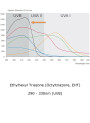
  • Reef Friendly: To strengthen this claim, consider moving toward a mineral-only system. Organic filters like Ethylhexyl Salicylate and Ethylhexyl Triazone are often excluded from strict "Reef Safe" definitions. Additionally, 15nm Titanium Dioxide is considered "nano-sized," which may conflict with certain non-nano marketing standards.
  • Spreading and Creasing: To reduce settling into fine lines and improve the "soft-focus" effect, consider adding Silicone Elastomer Powder at 0.5–2.0%. This provides a matte, silky finish and helps prevent the pigment from migrating into skin folds.
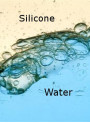
  • SiliSolve™ (PEG-10 Dimethicone): This is a Water-in-Silicone (W/Si) emulsifier. It is not a direct 1:1 replacement for your current emulsifiers unless you redesign the formula as a W/Si system. SiliSolve™ works best with high water content (70–99%) and very low oil content (preferably <3%).

4. Formulation and Processing Guidance

  • Pigment Dispersion: Always disperse pigments and physical sunscreens in the oil/silicone phase using high-shear mixing before emulsification to ensure a smooth, non-streaky finish.
  • Emulsification (W/Si): If using SiliSolve™, the water phase (containing EDTA, Niacinamide, and Aloe) must be added gradually into the silicone/oil phase while mixing continuously.
  • SPF Testing: Any change in pigments, UV filters, or emulsifiers requires a new SPF/UVA-PF test, as film uniformity significantly impacts actual protection levels.

Citations

  • NOAA identifies several sunscreen chemicals, including nano-minerals and certain organic filters, as concerns for marine life. [0]
  • Palau’s Responsible Tourism Education Act bans specific reef-toxic ingredients; while your current filters are not all on the ban list, mineral-only systems are generally preferred for this concept. [1]
  • Downs et al. (2016) reported the impact of certain UV filters on coral health, supporting the move toward safer alternatives. [2]
  • Bissett et al. (2004) demonstrated the topical benefits of Niacinamide for improving skin appearance and tone. [4]
Relevant References

Sources supporting the key technical claims in this answer

NOAA. Skincare Chemicals and Coral Reefs.

Supports the avoidance of certain UV filters and nano-minerals for reef safety.

Palau’s Responsible Tourism Education Act.

Context for reef-toxic ingredient bans in sunscreen products.

Downs CA, et al. (2016). Toxicopathological Effects of White Powder and UV Filters on Coral. Archives of Environmental Contamination and Toxicology.

Scientific basis for coral impact from specific UV filters.

DOI: 10.1007/s00244-015-0227-7 PMID: 26487337
Bissett DL, et al. (2004). Topical niacinamide reduces yellowing, wrinkling, red blotchiness, and hyperpigmented spots in aging facial skin. International Journal of Cosmetic Science.

Supports the use of Niacinamide for skin appearance benefits in foundation products.

DOI: 10.1111/j.1467-2494.2004.00228.x