Formulation Questions: Cream, Sunscreen, Under-Eye Gel, Serum, and Soap
Question
I have several questions regarding different cosmetic formulations:
- Light Cream Formulation Issues:
- My initial Light Cream formula (
Light cream 3%,Pep®-Coll 3%,Matrixyl™ 3000 5%,DMAE liquid 20%,Rose Hip Oil 10%,Delentigo 5%,MOIST72™ 2%,Vitamin B5 2%,Ethoxydiglycol 20%,Propylene Glycol 20%,Cyclomethicone 5%,Preservative 1%,Water 5%) experienced oil separation. Why did this happen? - How can I thicken my cream formula to achieve a jar cream consistency?
- Can I add
Water 74%,B3 6%, andDMAE liquid 20%to the original formula, and what would be the resulting composition and effects?
- My initial Light Cream formula (
- Sunscreen Formulation: How can I create a sunscreen with a powdery or foundation-like texture?
- Under-Eye Gel Formulation: Is my under-eye gel formula (
REGU®-AGE 5%,Copper Peptide (GHK-Cu) 3%,Vitamin B3 2%,Glucosamine (N-acetyl-D) 4%,Cucumber Extract 5%,Phenoxyethanol 1%,Hyaluronic Acid 0.5%,Water 79%) suitable and effective for reducing under-eye bags and dark circles? - Freckle/Sunspot Serum Formulation:
- Can
Azelaic Acid(Liquid Azelaic™) andTranexamic Acid(Trans-White™) be used together in a serum formula? - Can a serum containing
Azelaic Acid 10%(orTranexamic Acid 3%),N-acetyl-D 4%, andVitamin B3 2%be applied to the whole face or only specific spots?
- Can
- Ingredient Stability in Soap: Do herbal soaps, which are typically alkaline, render ingredients like
Vitamin B3ineffective?
Answer
Formulation Advice
Light Cream Formulation Issue (Oil Separation)
The issue of oil separation in your original Light Cream formula (Light cream 3%, Pep®-Coll 3%, Matrixyl™ 3000 5%, DMAE liquid 20%, Rose Hip Oil 10%, Delentigo 5%, MOIST72™ 2%, Vitamin B5 2%, Ethoxydiglycol 20%, Propylene Glycol 20%, Cyclomethicone 5%, Preservative 1%, Water 5%) was due to the very low water content (only 5%). Light Cream Maker™ is designed for oil-in-water emulsions and requires a sufficient water phase to properly emulsify the oil phase. The staff recommended increasing the water content to at least 50%.
Regarding your proposed modified formula (Water 74%, B3 6%, DMAE liquid 20%):
Adding 74% water, 6% Vitamin B3, and 20% DMAE liquid to your original formula would drastically change the overall composition and dilute the percentages of the other ingredients you initially included (Pep®-Coll, Matrixyl™ 3000, Rose Hip Oil, Delentigo, MOIST72™, Vitamin B5, Ethoxydiglycol, Propylene Glycol, Cyclomethicone, Preservative). To understand the effectiveness and focus of this new formula, you would need to calculate the final percentage of each ingredient in the total 100% mixture. With 74% water, the formula would be much more water-based, likely focusing more on hydration and the effects of Vitamin B3 and DMAE at their new concentrations, while the effects of the other original ingredients would be significantly reduced due to dilution.
To thicken your cream to a jar cream consistency:
- As the staff advised, you should increase the percentage of Light Cream Maker™. This is the primary emulsifier and thickener for your oil-in-water cream base. Using a higher percentage (e.g., 1.5% to 3%) will result in a thicker cream.
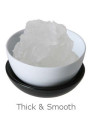
- Silicone Gel Base (like Silicone Gel (Thick & Smooth, Cyclopentasiloxane Base)) is a different type of ingredient used primarily to improve texture, spreadability, and provide a smooth, matte feel, especially in silicone-heavy or anhydrous formulas. It acts as a thickener for silicone oils. If you want to incorporate it, you would typically dissolve it in the silicone oil phase (like Cyclomethicone) before combining with the water phase, but for thickening your existing Light Cream Maker™ emulsion, increasing the Light Cream Maker™ is the direct method.
Sunscreen Formulation
For your desired sunscreen with a powdery or foundation-like texture, the staff correctly suggested adding Talc or Mica to the formula. These ingredients provide a matte, powdery feel and can contribute to coverage, similar to a foundation. Looking at BB cream formulas can provide good examples of how to incorporate these powders into an emulsion base.
Under-Eye Gel Formulation
Your formula for the under-eye gel (REGU®-AGE 5%, Copper Peptide (GHK-Cu) 3%, Vitamin B3 2%, Glucosamine (N-acetyl-D) 4%, Cucumber Extract 5%, Phenoxyethanol 1%, Hyaluronic Acid 0.5%, Water 79%) appears suitable for addressing under-eye bags and dark circles.
- REGU®-AGE is specifically designed to reduce dark circles and puffiness and strengthen the delicate skin around the eyes.
- Copper Peptide is known for its skin regeneration properties, which can help with wrinkles and skin firmness.
- Vitamin B3 (Niacinamide) can help reduce hyperpigmentation and improve blood flow, beneficial for dark circles.
- Glucosamine (N-acetyl-D) can help with skin hydration and potentially improve skin tone when combined with Vitamin B3.
- Cucumber Extract provides soothing and softening effects, suitable for the eye area.
- Hyaluronic Acid provides hydration.
Based on the functions of these ingredients, the formula should be effective for the intended purpose.
Freckle/Sunspot Serum Formulation
For your serum to reduce freckles and sunspots:
- You can use Azelaic Acid (Liquid Azelaic™) and Tranexamic Acid (Trans-White™) together in the same formula. Both are effective whitening agents targeting hyperpigmentation.
- As the staff mentioned, if you use both, it is important to check the pH of the final formula and adjust it to be no higher than 7, ideally in the range of 6-7, for optimal stability and effectiveness of Azelaic Acid.
- Regarding whether the serum can be applied to the whole face or only spots: The ingredients you are using (Azelaic Acid, Tranexamic Acid, N-acetyl-D Glucosamine, Vitamin B3) are commonly used in facial serums for overall brightening and treating widespread pigmentation issues like freckles and sunspots. The percentages you listed (Azelaic Acid 10% or Tranexamic Acid 3%, N-acetyl-D 4%, Vitamin B3 2%) are within typical usage ranges for facial application. Therefore, it should be safe to apply the serum to your whole face, but always perform a patch test first to ensure your skin tolerates it well.
Regarding adding Vitamin B3 to herbal soap with fermented starfruit juice:
As the staff explained, traditional bar soaps are highly alkaline. Vitamin B3 (Niacinamide) is sensitive to high pH and will degrade in an alkaline environment (optimal pH 4.0-7.0). Therefore, adding Vitamin B3 to a high-pH herbal soap would likely render it ineffective as the Vitamin B3 would not remain stable.
In general, many beneficial active ingredients used in skincare are sensitive to high pH. If a herbal soap has a high alkaline pH (which is common for bar soaps made via saponification), many added active ingredients may degrade and lose their effectiveness. This is why serums, creams, and lotions, which can be formulated at a skin-compatible pH, are often preferred vehicles for delivering sensitive active ingredients.
I hope this comprehensive summary and advice helps with your formulations!
Related Products Mentioned
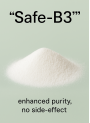
Safe-B3™ (Vitamin B3, Niacinamide)
GlucoBright™ (Acetyl Glucosamine)
Light Cream Maker™

REGU®-AGE (CB)
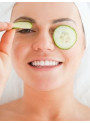
Cucumber Extract (France)