Formulation Questions: Emulsifier, Regulatory, Stability, Peptides
Question
Regarding the Vitamin C E Ferulic (Lite) kit formula:
In the formula, can Laureth-23 be replaced with Satin Cream Maker? If yes, what percentage should be used?
Is Ethoxydiglycol at 20% permissible for FDA registration for a leave-on product? The website states not more than 2.6% for leave-on. What alternative should be used if this formula is to be registered? What function does Ethoxydiglycol serve in FDA registration number 10-1-6010052107, or how was it registered?
Is using Glutathione (L-Glutathione) (Extrasol, Japan) 1.5% together with L ascorbic acid (Fine or Ultra fine) 15% sufficient to delay the oxidation of Vitamin C? If this formula is stored in the refrigerator, how many months can it remain effective with good performance? Are there any additional tips regarding stability (mixing procedure, effect of heat, dissolution without heat)?
3.1 As an opinion from the officer, which formula is likely more stable: the Vitamin C E Ferulic (Lite) kit formula or this formula (L-Ascorbic Acid + Glutathione)? This is just an opinion, not based on specific testing, and not concerned with right or wrong.
3.2 Should the formula using Glutathione to delay oxidation include EDTA 0.2% to chelate metal ions in water?
3.3 Can this formula be used with any available peptides, such as Pal-GHK, Pal-GQPR (eq. Matrixyl 3000), Acetyl Hexapeptide-8 (eq. Argireline), DMAE (SkinTight MD™) Liquid, B5, Adenosine Liposome, Tetrapeptide-21? If yes, please recommend 1-2 effective, researched, and affordable ingredients (single or paired use) for general age-related wrinkles.
Answer
Formulation Questions
1. Replacing Laureth-23 with Satin Cream Maker
Yes, you can potentially replace Laureth-23 with Satin Cream Maker. However, the mixing method is different.
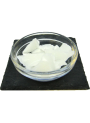
- Laureth-23 is a solid emulsifier that requires heating (60-70°C) and is added to the oil phase.
- Satin Cream Maker is a heat-free emulsifier and thickener that is added to the water phase before combining with the oil phase. It works over a wide pH range (3-12) and can emulsify up to 25% oil.
To use Satin Cream Maker, you would disperse it in the water phase first, then add the oil phase while mixing.
Regarding the usage percentage, the description for Satin Cream Maker recommends 1-1.5% for desired viscosity, and you can increase it up to 3.0% for a thicker cream.
2. Ethoxydiglycol and FDA Registration
Using Ethoxydiglycol at 20% in a leave-on product like a serum or cream is not permissible according to current FDA guidelines mentioned in the product description. The limit for leave-on or skin spray products is not more than 2.6%.
I cannot provide specific details about FDA registration number 10-1-6010052107 or the specific function of Ethoxydiglycol within that registered formula, as this information is not available through the product database.
If you need to use a solvent/carrier at a higher concentration for FDA registration, you should consider alternatives with higher permissible limits. Suitable alternatives that function as solvents and carriers include:
- Propanediol (1,3-Propanediol): Can be used at 1-20%. It is a natural-derived solvent and humectant.
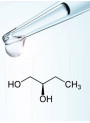
- Butylene Glycol: Can be used at 1-20% (up to 50% maximum). It is a common, gentle solvent and humectant.
Both Propanediol and Butylene Glycol are widely used in cosmetics and generally acceptable for FDA registration within their typical usage ranges.
3. Glutathione and L-Ascorbic Acid Stability
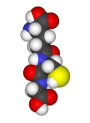
Using Glutathione (L-Glutathione Reduced) at 1.5% in conjunction with L-Ascorbic Acid (Fine or Ultra-Fine) at 15% can help to increase the stability of the L-Ascorbic Acid by acting as an antioxidant. The product description for Glutathione specifically mentions using it in a 1:10 ratio with L-Ascorbic Acid for this purpose.
Mixing and Stability:
- Mix Glutathione in the water phase.
- Avoid heat during mixing; the temperature should not exceed 40°C. Using heat (60-70°C) for a short time can help Glutathione dissolve faster, but it is better for stability to avoid higher temperatures.
- The pH of the final formula should be between 3-6 for Glutathione stability. L-Ascorbic Acid requires a pH between 2.0-4.0 (FDA requires >= 3.5 for leave-on), so a pH in the range of 3.5-4.0 is ideal for both ingredients.
- It is highly recommended to include Disodium EDTA at 0.1-0.2% in the water phase before adding L-Ascorbic Acid. This helps to chelate metal ions that can degrade L-Ascorbic Acid.
Shelf Life:
Storing this formula in the refrigerator (6-8°C for L-Ascorbic Acid, 6-8°C or 4-8°C for Glutathione) will significantly extend its shelf life and maintain its activity. While an exact duration depends on the specific formula and storage conditions, keeping it refrigerated should allow it to remain effective for several months (potentially 6 months or longer, based on typical stability of refrigerated L-Ascorbic Acid formulas). Always observe the product for changes in color or odor, which indicate degradation.
3.1 Stability Comparison (Opinion)
Comparing the stability of the Vitamin C E Ferulic (Lite) formula (ที่ใช้ Vitamin E + Ferulic Acid) and a formula using L-Ascorbic Acid + Glutathione + EDTA, both approaches are designed to improve the inherent instability of L-Ascorbic Acid.
The Vitamin C E Ferulic combination is a classic, well-researched, and widely adopted method for stabilizing L-Ascorbic Acid and enhancing its antioxidant network. It is a proven system for delivering stable Vitamin C.
The Glutathione + L-Ascorbic Acid + EDTA combination also utilizes the antioxidant properties of Glutathione and the chelating ability of EDTA to protect L-Ascorbic Acid.
Without specific comparative stability testing data for these exact formulations, it is difficult to definitively state which is more stable. However, the Vitamin C E Ferulic combination is generally considered a benchmark for L-Ascorbic Acid stability due to extensive research supporting the synergistic effect of Vitamin C, Vitamin E, and Ferulic Acid.
3.2 EDTA Requirement
Yes, as mentioned in point 3, it is highly recommended to include Disodium EDTA at 0.1-0.2% in the formula when using L-Ascorbic Acid, especially in water-based systems. This is crucial for chelating metal ions in the water that can catalyze the oxidation of L-Ascorbic Acid, thus improving the formula's stability.
3.3 Compatibility with Peptides and Anti-Wrinkle Ingredients
Many of the peptides and anti-wrinkle ingredients you listed can be used in a formula containing L-Ascorbic Acid and Glutathione, provided the pH and temperature requirements are met. The optimal pH range for L-Ascorbic Acid (3.5-4.0 for FDA compliance) and Glutathione (3-6) is compatible with the recommended pH ranges for:
- Acetyl Hexapeptide-8 (Argireline): pH 3.5-6.5
- Pal-GHK, Pal-GQPR (Matrixyl 3000): No specific pH range mentioned, but typically compatible with cosmetic formulations.
DMAE: pH adjusted in the product form, soluble in water.
D-Panthenol (Vitamin B5): pH 3.5-7.0
- Pure-Adenosine™: pH 3.5-6.5
- Tetrapeptide-21: No specific pH range mentioned, soluble in water.
All these ingredients are water-soluble (Adenosine is dispersible) and can be added in the final cooling phase (below 40°C), which aligns with the mixing instructions for Glutathione and L-Ascorbic Acid.
For addressing general age-related wrinkles, two effective and well-researched ingredients you could consider, either individually or together, are:
- Pal-GHK, Pal-GQPR (Matrixyl 3000): This peptide blend is known to stimulate collagen synthesis and other components of the skin matrix, helping to reduce wrinkles and improve skin elasticity. Recommended usage is 3-5%.
- Tetrapeptide-21: This peptide is specifically researched for stimulating Extracellular Matrix (ECM) synthesis, showing good efficacy in wrinkle reduction, potentially better than Matrixyl according to its description. Recommended usage is 0.5-5% (3% recommended).
Both Matrixyl 3000 and Tetrapeptide-21 target the skin's structural components to improve wrinkles. You could choose one based on preference or combine them for a potentially synergistic effect.
Related Products Mentioned
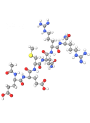
Acetyl Hexapeptide-8 (eq Argireline)
Pal-GHK, Pal-GQPR (eq Matrixyl 3000)
Vitamin C E Ferulic
Vitamin C (L-ascorbic acid) (Ultra-Fine)
Vitamin C (L-ascorbic acid) (Fine)
Ethoxydiglycol (e.q. Transcutol)
Laureth-23
Disodium EDTA
Glutathione (L-Glutathione) (Extrasol)

Satin Cream Maker™
Butylene Glycol

DMAE (SkinTight MD™) Liquid
Pure-Adenosine™