Formulation Questions: Emulsifiers, Stabilizers, and Sunscreen
Question
The user asks about the compatibility and usage percentages of Water-in-Oil emulsifiers with Oil-in-Water cream makers (Satin Cream Maker, Milk Lotion Maker) in sunscreen or general cream formulas containing electrolytes. They also inquire if Magnesium Sulfate is still necessary for W/O stability when other emulsifiers are used, and the recommended percentage of DHHB to add to a specific SPF Protect Ultra II sunscreen formula to enhance UVA protection.
Answer
Formulation Guidance for Water-in-Oil, Cream Makers, Magnesium Sulfate, and Sunscreen
Here is guidance regarding your formulation questions:
1. Combining Water-in-Oil Emulsifiers with Satin Cream Maker and Milk Lotion Maker
- Water-in-Oil EZ™ is designed to create water-in-oil (W/O) emulsions, where water droplets are dispersed within an oil phase. These emulsions are typically more water-resistant and provide a different skin feel.
- Satin Cream Maker™ and Milk Lotion Maker™ are designed to create oil-in-water (O/W) emulsions, where oil droplets are dispersed within a water phase. These are the most common type of creams and lotions, generally feeling lighter and less greasy.
These two types of emulsifiers create fundamentally different emulsion systems and are generally not used together as primary emulsifiers in the same formula. The choice depends on the desired final product type (W/O or O/W).
- If you are making a Water-in-Oil formula using an emulsifier like Water-in-Oil EZ™, you would not typically use Satin Cream Maker™ or Milk Lotion Maker™ in that same formula to create the W/O structure.
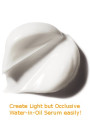
- If you are making a standard Oil-in-Water cream or lotion, you would use O/W emulsifiers like Satin Cream Maker™ or Milk Lotion Maker™. Satin Cream Maker™ is suitable for O/W formulas with up to 25% oil and is electrolyte resistant, working without heat. Milk Lotion Maker™ can handle higher oil percentages (up to 40%) but requires heat and is not electrolyte resistant.
Therefore, you would choose the appropriate emulsifier(s) based on whether you want a W/O or O/W system, rather than using them all together.
2. Necessity of Magnesium Sulfate when using other Emulsifiers
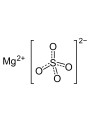
Magnesium Sulfate is specifically recommended as a stabilizer for Water-in-Oil emulsions (like those made with Water-in-Oil EZ™ or Water-in-Oil Max™) at a typical usage rate of 1%. It helps improve the stability and reduce the chance of separation in W/O systems.
Magnesium Sulfate is not suitable for use in standard Oil-in-Water emulsions (made with emulsifiers like Satin Cream Maker™ or Milk Lotion Maker™). In fact, adding electrolytes like Magnesium Sulfate can destabilize many O/W emulsions, although Satin Cream Maker™ is noted as being electrolyte resistant.
So, if you are making a Water-in-Oil emulsion, adding 1% Magnesium Sulfate is recommended for stability. If you are making an Oil-in-Water emulsion, you should not add Magnesium Sulfate.
3. Adding DHHB to the SPF Protect Ultra II Sunscreen Formula
The SPF Protect Ultra™ II blend already contains DHHB (Diethylamino Hydroxybenzoyl Hexyl Benzoate) as one of its components. Adding additional pure DHHB to the formula will increase the total concentration of DHHB, primarily boosting the UVA protection (PA value).
The maximum allowed concentration of DHHB in cosmetic formulas in Thailand is 10%. To achieve higher UVA protection levels, such as PA++++, a total DHHB concentration above 7.5% is generally needed.
Your sample formula uses 15% SPF Protect Ultra™ II, which provides PA++. To increase the PA rating, you can add additional DHHB. You can add DHHB at a level of 2-5% to significantly boost the UVA protection, while staying within the 10% maximum limit for total DHHB in the formula. You would need to reduce the percentage of water or other non-essential ingredients to accommodate the added DHHB.
Remember that DHHB should be dissolved in the oil phase of your formula using heat (around 80°C) before proceeding with the emulsification process as described in the SPF Protect Ultra™ II sample formula steps.
Related Products Mentioned

Satin Cream Maker™
Milk Lotion Maker™

SPF Protect Ultra™ II