Formulation Questions on Oily Skin, Peptide Concentration, and W/O SPF Base
Question
Question 1: For oily skin, when using Powder Cream and Matte Silica to improve skin feel for various oil-soluble ingredients and oils, such as Activated Resorcinol (4-butyl Resorcinol), MSH White, Kojic Acid Dipalmitate, Sym-White (Phenylethyl Resorcinol), as well as PE-1 Aqua or dissolving in LipidSoft Lite:
Will the efficacy of Whitening and penetration enhancer properties be reduced due to the oil absorption by the emollients?
Is it still necessary to use these for a dry, non-sticky, and non-greasy skin feel?
Question 2: There is consistent information from various sources (or copied) stating that Cream de La Mer contains Argireline 15% and Matrixyl 3000 10%, exceeding the manufacturer's recommended percentage (I am unsure of the US FDA percentage limit).
If these percentages are actually used, does it mean they provide increased efficacy, or is it for ingredient stability during transportation and storage until the consumer uses it without constant refrigeration?
Alternatively, do the ingredients used by La Mer come from different manufacturers with different concentrations, or are they modified to integrate more easily into the formula, thus requiring a higher quantity?
Many brands sold in the US also use a combination of these three peptides: Argireline, Matrixyl 3000, and Pep-Coll, at percentages that are claimed to be effective, not just for marketing.
Regarding the previous response from your team (C7) stating that combining Matrixyl 3000 and Pep-Coll is not necessary as they have similar mechanisms and do not increase anti-wrinkle efficacy:
Could this be a marketing strategy to increase the price for consumers who want high-quality products with multiple key ingredients at higher percentages, especially for newer brands aiming for value?
Or have they found that these three peptides have different molecular bond structures, and despite Matrixyl 3000 and Pep-Coll having similar mechanisms, they can work synergistically for better results? Given the significantly higher cost, no one would add them unless they truly work together. This might be a company secret, similar to US brands using Caffeine in anti-wrinkle products without research or consumer feedback confirming its efficacy. I would like to ask if there is any updated research information available?
Personally, I use all three at full percentage and add Retinol, as peptides were created as an alternative to Retinol, providing good initial results but ultimately equaling Retinol's effect without its drawbacks. So, what is the maximum percentage that can be used?
Question 3: Can Water-in-Oil EZ be used to produce a cream base for oily skin with added SPF protection?
Specifically, can Water-in-Oil EZ be mixed with Isododecane instead of oil, given that the product description states it is suitable for dry skin or skin in cold and dry climates?
Thank you very much.
Answer
Formulation Questions Answered
Here are the answers to your formulation questions:
1. Impact of Powders on Oil-Soluble Actives and Penetration Enhancers
Using oil-absorbing powders like Powder Cream and Matte Silica to improve the skin feel of a formulation for oily skin can potentially impact the efficacy of oil-soluble active ingredients (such as Activated Resorcinol, MSH White, Kojic Acid Dipalmitate, and Sym-White) and penetration enhancers (like PE-1 Aqua or LipidSoft Lite used as a solvent).
These powders work by absorbing the oil phase of the formulation, which is where your oil-soluble actives and penetration enhancers are dissolved. When the oil vehicle is absorbed by the powder, it can make the active ingredients less available to penetrate the skin, potentially reducing their effectiveness. The function of a penetration enhancer, which relies on the vehicle to carry the actives into the skin, may also be diminished.
There is a trade-off between achieving a dry, non-greasy skin feel and ensuring optimal delivery of oil-soluble actives. To minimize the impact on efficacy while still improving skin feel, consider:
- Using the lowest effective concentration of oil-absorbing powders.
- Exploring different types of powders. Some treated silicas, like MatteSilica S (Dimethicone coated), might offer a softer feel, although they still absorb oil. UltraBlur Silica is noted as less oil absorbent, though its primary function is blurring.
- Optimizing the formulation technique to ensure actives are well-dispersed before the powders are incorporated.
2. High Peptide Concentrations in Commercial Products
The observation that some commercial products, like Cream de La Mer and certain US brands, appear to use Argireline, Matrixyl 3000, and Pep-Coll at concentrations exceeding the typical recommended usage rates (e.g., 15% Argireline, 10% Matrixyl 3000) can be attributed to several factors:
- Perceived Increased Efficacy: While raw material suppliers provide recommended usage rates based on their studies, some brands may believe that higher concentrations lead to greater or faster results, even if extensive clinical data at those specific high levels is not publicly available or the increase in efficacy is not linear.
- Marketing Strategy: High percentages of popular active ingredients can be a significant marketing point, appealing to consumers who associate higher concentrations with greater potency or value.
- Complementary Mechanisms: While Matrixyl 3000 and Pep-Coll have similar mechanisms of action (stimulating collagen synthesis), combining peptides with different functions, such as Argireline (which targets muscle contractions) with collagen stimulators, can be a strategy to address multiple aspects of wrinkle formation. Combining with other potent anti-aging ingredients like Retinol is also a common approach, although it's important to consider potential irritation.
- Formulation and Stability: In some complex formulations, higher initial concentrations might be used to ensure a certain level of active remains effective over the product's shelf life, although this is less likely the primary driver for such significantly high percentages.
It's important to note that in the US, the FDA does not set strict percentage limits for most cosmetic ingredients, unlike pharmaceuticals. The responsibility lies with the manufacturer to ensure the safety and proper labeling of their products. Exceeding a supplier's recommended usage rate does not automatically guarantee a proportional increase in efficacy and may increase the risk of skin irritation or sensitivity.
Your previous information regarding Matrixyl 3000 and Pep-Coll having similar mechanisms is generally correct; both are signal peptides that promote collagen production. Combining them might not provide a strictly additive benefit in terms of collagen stimulation compared to using one at its optimal concentration, but formulators might include both for other perceived benefits or marketing.
3. Water-in-Oil EZ Base for Oily Skin with SPF
Water-in-Oil EZ is an emulsifier designed to create water-in-oil (W/O) emulsions. While you can use a lightweight emollient like Isododecane as the oil phase with Water-in-Oil EZ, a W/O emulsion base is generally less suitable for oily skin compared to an oil-in-water (O/W) emulsion.
Here's why:
- Skin Feel: W/O emulsions have an external oil phase, which tends to feel more occlusive, heavier, and potentially greasier on the skin than O/W emulsions, where the external phase is water. This is why W/O emulsions are often recommended for dry skin or use in dry/cold climates, as they provide a good barrier to prevent moisture loss.
- Suitability for SPF: Water-in-oil emulsions are indeed suitable for sunscreen formulations because their water-repellent nature provides good durability and water resistance, which are crucial for SPF products.
While using Isododecane will result in a lighter oil phase compared to heavier oils, the overall feel of a W/Oil emulsion may still be too heavy for someone with oily skin seeking a non-greasy product. If a lightweight, non-greasy feel is the priority for oily skin, an oil-in-water emulsion base is typically a better choice, even for an SPF product. However, if durability and water resistance are the primary goals, a W/O emulsion with a light oil phase like Isododecane using Water-in-Oil EZ can be effective for the SPF function, but the skin feel might not be ideal for all oily skin types.
Related Products Mentioned
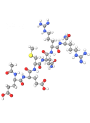
Acetyl Hexapeptide-8 (eq Argireline)
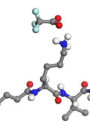
Pep®-Coll (Palmitoyl tripeptide-5)

Pal-GHK, Pal-GQPR (eq Matrixyl 3000)
Kojic Acid Dipalmitate
Isododecane (Germany)
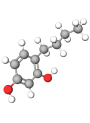
MatteSilica 5™ (5 Micron)
MSH White™ (Undecylenoyl phenylalanine)
Isododecane (Ultra Lite)
Retinol (100% Pure Powder)
Retinol (50% liquid)
Isododecane Gel (Thixotropic)