Formulation Questions: Solubility, Oil Phase Mixing, and Addition Order
Question
I have some questions about formulation. 1. Is 5% Butylene Glycol sufficient to dissolve Licorice (90%) 0.05%, Licorice (A 20%) 0.5%, and Artocarpus Lakoocha Wood Extract 0.5% until clear? If not, what percentage of Butylene Glycol is needed for complete dissolution? 2. If the formula contains an oil phase of approximately 12.5% consisting of Squalane 6%, MSH White 2%, Phytosphingosine 1.5%, Bakuchiol 1.5%, German Chamomile Extract 1%, and Sym-White 0.5%, is my mixing procedure correct? My procedure is: mix 2.1+2.2+2.3, heat briefly not exceeding 60 degrees Celsius until fully dissolved as the oil phase, then mix with the water phase containing Cream Maker until a cream texture is obtained, then add 2.4+2.5+2.6 directly into the cream in the final step and mix until combined. If my procedure is incorrect, please provide the correct steps. 3. Given that the formula contains a water/water-soluble phase of 81.45%, an oil/oil-soluble phase of 12.5%, and a glycol-soluble phase of 6.05% (from question 1), at which step should the glycol-dissolved ingredients from question 1 be added to the formula?
Answer
Formulation Questions
Here are the answers to your formulation questions based on the product information:
1. Solubility in Butylene Glycol
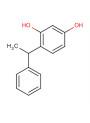
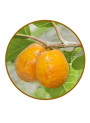
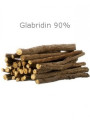
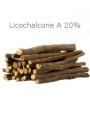
Yes, 5% Butylene Glycol should be sufficient to dissolve Licorice (90% Glabridin) 0.05%, Licorice (A 20% Licochalcone A) 0.5%, and Artocarpus Lakoocha Wood Extract (Oxyresveratrol 98%) 0.5% until clear.
- For Licorice (90% Glabridin), the product description states that you need at least 10 times the amount of Glabridin in Butylene Glycol or Ethanol for dissolution. Since you are using 0.05% Glabridin, you would need at least 0.5% Butylene Glycol (0.05% * 10 = 0.5%). Your 5% Butylene Glycol is well above this minimum.
- Licorice (A 20% Licochalcone A) and Artocarpus Lakoocha Wood Extract (Oxyresveratrol 98%) are also soluble in glycols. While specific ratios aren't provided, 5% Butylene Glycol is a common and effective solvent concentration that should be sufficient to dissolve these amounts (0.5% each). You can use gentle heat (not exceeding 60°C for Artocarpus Lakoocha Wood Extract) to aid dissolution if needed.
2. Oil Phase Mixing Process
Your proposed method for the oil phase needs a slight adjustment regarding the heating temperature for MSH White.
- MSH White requires heating to 80°C to dissolve completely in the oil phase. Your proposed temperature below 60°C is not sufficient for MSH White.
- Phytosphingosine can also withstand heat up to 80°C. Squalane should generally avoid heat, but brief heating to 80°C to dissolve the powders is acceptable.
The correct procedure for your oil phase (Squalane 6%, MSH White 2%, Phytosphingosine 1.5%) is to mix them together and heat the mixture briefly up to 80°C until MSH White and Phytosphingosine are fully dissolved.
Adding Bakuchiol, German Chamomile Extract, and Sym-White directly to the finished cream in the final step is correct according to their product descriptions, as they are oil-soluble and should be added to the emulsion. For Sym-White, you can use heat not exceeding 50°C in the final step if needed to help it melt into the cream faster.
3. Addition of Glycol-Dissolved Ingredients
The solution of Licorice (90% Glabridin), Licorice (A 20% Licochalcone A), and Artocarpus Lakoocha Wood Extract (Oxyresveratrol 98%) in Butylene Glycol should be added to the cream in the final step.
The product description for Licorice (90% Glabridin) specifically recommends adding it gradually to the last part of the formula after dissolving in glycol. The other two extracts also indicate adding to the formula after dissolving in glycol.
Therefore, after you have formed your cream emulsion and it has cooled down, you should add the glycol solution containing these three ingredients, along with Bakuchiol, German Chamomile Extract, and Sym-White, mixing until everything is uniformly dispersed.
Related Products Mentioned
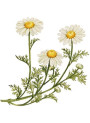
Natural Bisabolol (Brazil Chamomile)
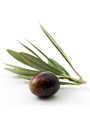
Squalane (Olive)
Butylene Glycol
MSH White™ (Undecylenoyl phenylalanine)