Formulation Review and Adjustment for Body Lotion and Face Serum
Question
I have two formulations and would like to confirm the mixing steps and ask for suggestions on adjusting the ingredient percentages.
Body Lotion Formulation:
- Water 79%
- Vitamin B3 (Niacinamide) 5%
- N-Acetyl-D glucosamine 3%
- Safflower Seed Oil 5%
- Grape Seed Oil 5%
- Dimethicone 2%
- Satin Mousse (Satin Cream Maker) 1%
- Mixing steps: Combine ingredients 1, 2, and 3 (Phase A). Combine ingredients 4, 5, and 6 (Phase B). Mix Satin Mousse into Phase A. Then combine Phase A and Phase B. Is this method correct?
- Should color, fragrance, and preservative be added at the end as usual?
- Should any ingredients be adjusted (reduced or increased)?
Face Serum Formulation:
- Water 67.5%
- Sea Kelp Extract 5%
- Licorice Extract 0.5%
- Vitamin B3 (Niacinamide) 3%
- N-Acetyl-D glucosamine 2%
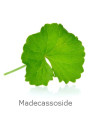
- Centella Asiatica Extract 1%
- Dimethicone 20%
- Satin Mousse (Satin Cream Maker) 1%
- Mixing steps: Combine ingredients 1, 2, 3, 4, and 5 (Phase A). Combine ingredients 6 and 7 (Phase B). Mix Satin Mousse into Phase A. Then combine Phase A and Phase B. Is this method correct?
- Should preservative be added at the end?
- Should any ingredients be adjusted (reduced or increased)?
Answer
Formulation Feedback
Body Lotion
The steps you outlined for the body lotion are correct, as confirmed by the staff. Adding color, fragrance, and preservative at the end is also the standard procedure.
Regarding the ingredient percentages:
- Vitamin B3 (Niacinamide) (5%) and N-Acetyl-D glucosamine (3%): These are excellent ingredients for skin brightening and improving skin barrier function. Your percentages are within the effective ranges. The combination of Niacinamide and N-Acetyl Glucosamine is known to work synergistically for whitening and reducing dark spots. While the product description for N-Acetyl Glucosamine suggests a 4% + 2-4% Niacinamide pairing for optimal synergy, your current percentages (5% Niacinamide + 3% N-Acetyl Glucosamine) are still effective. You could consider slightly adjusting them to 4% of each if you want to align more closely with the suggested synergistic ratio, but 5% Niacinamide is also highly beneficial on its own.
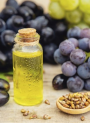
- Safflower Seed Oil (5%) and Grape Seed Oil (5%): These are good moisturizing oils. The percentages are reasonable for a body lotion and will contribute to skin softness and moisture retention.
- Dimethicone (2%): This provides a smooth feel. 2% is a suitable amount for this purpose.
- Satin Mousse (Satin Cream Maker) (1%): This emulsifier/thickener at 1% should be sufficient to create a stable lotion with your oil phase (Safflower Oil, Grape Seed Oil, Dimethicone totaling 12%).
Overall, the body lotion formulation looks well-balanced with appropriate percentages for the chosen ingredients.
Face Serum
The steps for the face serum are also correct, as confirmed by the staff. Adding preservative at the end is standard.
Regarding the ingredient percentages:
- Sea Kelp Extract (5%): This extract is great for moisturizing and nourishing the skin. The recommended usage rate for skin care is typically 1-3%. Using 5% is on the higher side and, as noted in the product description, could potentially introduce a fishy odor. You might consider reducing this to 1-3% to minimize odor risk while still gaining the benefits.
- Licorice Extract (0.5%): This is effective for reducing inflammation, redness, and oiliness. The recommended usage rate for these benefits is 0.5-1.0%. 0.5% is effective, but increasing it to 1% could potentially enhance these effects.
- Vitamin B3 (Niacinamide) (3%) and N-Acetyl-D glucosamine (2%): Similar to the body lotion, these work well together for brightening and improving skin texture. The product description for N-Acetyl Glucosamine suggests a synergistic pairing of 4% N-Acetyl Glucosamine with 2-4% Niacinamide. Your current percentages (3% Niacinamide + 2% N-Acetyl Glucosamine) are lower than this suggested optimal ratio for synergy. You could consider increasing one or both, for example, 4% N-Acetyl Glucosamine with 3-4% Niacinamide, to potentially boost the whitening and anti-aging effects.
- Centella Asiatica Extract (1%): This is excellent for collagen stimulation, reducing wrinkles, and calming redness. 1% is the recommended usage rate and is appropriate.
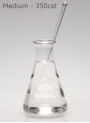
- Dimethicone (20%): The recommended usage rate for Dimethicone is typically 0.5-10%. Using 20% is significantly higher than usually recommended for this type of silicone oil in a serum. This high percentage might result in a heavy or overly "slippery" feel on the skin and could potentially affect the overall texture and absorption of the serum. It is highly recommended to reduce the Dimethicone percentage, perhaps to 5-10% or even lower, depending on the desired light feel for a serum.
- Satin Mousse (Satin Cream Maker) (1%): At 1%, this emulsifier can handle the oil/silicone phase. However, the high percentage of Dimethicone is the main factor to reconsider for the serum's feel.
In summary, for the face serum, you might consider reducing the Sea Kelp Extract slightly to avoid potential odor, potentially increasing Licorice Extract, and adjusting the Niacinamide and N-Acetyl Glucosamine percentages for better synergy. The most significant adjustment to consider is reducing the Dimethicone percentage to achieve a more typical serum texture and feel.
Related Products Mentioned
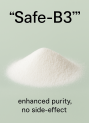
Safe-B3™ (Vitamin B3, Niacinamide)

Sea Kelp Extract
GlucoBright™ (Acetyl Glucosamine)
Dimethicone (Medium/350, Low-Odor)