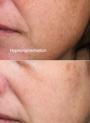
Formulation Review: Cream with CysWhite and Vitamin C Derivatives - pH Compatibility Issue
Question
Can this cream formulation containing CysWhite (5%), Ascorbyl Glucoside (3%), Ethyl Ascorbic Acid (2%), Odor Kill (1%), Mild Preserved Eco (1%), ActiveProtec OX (1%), Soft Cream Maker (5%), Almond Oil (5%), and Water (77%) be successfully mixed and formulated?
Answer
Formulation Review
Based on the provided ingredients and percentages, the proposed formula has significant compatibility issues, primarily concerning the pH requirements of the Vitamin C derivatives.
- Ascorbyl Glucoside (AA-2G) requires a pH range of 6.5-6.8 for optimal stability.
- Ethyl Ascorbic Acid requires a pH range of 3.5-6.0 for optimal stability.
These two required pH ranges are mutually exclusive. It is not possible to create a single formula where both of these ingredients are stable and effective simultaneously.
Furthermore:
- The description for Ethyl Ascorbic Acid recommends including Disodium EDTA in water-based formulas for enhanced stability, which is missing from your ingredient list.
- CysWhite (Cysteamine HCL), although included with recommended additives like Odor-Kill and ActiveProtec OX to help with odor and stability in water, is typically used as a short-contact treatment (applied for 15-30 minutes and then washed off) rather than in a leave-on cream formulation.
Conclusion:
Due to the conflicting pH requirements of Ascorbyl Glucoside and Ethyl Ascorbic Acid, this formula cannot be successfully mixed to ensure the stability and efficacy of both Vitamin C derivatives. Additionally, the typical application method for CysWhite as a wash-off product should be considered.
You may need to revise the formula by selecting only one of the Vitamin C derivatives or by creating separate formulations for ingredients with incompatible pH requirements.
Related Products Mentioned
Soft Cream Maker™
Mild Preserved Eco™ (Preservative-Free)

Odor-Kill™
ActiveProtec™ OX