Formulation Review for Light Serum/Lotion
Question
How to formulate a light, non-greasy serum/lotion containing Microneedle Sponge, various peptides, extracts, and oils, specifically asking for advice on emulsifier choice, ingredient compatibility (especially regarding pH sensitivity), and the correct mixing procedure.
Answer
Formulation Review
Here is a review of your formulation based on your questions:
1. Light Lotion Maker vs. Silky Serum Base Plus for Texture
For a light, non-greasy texture suitable for nighttime, both Light Lotion Maker and Silky Serum Base Plus are designed to provide a light feel. However, given your formula contains 20% oil, Light Lotion Maker is likely more suitable. Light Lotion Maker is an emulsifier specifically designed to create light lotions and can handle oil percentages up to 40%, which accommodates the 20% oil in your formula. Silky Serum Base Plus, while creating a very light, quickly absorbing serum texture, is typically used in formulas where the combined oil and base percentage does not exceed 30%. Using it with 20% oil might exceed its recommended capacity for stability in this specific formulation structure. Therefore, Light Lotion Maker is the more appropriate choice for this formula composition to achieve a light emulsion texture.
2. Ingredient Compatibility
There is a significant compatibility issue regarding the pH of your formula. Wrinkle-Fill (Acetyl-Tyrosine) is acidic, and at 2% concentration, it will likely lower the pH of the water phase to a range (pH 2-3) that is incompatible with several other key ingredients:
- Copper Peptide (GHK-Cu): Requires a pH range of 4.5-7.4 for stability and effectiveness. A pH below 4.5 will cause it to degrade.
- Pure-Adenosine: Suitable for pH 3.5-6.5. A pH below 3.5 might affect its stability.
- Repair Activator (Bifida Ferment Lysate): Has a pH range of 4-5.5. A pH below 4 might compromise its activity.
The low pH from Wrinkle-Fill will negatively impact the stability and efficacy of Copper Peptide, Pure-Adenosine, and Repair Activator. You will need to adjust the final pH of the formula to be within a range that is compatible with all sensitive ingredients, ideally between pH 4.5 and 5.5, after all ingredients have been added. This may require using a pH adjuster.
Other ingredients like Hi-Lupeol, Avocado Oil, Wakame Extract, Copper Peptide, Repair Activator, and Microneedle Sponge are sensitive to heat and should be added at lower temperatures.
3. Mixing Method
Your proposed mixing method is generally correct in separating oil and water phases and adding the Microneedle Sponge last. However, it needs refinement to account for heat-sensitive ingredients and those that need to be added to the final emulsion:
Revised Mixing Method:
- Phase A (Oil Phase): Combine Avocado Oil, Hi-Lupeol, and Light Lotion Maker. Mix well without heat.
- Phase B (Water Phase - Initial): Combine Water, Wrinkle-Fill, VersaMoist, and Mild Preserved Eco. Stir until dissolved/uniform.
- Emulsification: Slowly add Phase A to Phase B while stirring or blending continuously to form the emulsion. Continue stirring until the emulsion is uniform and has cooled down to below 40°C.
- Add Heat-Sensitive & Dispersible Ingredients: Once the emulsion is below 40°C, add the following ingredients one by one, ensuring each is fully incorporated before adding the next:
- Wakame Extract
- Copper Peptide
- Pure-Adenosine (Disperse thoroughly in the emulsion)
- Repair Activator (Shake well before adding and mix in)
- Microneedle Sponge (Disperse thoroughly in the emulsion, avoid using a homogenizer)
- Final Adjustment: Check and adjust the final pH of the formula to be between 4.5 and 5.5 to ensure the stability and effectiveness of all active ingredients, especially Copper Peptide, Pure-Adenosine, and Repair Activator.
By adjusting the pH and refining the mixing method to add heat-sensitive and dispersible ingredients at the end, you can improve the stability and performance of your formulation.
Related Products Mentioned
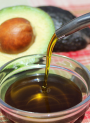
Avocado Oil (Refined)
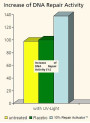

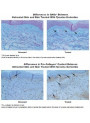
Wrinkle-Fill™ (Acetyl-Tyrosine)
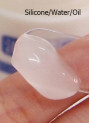
Silky Serum Base Plus (Face/Eye, Oil)
Mild Preserved Eco™ (Preservative-Free)

Wakame Extract (Brown Sea Weed)
Pure-Adenosine™
Light Lotion Maker

VersaMoist™