Formulation Review & Ingredient Issues for Sunscreen, Serum, Scar Gel (Post-Laser)
Question
I am developing several cosmetic formulas and have some questions regarding ingredient solubility, mixing procedures, and compatibility, especially for post-laser skin care.
Ingredient Solubility & Mixing:
- I have Centella Asiatica Extract (Madecassoside 7.7%) (ID 294). Does it dissolve in water or oil, or does it disperse? How should I incorporate it into a formula, especially if it doesn't contain glycols?
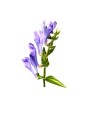
- I also have BaicaVital™ (Scutellaria Baicalensis Extract) (ID 1086) and Hi-EGCG™ (Green Tea Extract) (ID 729). I've had difficulty dissolving them, and they tend to clump. What is the best way to dissolve these, and can they be mixed in oil? I read somewhere that Hi-EGCG might be effective in oil.
Mixing Equipment:
- Can I use a milk frother or an electric whisk (like those used for baking) to help stir or blend ingredients in my formulas, particularly with gel makers like Pro Polymer (ID 234)?
Formula Review & Compatibility:
- Could you please review my proposed formulas and provide feedback?
- Sunscreen Formula: I'd like to create a sunscreen. What would be a recommended formula to achieve a good SPF/PA, perhaps with a moisturizing texture like Water-in-Oil?
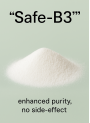
- Serum Formula: I have a serum formula I'm working on. Can it be mixed? Are there recommended concentrations for ingredients like Hi-EGCG™ (ID 729) and Calendula Extract (ID 123)? Are there other ingredients you would suggest adding for post-laser skin recovery and oil control, such as Safe-B3™ (ID 74) or Vitamin B5 (ID 111)?
- Scar Treatment Gel Formula (for post-laser scars): I have a formula for a scar treatment gel. Can this formula be mixed? I included Papaya Enzyme (ID 1036) - is this suitable for use immediately after laser treatment? Can Copper Peptide (GHK-Cu) (ID 272) be added to this formula, and is it effective for post-laser scars?
Ingredient Sensitivity:
- I used 5% Hi-EGCG™ (ID 729) in a previous formula and experienced stinging on my face. Why might this happen, and should I avoid using it on my face?
Answer
Okay, I understand. It can be confusing regarding the solubility of Centella Asiatica Extract. Based on the information provided by the staff, here is a summary and answers to your questions:
Regarding Ingredient Solubility:
- Centella Asiatica Extract (Madecassoside 7.7%) (ID 294): This extract does not dissolve directly in water or oil. Instead, it disperses within the formula. If your formula contains glycols (e.g., Propylene Glycol ID 138, Butylene Glycol ID 320), you can disperse it in the glycol first. If not, you can add it in the final step and disperse it using stirring or blending within the formula base (which needs a dispersing agent or thickener like Pro Polymer (ID 234), which you used in your gel formula). Mixing it directly into oil may lead to separation over time.
- BaicaVital™ (Scutellaria Baicalensis Extract) (ID 1086) and Hi-EGCG™ (Green Tea Extract) (ID 729): Both of these extracts are water-soluble. The difficulty dissolving and clumping you experienced might be because the ingredients were too cold. It is recommended to leave them at room temperature for about 1-2 hours before mixing or use slightly warm water (around 50°C) for dissolving, which will make it much easier. Neither of these extracts can be mixed in oil. (Regarding the effectiveness of Hi-EGCG in oil you read about, it might be information about a different type of green tea extract or a misunderstanding.)
Regarding Mixing Equipment:
- You can definitely use a milk frother or an electric whisk for baking to help stir or blend the ingredients. These tools will help the ingredients mix better and reduce clumping, especially with gel makers like Pro Polymer (ID 234).
Regarding Formula Review:
The staff has provided recommendations for the formulas you proposed. Here is a summary:
Sunscreen Formula: The staff recommended a revised sunscreen formula to achieve a higher SPF and PA (around SPF40, PA+++) with a Water-in-Oil texture, which should be moisturizing. The recommended formula is:
- Water-in-Oil EZ (ID 726) 3%
- Titanium Dioxide 15nm Liquid (ID 724) 20%
- Zinc Oxide 200nm EasyDisperse™ (ID 248) 10%
- Mild Preserved Eco™ (ID 1001) 1.0%
- Water (ID 838) remaining part
- Note: This formula requires a blender to mix properly; manual stirring is not sufficient.
Serum Formula: Your proposed serum formula can be mixed, but it requires a blender. The staff recommended reducing the concentration of Hi-EGCG™ (ID 729) to no more than 2% and Calendula Extract (ID 123) to 1.0-1.5% as this is sufficient. They also recommended considering adding Safe-B3™ (ID 74) 5% and Vitamin B5 (ID 111) 2% to help with skin recovery after laser treatment and oil control.
Scar Treatment Gel Formula (for post-laser scars): Your proposed formula can be mixed. A crucial recommendation from the staff is to avoid using Papaya Enzyme (ID 1036) during the period immediately after laser treatment, as it is a skin exfoliant and can irritate sensitive skin. The other ingredients are compatible. Copper Peptide (GHK-Cu) (ID 272) can be added to this formula and will be most effective when used after procedures that stimulate skin repair, such as laser or Derma roller treatments.
Regarding Hi-EGCG™ causing stinging:
Based on your experience with stinging when using 5% Hi-EGCG™ (ID 729), the staff recommended avoiding its use in facial formulas altogether, as your skin might be sensitive to this ingredient. If you wish to use it, you could try a very low concentration or use it on other parts of your body that do not react. Consider alternative ingredients with similar benefits that do not cause irritation for your facial skin.
I hope this information is helpful. Please let me know if you have any further questions.
Related Products Mentioned
Pep®-Coll (Palmitoyl tripeptide-5)
Safe-B3™ (Vitamin B3, Niacinamide)

Calendula Extract (Water Soluble)
Propylene Glycol (USP)
Pro Polymer™ (Gel Maker)
Zinc Oxide 200nm EasyDisperse™

Butylene Glycol
Silky Serum Base (Face/Eye)
Titanium Dioxide 15nm Liquid (Gloss)
Hi-EGCG™ (Green Tea Extract)
Purified Water, TDS Limit 1PPM)
Mild Preserved Eco™ (Preservative-Free)