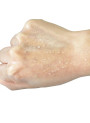
Formulation Techniques and Comparisons for Water Drop Emulsions
Question
How can I develop an Emulsion formula with a Water Drop effect?
- What are the specific techniques or mixing methods required when using single ingredients instead of ready-made mixtures?
- How much more complex and difficult is this manual approach compared to using ready-made ingredients? Please provide a detailed explanation.
- What are the specific advantages of using ready-made mixtures for this effect?
Answer
Developing a Water Drop (or Water Break) emulsion involves creating a specific type of Water-in-Oil (W/O) or Water-in-Silicone (W/Si) system. Technically, this is referred to as a Macro-emulsion, where the internal water droplets are large enough to "break" and become visible when mechanical force (rubbing) is applied to the skin.
1. Developing Water Drop without Ready-made Mixtures (Using Single Ingredients)
To create this effect from scratch, you must carefully balance the emulsifier, the oil/silicone phase, and the mixing technique.
A. Ingredient Selection:
- Primary Emulsifier: You need a specialized W/O or W/Si emulsifier. A common and effective choice is Water-in-Oil EZ™ (Cetyl PEG/PPG-10/1 Dimethicone), which can bind water into oil/silicone effectively.
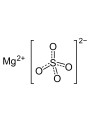
- Electrolytes (Stabilizers): In W/O systems, electrolytes are crucial for stability. You must include Magnesium Sulfate or Sodium Chloride at approximately 0.5-1.0% in the water phase.
- Phase Ratio: Typically, the water phase should be high (70-80%) to ensure that when the emulsion breaks, there is enough water to form visible droplets.
B. The Critical Mixing Technique:
- Water-into-Oil: You must slowly add the water phase into the oil/silicone phase (which contains the emulsifier) while stirring.
- Low Shear Force (Crucial): Unlike standard creams, you must not use a high-speed homogenizer. High shear creates tiny water droplets (Micro-emulsion) that are too stable to break on the skin. You should use a low-speed mixer (approx. 500-1,000 rpm) to maintain a Macro-emulsion structure.
2. Complexity and Challenges of the Manual Method
Developing it this way is significantly more difficult than using ready-made bases for several reasons:
- Stability vs. Breakability: It is a "fine line." If the emulsion is too stable, it won't drop water. If it's too unstable, it will separate in the bottle within days.
- Sensitivity to Mixing Speed: Even a slight increase in mixing time or speed can "over-emulsify" the formula, causing it to lose the water-drop effect entirely.
- Ingredient Sensitivity: Adding certain active ingredients or glycols (like Glycerin or Butylene Glycol) can easily destabilize the system if not perfectly balanced with the emulsifier.
3. Advantages of Using Ready-made Emulsifiers
Ready-made "Water Drop" emulsifiers like WaterBreaker™ (for silicone systems) or WaterDropper™ (for silicone-free/natural oil systems) offer several benefits:
- Ease of Formulation: These are pre-balanced mixtures of emulsifiers and stabilizers designed specifically to create the water-break effect.
- Consistent Results: They are less sensitive to variations in mixing speed, making it much easier to achieve the same "drop" size in every batch.
- Better Stability: They are engineered to remain stable in the packaging across various temperatures while still breaking easily upon skin contact.
- Time-Saving: They eliminate the extensive "trial and error" required to find the perfect ratio of single emulsifiers and electrolytes.
Recommendation:
If you are new to this texture or need a reliable production result, starting with WaterBreaker™ is highly recommended. If you wish to customize the feel and have the equipment to precisely control mixing speeds, using Water-in-Oil EZ™ provides more flexibility but requires more expertise.
Related Products Mentioned
Sodium Chloride (High Purity, 99.9%)