Formulation with Ectoin & Repair Activator: Compatibility and Penetration Enhancers
Question
In a formula containing Ectoin and Repair Activator, I have the following questions:
- Can I use Ectoin 2% & Repair Activator 10% together with Chelating Agent in the same formula?
- Can I use Laurocapram (Water Soluble) 2% as a penetration enhancer for Ectoin 2% and Repair Activator 10% in the formula, instead of DMI 3%? (I experienced severe sensitivity to the odor of DMI).
Answer
Formulation Questions: Ectoin, Repair Activator, Chelating Agent, and Penetration Enhancers
Here is information regarding your questions about formulating with Ectoin and Repair Activator:
1. Using Ectoin, Repair Activator, and Chelating Agent Together
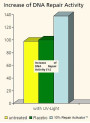
Yes, you can generally use Ectoin (2%) and Repair Activator (Bifida Ferment Lysate) (10%) together in a formula with a Chelating Agent.
- Ectoin is stable across a wide pH range (1-9) and is water-soluble.
- Repair Activator (Bifida Ferment Lysate) is also water-soluble and typically has a pH between 4-5.5, which is compatible with Ectoin's stability range.
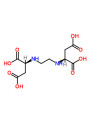
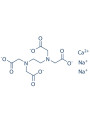
- Chelating Agents are commonly used in cosmetic formulations to bind metal ions, which can improve the stability and efficacy of sensitive ingredients. They are typically water-soluble and compatible with most water-based formulations.
Using a Chelating Agent in your formula can help protect the stability of both Ectoin and Repair Activator by preventing potential interactions with trace metal ions in the water or other ingredients.
2. Using Laurocapram (Water Soluble) Instead of DMI
Yes, you can use Laurocapram (Water Soluble) at 2% as a penetration enhancer for Ectoin (2%) and Repair Activator (10%) instead of Dimethyl Isosorbide (DMI) at 3%.
- Both Laurocapram (Water Soluble) and Dimethyl Isosorbide (DMI) are effective penetration enhancers for water-soluble ingredients like Ectoin and Repair Activator.
- Your proposed usage rate of 2% for Laurocapram is within its recommended range (1-3%).
- Laurocapram (Water Soluble) is described as having little to no odor, which addresses your sensitivity to the smell of DMI.
- When using Laurocapram, it's recommended to mix it into the water phase and avoid heat exceeding 60 degrees Celsius. DMI can withstand higher temperatures (up to 80 degrees Celsius), but both are typically added in the cool-down phase of a formulation.
Therefore, Laurocapram (Water Soluble) at 2% is a suitable alternative to DMI at 3% for enhancing the penetration of Ectoin and Repair Activator, especially given your preference for a less odorous ingredient.
Related Products Mentioned
Ectoine (Ectoin, from Bio-fermentation)
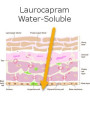
Laurocapram (Water Soluble)
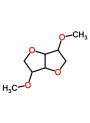
Dimethyl Isosorbide (DMI)
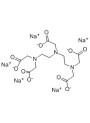
Pentasodium Pentetate (DTPA-5Na, 40%)