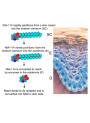
Gel and Cream Formulation with Actives: Feasibility, Mixing, and Adding Moisturizers
Question
I would like to create two cosmetic formulas, a gel and a cream, using the following ingredients. Could you please review the formulas for feasibility and provide guidance on the mixing procedure, especially regarding the order of adding ingredients like Zinc PCA? Additionally, I plan to make a similar formula for normal skin and would like to know if I can add Panthenol, Rice Vitamin (Inositol), and L-Carnitine, and how to incorporate them.
Gel Formula:
- B3 (Niacinamide) 4%
- NAG (Acetyl Glucosamine) 4%
- Zinc PCA 1%
- Beta Glucan 7%
- Pitera (Galactomyces Ferment Filtrate) 30%
- Phenoxyethanol SA 0.6%
- Pro Polymer (Acrylate Crosspolymer) 2%
- Rhamnose 3%
- DI Water (remaining proportion)
Cream Formula:
- Water Phase:
- B3 (Niacinamide) 4%
- NAG (Acetyl Glucosamine) 4%
- Zinc PCA 1%
- Beta Glucan 7%
- Pitera (Galactomyces Ferment Filtrate) 20%
- Phenoxyethanol SA 0.6%
- Rhamnose 3%
- Satin Cream Maker (Silky Cream Maker) 1%
- Oil Phase:
- Coenzyme Q10 Extra 1%
- MSH White Absorb 5%
- Pro-Niacin (Myristyl Nicotinate) 5%
Specific Questions:
- Are both formulas feasible to mix as listed?
- What is the correct mixing procedure for each formula, particularly noting any sensitive ingredients or specific addition orders (like Zinc PCA)?
- Can I use a magnetic bar and stirrer for mixing?
- For a formula targeting normal skin needing more moisture, can I add Panthenol, Rice Vitamin (Inositol), and L-Carnitine? How should these be added?
Answer
Formula Analysis
Overall, both of your formulas contain excellent ingredients targeting your desired properties: reducing oiliness and acne, providing hydration, anti-aging benefits, brightening, and strengthening the skin barrier. Ingredients like Niacinamide (Safe-B3™), Acetyl Glucosamine (GlucoBright™), Zinc PCA, Beta Glucan, Pitera (Galactomyces Ferment Filtrate), Rhamnose, Coenzyme Q10, MSH White™, and Myristyl Nicotinate (Max-B3™) are all well-suited for these goals.
However, there are a few points to consider regarding the concentration and mixing of certain ingredients, as noted in the staff reply and product descriptions.
Gel Formula
- Ingredients: Safe-B3™ (Niacinamide) 4%, GlucoBright™ (NAG) 4%, Zinc PCA 1%, Beta Glucan 7%, Pitera (Galactomyces Ferment Filtrate) 30%, Phenoxyethanol SA 0.6%, Pro Polymer™ 2%, Rhamnose 3%, DI Water.
- Analysis:
- The active ingredients are appropriate for your skin type and goals.
- As the staff mentioned, the concentration of Pro Polymer™ at 2% is likely too high and will result in a very thick, potentially pudding-like gel texture, which might feel sticky and not ideal for combination skin seeking a non-greasy feel. Reducing Pro Polymer™ to 1.0-1.3% should be sufficient to create a gel texture.
- The high concentration of Pitera (30%) is within the usage range but might contribute to a slightly greasy feel, as noted in its description.
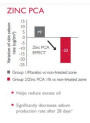
- The mixing order for Zinc PCA is crucial. It is an electrolyte and should be added gradually after the gel texture has formed with Pro Polymer™ to avoid interfering with gel formation.
- Ensure the final pH of the formula is in the optimal range for the ingredients, ideally between 4-6, which is suitable for Zinc PCA, Niacinamide, and Acetyl Glucosamine, and compatible with Phenoxyethanol SA (pH 2-6) and Rhamnose (pH 5-9).
- Expected Results: This formula should be effective for acne, oil control, brightening, anti-aging, and barrier support. However, the texture might be thicker and potentially stickier than desired due to the Pro Polymer™ and high Pitera concentration. Adjusting Pro Polymer™ is recommended for a better feel.
Cream Formula
- Ingredients: Water Phase: Safe-B3™ 4%, GlucoBright™ 4%, Zinc PCA 1%, Beta Glucan 7%, Pitera 20%, Phenoxyethanol SA 0.6%, Rhamnose 3%, Satin Cream Maker™ 1%. Oil Phase: Coenzyme Q10 (Oil-Soluble) 1%, MSH White™ 5%, Max-B3™ (Myristyl Nicotinate) 5%.
- Analysis:
- Again, the ingredient selection is good for your goals.
- The staff correctly pointed out that 1% Satin Cream Maker™ is likely insufficient to emulsify the oil phase, especially with the presence of Zinc PCA (an electrolyte) which can reduce the effectiveness of Satin Cream Maker™. Increasing Satin Cream Maker™ to at least 2.0% or adding 1% Pro Polymer™ alongside 1% Satin Cream Maker™ is necessary for stable emulsification.
- The usage rate for Coenzyme Q10 (1%) is higher than the recommended maximum of 0.5%. While it might not cause issues, it's worth noting.
- The usage rate for MSH White™ (5%) is significantly higher than the recommended maximum of 0.5-2%. Using such a high concentration might not provide additional benefits and could potentially cause formulation issues or irritation. It's generally recommended to stick within the suggested usage rates for optimal performance and safety.
- MSH White™ and Coenzyme Q10 are oil-soluble and need to be dissolved in the oil phase, requiring heating to around 80°C for MSH White™ and below 60°C for Coenzyme Q10. This needs to be factored into your mixing process. Max-B3™ is also oil-soluble and should be mixed in the oil phase.
- Ensure the final pH is in the optimal range (4-6) for the water-soluble actives, which is compatible with Satin Cream Maker™ (pH 3-12), Phenoxyethanol SA (pH 2-6), and Rhamnose (pH 5-9).
- Expected Results: This formula has the potential to address your goals, but the stability of the emulsion is questionable with only 1% Satin Cream Maker™. Adjusting the emulsifier system is necessary. The high concentrations of CoQ10 and MSH White™ might be unnecessary and could potentially cause issues.
Mixing Method
Yes, you can use a magnetic bar and a stirrer (like an overhead stirrer) for mixing these formulas.
- For the gel formula, a magnetic stirrer is generally sufficient for mixing the water phase and incorporating the Pro Polymer™. Remember to add the Pro Polymer™ gradually and stir slowly initially, avoiding high shear mixing (>2500 rpm) to prevent damaging the polymer structure. Add Zinc PCA last, slowly, while stirring.
- For the cream formula, a magnetic stirrer with a heating plate or an overhead stirrer with a heating bath would be suitable. You will need to heat the oil phase to dissolve the oil-soluble ingredients (MSH White™ and Coenzyme Q10) before combining it with the water phase. When combining the phases and emulsifying with Satin Cream Maker™, use moderate stirring and avoid excessive speed (>2500 rpm) to ensure a stable emulsion.
Adding Ingredients for Normal Skin
Yes, you can add Panthenol (PreB5™), Rice Vitamin (Inositol), and L-Carnitine to a formula for normal skin seeking more moisture.
- Panthenol (PreB5™): A good moisturizer and skin strengthener. It is water-soluble and can be added to the water phase at a recommended rate of 0.5-1.0%.
- Rice Vitamin (Inositol): Helps balance skin moisture and is suitable for both combination and dry skin. It is water-soluble and can be added to the water phase at a recommended rate of 1-3%.
- L-Carnitine: Provides moisture balance, accelerates cell turnover, and helps reduce oiliness. It is water-soluble and can be added to the water phase at a recommended rate of 1-5%. It is sensitive to moisture, so handle with care.
These ingredients are water-soluble and compatible with the pH ranges of the ingredients in your existing formulas. Adding them will increase the total percentage of water-soluble actives, which might require a slight adjustment (increase) in the amount of your gel maker (Pro Polymer™) or emulsifier (Satin Cream Maker™) to maintain the desired texture and stability.
Summary and Recommendations
- Your ingredient choices are appropriate for the desired benefits.
- For the gel formula, reduce the Pro Polymer™ concentration to achieve a less thick, non-sticky texture (aim for 1.0-1.3%). Add Zinc PCA after the gel has formed.
- For the cream formula, increase the Satin Cream Maker™ concentration to at least 2.0% or use a combination of Satin Cream Maker™ and Pro Polymer™ (e.g., 1% each) to ensure a stable emulsion. Reconsider the high concentrations of Coenzyme Q10 and MSH White™ and potentially reduce them to the recommended maximums for better formulation stability and cost-effectiveness. Ensure MSH White™ and CoQ10 are properly dissolved in the oil phase with heat before emulsification.
- Magnetic stirrers and overhead stirrers are suitable mixing equipment, but avoid high shear (>2500 rpm) when incorporating thickeners/emulsifiers.
- Panthenol, Rice Vitamin, and L-Carnitine can be added to formulas for normal skin needing more moisture; add them to the water phase. Be mindful that adding more water-soluble ingredients might necessitate adjusting the thickener/emulsifier concentration.
Related Products Mentioned
Safe-B3™ (Vitamin B3, Niacinamide)
GlucoBright™ (Acetyl Glucosamine)
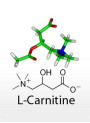
L-Carnitine (Carnitine)
Pro Polymer™ (Gel Maker)

Satin Cream Maker™
Zinc PCA
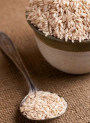
Rice Vitamin (Inositol, Vitamin B8)
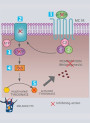
MSH White™ (Undecylenoyl phenylalanine)

Coenzyme Q10 (98%, Powder, Oil-Soluble)
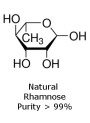
Rhamnose (rhamnose sugar)

Phenoxyethanol SA (eq. Optiphen Plus)