Gel-Cream Formulation Stability Issues with Multiple Actives and Preservative Booster
Question
I am developing a gel-cream formula with the following ingredients:
Carbopol Ultraz 21Triethanolamine- Actives:
Alpha Arbutin,Tranexamic Acid,B3,vit c (GO VC)
The problem I encountered is that after storing the cream for a while, it changed from white to light brown and developed a sour smell.
I then tried preparing the formula again by adding Active Protec ™ OX 1% to the water phase. I found that the cream became thinner, resulting in a lotion-like texture, and thickened when in a high-temperature room. However, the color of the cream did not change at all.
I would like to know what adjustments I need to make or if there are other anti-discoloration and anti-odor agents that would be suitable for this gel-cream formula. Please advise.
Answer
Based on the additional search for electrolyte-resistant gelling agents, the results included Carbomer U21 and Ethylcellulose. Carbomer U21 is what you are currently using and experiencing viscosity issues with electrolytes like Active Protec™ OX. Ethylcellulose may not provide the gel-cream texture you desire.
The problem you encountered with the cream becoming thinner after adding Active Protec™ OX is because Active Protec™ OX is an electrolyte, which interferes with the gel structure of Carbomer U21, causing a decrease in viscosity and a thinner texture.
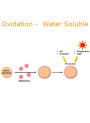
Regarding the issue of the cream changing to a light brown color and having a sour smell, this is likely due to the degradation (Oxidation) of the active ingredients, particularly Alpha Arbutin and the Vitamin C derivative (GO VC). Active Protec™ OX effectively helps prevent the color change issue, as you observed.
Furthermore, information from the Product Description of Ascorbyl Glucoside (AA-2G), a stable Vitamin C derivative, clearly states that it should not be used with Niacinamide (Safe-B3™) as it affects the stability of AA-2G. It is highly probable that GO VC, also a Vitamin C derivative, may have compatibility issues with Niacinamide as well. This incompatibility could be a significant factor contributing to the initial instability (discoloration and odor) of your formula before you even added Active Protec™ OX.
Recommendations for Formulation Improvement:
Address Active Ingredient Compatibility: The most critical issue is the potential incompatibility between Niacinamide and the Vitamin C derivative (GO VC). It is strongly recommended to separate these two ingredients by creating two separate gel-cream formulas instead:
- Formula 1: Contains Alpha Arbutin, Tranexamic Acid, and Vitamin C (GO VC) + Active Protec™ OX.
- Formula 2: Contains Niacinamide (Safe-B3™) + other compatible actives (Alpha Arbutin, Tranexamic Acid can be included if desired) + Active Protec™ OX.
Separating the formulas will make stability control significantly easier.
Adjust Gelling Agent System:
- For formulas containing Active Protec™ OX (whether it's the Vitamin C formula or the Niacinamide formula), since Active Protec™ OX is an electrolyte that affects Carbomer U21, you may need to consider using a different gelling agent that is more tolerant to electrolytes than Carbomer U21, or use it in combination with Carbomer U21 at an appropriate ratio.
- Carbomer U21 can still be used in formulas without a high amount of electrolytes, or if using Active Protec™ OX in a small amount and the reduced viscosity is acceptable.
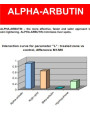
Control pH Level: Check and adjust the final pH of your formula to be within the optimal range for all active ingredients in that specific formula. Consider the optimal pH ranges for Alpha Arbutin (3.5-6.5), Tranexamic Acid (3-8), Safe-B3™ (3-8, best 4.0-7.0), and Active Protec™ OX (must be above 4). If you separate the formulas as recommended in point 1, controlling the pH will be easier.
Conclusion: The main issues likely stem from the incompatibility of Niacinamide and the Vitamin C derivative, as well as the electrolyte sensitivity of Carbomer U21 when used with Active Protec™ OX. Separating the incompatible active ingredients into two formulas and considering the use of more electrolyte-tolerant gelling agents will help resolve the stability problems in your formulation.
Related Products Mentioned
Alpha Arbutin (Switzerland)
Safe-B3™ (Vitamin B3, Niacinamide)
Triethanolamine 99%
Tranexamic Acid (Trans-White™)