Gel Formula, Radiant Skin Formulation, and AHA vs. BHA for Commercial Sale
Question
Based on a personal gel formula that showed positive results, I have questions regarding developing products for commercial sale:
1. How can a gel formula (intended for skin whitening, reducing melasma, dark spots, and acne scars) be adjusted for commercial sale, specifically concerning cost reduction while maintaining effectiveness?
2. What are the recommended guidelines and suggested active ingredients for formulating a product aimed at achieving radiant skin, reducing dark spots, and improving uneven skin tone?
3. For an exfoliating cleansing gel, which is more suitable: AHA or BHA? What factors should be considered when choosing between them?
Answer
Analysis of Your Gel Formula, Radiant Skin Formulation, and AHA vs. BHA
Thank you for your questions regarding your gel formula, developing a radiant skin product, and choosing between AHA and BHA for a cleansing gel. I also appreciate the insights shared by cosmeceutical7.
Regarding the gel formula you mentioned, I was unable to see the image you attached. To provide a specific analysis of its suitability for skin whitening, reducing melasma, dark spots, and acne scars, and to discuss cost-effectiveness for commercial sale, please provide the list of ingredients and their concentrations. Without this information, I can only offer general advice.
Adjusting Formulas for Cost Reduction for Commercial Sale
As cosmeceutical7 pointed out, manufacturing for sale involves significant cost considerations. Highly effective active ingredients are often expensive. Using them in high quantities, as might be done in a personal formula, can result in costs that are too high for competitive market pricing. Generally, cost reduction can be achieved by:
- Adjusting the concentration of active ingredients: Use a level that still provides satisfactory efficacy but reduces the quantity of expensive ingredients.
- Choosing alternative active ingredients: Find other ingredients that offer similar benefits but have lower costs, or use synergistic ingredients to achieve good results without needing very high concentrations of the primary ingredients.
- Considering base ingredients: Select gelling agents, moisturizers, or preservatives with appropriate costs.
Any modifications should undergo stability and efficacy testing to ensure the finished product maintains the desired quality and safety.
Guidelines for a Radiant Skin Product Formulation
For a product focused on achieving radiant skin, reducing dark spots, and improving uneven skin tone, you can consider using active ingredients that help inhibit melanin production and promote gentle exfoliation. Popular ingredients with information available include:
- Alpha Arbutin: A synthetic, water-soluble ingredient that works by reducing the activity of the enzyme Tyrosinase, a key enzyme in melanin production. It helps the skin look brighter and more even-toned and is considered safer than Hydroquinone. It is recommended for use at a concentration of 0.2-2% (2% recommended for skin brightening). It should be added in the final step at a temperature below 30°C, and the formula's pH should be controlled between 3.5-6.5 to prevent breakdown into Hydroquinone (do not use in formulas with pH higher than 8). (See product information for Alpha Arbutin (Switzerland))
- Niacinamide or Vitamin B3: A vitamin with various skin benefits. It helps reduce redness and dark spots from acne, evens out skin tone, strengthens the skin barrier, and helps control oiliness, making it suitable for acne-prone skin. It can be used at a concentration of 1-10% (5% recommended). Safe-B3™ is a high-purity type that can be used up to 10% with less likelihood of redness or irritation. It should be mixed in the water phase with a pH between 3-8 (best at 4.0-7.0). (See product information for Safe-B3™ (Vitamin B3, Niacinamide))
- Vitamin C Derivatives: Several stable forms are popular for skin brightening, antioxidant effects, and collagen stimulation, such as:
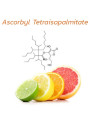
- Perfect-C™ (Ascorbyl Tetraisopalmitate): An oil-soluble vitamin C with high stability. It absorbs well into the skin, helps brighten the skin, reduces UV-induced DNA damage, and stimulates collagen. Use at a concentration of 1-10% (5% recommended). It should be mixed in the oil phase or during the cream making process, with the formula pH controlled at 5.0-5.5. Disodium EDTA 0.2% should be included in formulas containing water. (See product information for Perfect-C™ (Ascorbyl Tetraisopalmitate))
- Ethyl Ascorbic Acid: A water-soluble vitamin C derivative with high stability. It helps brighten the skin and reduce dark spots. Use at a concentration of 1-10% (3% recommended). It should be mixed in the water phase with the formula pH controlled at 3.5-6.0. Disodium EDTA 0.2% should be included in formulas containing water. (See product information for Ethyl Ascorbic Acid)
- Sodium Ascorbyl Phosphate (SAP): A water-soluble vitamin C with high stability. Suitable for dark spot reduction products. Use at a concentration of 0.5-10% (3% recommended). It should be mixed in the water phase with a pH between 7-9 and should include Disodium EDTA 0.05%. (See product information for Sodium Ascorbyl Phosphate (Vitamin C SAP))
- Kojic Acid: An ingredient that helps inhibit melanin production and is quite effective but unstable when dissolved in water. More stable derivatives or using it with stabilizers are now popular. Use at a concentration of 0.1-2.0%. (See product information for Kojic Acid)
Combining these ingredients in a suitable gel or serum formula for the target skin type will enhance their effectiveness in making the skin look brighter and reducing various spots and marks.
AHA or BHA in Exfoliating Cleansing Gel
The choice between AHA or BHA in a cleansing gel depends on the desired results and skin type.
- AHA (Alpha Hydroxy Acid): Such as Glycolic Acid and Lactic Acid, these are water-soluble acids that work by loosening the bonds between dead skin cells on the upper layer of the epidermis. They help make the skin smoother, more even-toned, and increase hydration. Suitable for dry to normal skin that needs improvement in texture and brightness. (See product information for Glycolic Acid, Lactic Acid)
- BHA (Beta Hydroxy Acid): Such as Salicylic Acid, this is an oil-soluble acid that can penetrate into pores. It helps to clean clogged pores, reduce inflammation, and reduce blackheads and whiteheads. It is especially suitable for oily, combination, and acne-prone skin with clogged pores. (See product information for Salicylic Acid)
For an exfoliating cleansing gel, if the focus is on cleaning pores and controlling oiliness, BHA would be a good choice. However, if the focus is on exfoliating the upper skin layer for smoother and brighter skin, AHA is suitable. You can choose one type or use both together at appropriate concentrations for a cleansing product, which generally uses lower concentrations than leave-on products due to the shorter contact time with the skin.
I hope this information is helpful for developing your product formulas. If you have further questions or need specific information about any ingredient, feel free to ask.
Related Products Mentioned
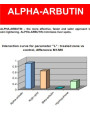
Alpha Arbutin (Switzerland)
Safe-B3™ (Vitamin B3, Niacinamide)