Gel Formulation for Melasma/Brightening: Ingredient Compatibility, Solubility, and pH
Question
I am developing a gel formulation for melasma and skin brightening with the following ingredients:
- Azelaic Acid (Liquid Azelaic™) 10%
- Tranexamic Acid (Trans-White™) 3%
- Safe-B3™ (Vitamin B3) 4%
- GlucoBright™ (Acetyl Glucosamine) 4%
- Witch Hazel
- Aloe Vera Extract
- Allantoin 0.5%
- Pro polymer 1.5%
- Preservative
I also want to include Salicylic Acid and potentially Alpha Arbutin.
My questions are:
- How can I incorporate Salicylic Acid into this water-based gel formula, considering its solubility?
- Are all these ingredients compatible with each other in this formulation?
- What is the optimal pH range for this formula to ensure the efficacy and stability of the active ingredients and proper gelling of the Pro polymer?
- If I add Alpha Arbutin, how should I adjust the formula, and is it compatible with the other ingredients and the required pH?
Answer
Formulation Review and Recommendations
Your formula combines several excellent ingredients known for their skin brightening and soothing properties, targeting concerns like melasma.
Salicylic Acid Solubility
The staff correctly pointed out that standard Salicylic Acid is not water-soluble and cannot be directly incorporated into a water-based gel formulation like this. To include Salicylic Acid in your gel, you have a few options:
- Use a water-soluble form: Replace the standard Salicylic Acid with a water-soluble version such as Complex Salicylic Acid (Powder, Water-Soluble) or ActiveRelease™ Salicylic Acid (Powder, Water-Soluble). These forms are designed to dissolve directly in the water phase. To achieve 2% active Salicylic Acid, you would typically use 5% of these powder forms.
- Use a solvent: If you must use standard Salicylic Acid, you would need to dissolve it in a suitable solvent like Propylene Glycol or Polysorbate 20 before adding it to the water phase. However, using a water-soluble form is generally simpler for a gel.
Ingredient Compatibility and pH
For your ingredients to work effectively and remain stable, the pH of the final formulation is crucial.
- Optimal pH Range: Many of your active ingredients, including Azelaic Acid (Liquid Azelaic™), Tranexamic Acid (Trans-White™), Safe-B3™ (Vitamin B3), and GlucoBright™ (Acetyl Glucosamine), function well within a slightly acidic to neutral pH range, roughly 4.0 to 7.0. If you add Alpha Arbutin, its optimal stability and efficacy are within pH 3.5-6.5.
- Current Formula pH: Your formula contains a high percentage of Witch Hazel, which typically has an acidic pH (3-5). The gelling agent, likely a Carbomer type (referred to as Pro polymer), is also acidic before neutralization. This means your initial mixture will be quite acidic.
- Gelling Agent (Pro polymer): If your "Pro polymer" is Carbomer 940, it requires a pH of 6-7 to properly gel. If it's Carbomer U21, it has a wider gelling range (pH 5-11) and better tolerance for electrolytes, which might be beneficial with the various active ingredients.
- pH Adjustment: To ensure the efficacy and stability of your actives and proper gelling of the Carbomer, you will need to adjust the pH upwards using an alkaline substance (like Triethanolamine or Sodium Hydroxide) after you have dispersed the Carbomer in the water phase. Aim for a final pH between 4.0 and 6.5 to optimize the performance of most of your active ingredients, including Alpha Arbutin if added.
Adding Alpha Arbutin
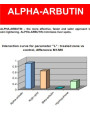
Adding Alpha Arbutin (Switzerland) would be a beneficial addition to your formula for targeting melasma and overall skin brightening. It is a highly effective and safe ingredient for this purpose.
- Usage Rate: The recommended usage rate for Alpha Arbutin for whitening is typically 2%.
- Compatibility: Alpha Arbutin is water-soluble and compatible with your other active ingredients within the recommended pH range of 4.0-6.5.
- Formula Adjustment: If you add 2% Alpha Arbutin and use 5% water-soluble Salicylic Acid powder (to get 2% active Salicylic Acid), you will need to slightly reduce the percentage of your base (Witch Hazel) or add a small amount of water to keep the total formula at 100%.
Other Ingredients
- Azelaic Acid (Liquid Azelaic™): At 10%, this is a strong concentration for brightening and reducing oiliness/acne. The liquid form is water-soluble and easier to incorporate.
- Tranexamic Acid (Trans-White™): At 3%, this is the maximum allowed cosmetic concentration and is effective for melasma.
- Safe-B3™ (Vitamin B3): At 4%, this is a good concentration for barrier support, anti-inflammatory effects, and synergy with Glucosamine for brightening.
- GlucoBright™ (Acetyl Glucosamine): At 4%, this works well with Vitamin B3 for brightening and improving skin hydration.
- Aloe Vera Extract: Provides soothing and moisturizing benefits.
- Allantoin: Known for its soothing and skin-healing properties. The amount (0.5%) should be soluble.
- Pro polymer: 1.5% of a Carbomer type polymer is a relatively high percentage and will likely result in a very thick gel. You may want to adjust this percentage based on your desired viscosity.
- Preservative: Essential for product safety and shelf life.
Summary
Your formula has a strong combination of actives for melasma and brightening. The key adjustments needed are:
- Replace standard Salicylic Acid with a water-soluble form (like Complex Salicylic Acid or ActiveRelease™ Salicylic Acid) at 5% usage.
- Adjust the final pH of the gel to 4.0-6.5 using an alkali after gelling the Pro polymer.
- If adding Alpha Arbutin at 2%, adjust the percentage of the base (Witch Hazel) or add a small amount of water to maintain the total formula at 100%.
This revised formula, with careful pH adjustment, should be effective and stable.
Related Products Mentioned
Alpha Arbutin (Switzerland)

Safe-B3™ (Vitamin B3, Niacinamide)

Allantoin
GlucoBright™ (Acetyl Glucosamine)
Salicylic Acid (BHA, Pharma Grade)

Carbomer 940 (EasyDisperse™, France)