Gel Formulation for Oil/Menthol Blend: Separation Issue and Alternatives
Question
How to formulate a stable gel from a blend of camphor, menthol, borneol, various oils, and herbal extract? The current attempt using Oil Fix O resulted in liquid separation. What is the cause, how to ensure sufficient mixing, what alternative oil gelling agents are suitable, and how would one formulate a cream instead?
Answer
Gel Formulation Advice
Thank you for consulting about your gel formulation containing camphor, menthol, borneol, various oils, and herbal extract. You've observed liquid separation after using Oil Fix O at 10%.
Let's address your questions:
1. Evaluating Mixing Sufficiency
Observing the gel's viscosity and uniformity visually is a good starting point. However, the ultimate test for sufficient mixing and stability is how the gel holds up over time. If separation occurs later, it indicates that the gelling agent wasn't able to create a stable network to hold the liquid phase, which could be due to insufficient mixing or, more likely in your case, the gelling agent itself not being suitable for the specific composition.
2. Cause of Liquid Separation
The separation you observed is most likely due to the gelling agent used. Oil Fix O is primarily designed as a water-in-oil emulsion stabilizer, not a robust oil gelling agent for high concentrations of active oils and lipophilic ingredients like those in your formula. While it can contribute some thickening, it may not build a strong enough gel network to prevent phase separation in this type of predominantly oil-based system.
3. Alternative Gelling Agents
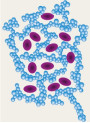
Since your formulation is largely oil-based, you need gelling agents specifically designed to thicken or gel oils. Based on the available options, the Oil Thick™ series, which uses Dextrin Palmitate, is likely more suitable than Oil Fix O for creating a stable oil gel. These products work by forming a network within the oil phase. Consider these options depending on the desired texture:
- Oil Thick™ Soft: For a soft gel or thick liquid texture.
- Oil Thick™ Hard: For a firmer, semi-solid gel texture.
- Oil Thick™ Transparent: For a clear, high-viscosity gel.
- Oil Thick™ Thixotropic: Provides a thixotropic gel texture (thins under shear, thickens at rest).
Another option is Sugar Gel, which is a sugar ester. However, its method requires incorporating a small amount of water (around 10%) and heating with glycerin before adding the oil phase, which is a different process than simply adding to your existing blend.
Choosing an appropriate oil gelling agent like those in the Oil Thick™ series that is compatible with your blend of oils and actives should provide better stability and prevent separation compared to using Oil Fix O in this application.
4. Changing to a Cream
To change your formulation from a gel to a cream, you would need to create an emulsion. This involves:
- Adding a water phase to your formulation.
- Selecting a suitable emulsifier that can effectively blend your oil phase (containing all your active ingredients and oils) with the water phase. The type of emulsifier depends on whether you want an oil-in-water (O/W) or water-in-oil (W/O) cream.
- Following standard emulsification procedures, which typically involve heating the oil and water phases separately, adding the emulsifier, and mixing them together with sufficient shear, followed by cooling with continued mixing.
- You would also need to include a preservative since water is present.
By selecting a suitable oil gelling agent and following the recommended usage instructions (especially regarding heating and mixing), you should be able to achieve a more stable gel formulation.
Related Products Mentioned