Gel Liquefaction and Safety Concerns from Incorrect Carbomer/TEA Ratio
Question
I made a gel using Carbomer and Triethanolamine (TEA) in water. The gel turned watery after a few days, and when applied to the skin, it caused a temporary whitening and smoothing effect.
- Why did the gel become watery?
- Is the whitening/smoothing effect safe or intended?
Answer
Gel Liquefaction and Safety Concerns
Thank you for reaching out and providing details about your formulation. Let's address the issues you've encountered.
Why the Gel Turned Watery
The staff correctly identified the reason your gel turned watery after a few days. You used Carbomer as the gelling agent and Triethanolamine (TEA) to neutralize and thicken it. Carbomer gels effectively within a specific pH range (typically 6-7). Triethanolamine is used to adjust the pH into this range.
The issue arose because you added too much Triethanolamine relative to the Carbomer. While the staff's guide suggests a TEA:Carbomer ratio of approximately 0.5:1 to 1.5:1 for optimal gelling, your formula used 10g of Triethanolamine with 2.5g of Carbomer in 200g of water. This is a ratio of 10:2.5, or 4:1. When the ratio of Triethanolamine to Carbomer is too high (exceeding roughly 1.5:1), the gel structure formed by the Carbomer collapses, causing the mixture to become liquid again.
Safety Concerns and Whitening Effect
You are right that 10g of Triethanolamine in 200g of water is 5% (10g / 200g = 0.05 or 5%). This concentration is the maximum allowed by regulatory guidelines. However, as the staff mentioned, using Triethanolamine at such a high ratio relative to Carbomer results in a very high pH. Applying a product with a high pH to the skin can be irritating and potentially damage the skin's natural barrier.
Triethanolamine itself is not a skin whitening agent. The significant whitening and smoothing effect you observed is likely a temporary reaction to the high pH of the product, possibly causing mild irritation or affecting the skin's surface layers. It is not a desirable or safe long-term effect.
Recommendations
- Stop Using the Product: Please stop using this batch of product immediately. The high pH and lack of preservative make it potentially harmful for continued skin application.
- Future Formulations with Carbomer: If you wish to use Carbomer again, it is highly recommended to use a pH meter to ensure the final pH of your product is within the skin-compatible range (typically pH 5-6). Also, strictly follow the recommended ratio of Triethanolamine to Carbomer (0.5:1 to 1.5:1) to achieve stable gel formation without excessive pH.
- Consider Pro Polymer: As suggested by the staff, Pro Polymer is a much easier-to-use gelling agent that is less sensitive to pH and other ingredients, making it a more suitable choice for beginners.
- Add a Preservative: Any cosmetic product containing water requires a suitable preservative to prevent the growth of bacteria, mold, and yeast, which can be harmful to the skin and cause the product to spoil. Storing in the fridge is not sufficient to prevent all microbial growth.
By following proper formulation guidelines, using appropriate tools like a pH meter, and including necessary ingredients like a preservative, you can create safe and stable cosmetic products.
Related Products Mentioned

Olive Oil (Extra Virgin)
Triethanolamine 99%
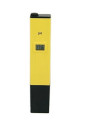
Digital pH meter (temporary use)
Pro Polymer™ (Gel Maker)

Carbomer 940 (EasyDisperse™, France)