Glycolic Acid Formulation for Melasma: pH, Texture, and Ingredients
Question
I am developing a formulation for melasma treatment using the following ingredients:
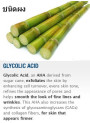
- Glycolic Acid
- Aloe Vera Extract (10:1) 3%
- Honey
- Water
- Centella Asiatica Extract (around 3%)
I have the following questions about this formulation:
- Is this combination of ingredients suitable for treating melasma, focusing on exfoliation and skin soothing?
- Is it appropriate to use Honey for moisture and nourishment? How should it be incorporated?
- Is 3% of Aloe Vera Extract (10:1) sufficient to create a gel texture? If not, what gelling agent should I use and at what percentage?
- What is the optimal pH range for Glycolic Acid to be effective as an exfoliant while minimizing irritation?
- Is adding Centella Asiatica Extract beneficial for this type of formulation?
Answer
Formulation for Melasma with Glycolic Acid
Based on your questions and the discussion, here is a breakdown of the formulation and ingredients for treating melasma with a focus on exfoliation and skin soothing:
1. Suitability of the Formulation
The combination of Glycolic Acid for exfoliation with Aloe Vera Extract, Honey, and Water is a suitable base for a melasma treatment focusing on cell turnover. Adding Centella Asiatica Extract, as you later inquired, further enhances the formula by providing anti-inflammatory benefits, which is helpful when using an exfoliant like Glycolic Acid.
2. Using Honey for Moisture and Nourishment
Yes, incorporating Honey is appropriate. Honey is known for its humectant properties, attracting and retaining moisture in the skin, and also provides nourishing benefits. As advised, dissolve it in slightly warm water before adding to the rest of the formulation to preserve its beneficial properties.
For a cosmetic formulation, using a cosmetic-grade ingredient like Honey Extract (Water-Dispersible) would be suitable.
3. Aloe Vera Percentage and Gel Texture
Using 3% of a 10:1 Aloe Vera Extract is a good concentration for its skin-conditioning and soothing benefits. However, this amount of Aloe Vera Extract alone is generally not enough to create a gel texture. Aloe Vera Extract can sometimes even reduce the viscosity of a formula because it contains electrolytes.
To achieve a gel consistency, you would typically need to add a gelling agent. A Pro Polymer (Gel Maker) is a common ingredient used for this purpose. Adding around 1% Pro Polymer is usually sufficient to create a gel texture, though the exact amount might need adjustment depending on the other ingredients in your formula, especially if they contain electrolytes.
4. Optimal pH for Exfoliation
For Glycolic Acid to be effective as an exfoliant, the pH of the final product needs to be acidic. While a lower pH provides stronger exfoliation, it also increases the potential for irritation. A pH below 3.0 is generally considered too acidic for at-home use and can cause significant irritation or burns.
To maintain effective exfoliation while minimizing irritation, the optimal pH range for a Glycolic Acid product is typically between 3.0 and 4.0. The effectiveness of Glycolic Acid decreases significantly as the pH rises above 4.0. You will need to measure the pH of your final formulation and adjust it if necessary using a suitable pH adjuster.
Adding Centella Asiatica Extract
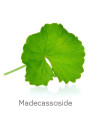
Adding Centella Asiatica Extract at around 3% is beneficial. Extracts like Centella Asiatica Extract (Madecassoside 90%) or Pure-TECA™ Centella Asiatica Extract (TECA 95%, CICA) are known for their anti-inflammatory and skin-healing properties, which can help counteract potential irritation from Glycolic Acid and support skin recovery, making it a good addition to a peeling formula.
In summary, your proposed formulation is a solid base. Ensure you control the final pH carefully and consider adding a gelling agent like Pro Polymer (Gel Maker) to achieve your desired texture. Including Centella Asiatica Extract is also a good strategy for managing potential irritation.
Related Products Mentioned
Pro Polymer™ (Gel Maker)