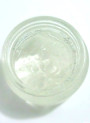
Grainy Texture in Cream with Titanium Dioxide 15nm Liquid
Question
I am making a cream formulation and used Titanium Dioxide 15nm Liquid in the oil phase. After mixing, I observed a grainy texture at the bottom of the cream.
Could you please advise on the possible causes and how to fix this issue? I can provide the full formula (ingredients and percentages) and the detailed mixing steps if needed.
Answer
Understanding the Grainy Texture in Your Formulation
You've observed a grainy texture at the bottom of your cream formulation after mixing Titanium Dioxide 15nm Liquid with the oil phase. This is a common issue that indicates the Titanium Dioxide dispersion is not stable or fully compatible within your specific formula.
Titanium Dioxide 15nm Liquid is a pre-dispersed form of titanium dioxide designed to be easily incorporated into formulations. However, it is specifically developed for use in Water-in-Oil (W/O) emulsion systems and is not recommended for Oil-in-Water (O/W) systems. The grainy texture suggests that the dispersion might be breaking or the particles are aggregating.
Several factors could contribute to this:
- Emulsion Type: If your formulation is an Oil-in-Water emulsion, this specific type of Titanium Dioxide is not suitable and can lead to instability and particle separation.
- Ingredient Compatibility: While the product is designed for the oil/silicone phase in W/O emulsions, other ingredients in your formula, particularly the emulsifier you are using (which was not listed), or the presence of electrolytes, could be causing incompatibility issues. The product description mentions it cannot be used in formulas containing electrolytes.
- Mixing Procedure: The method and temperature of mixing are crucial for properly incorporating dispersions. Ensure you are following recommended procedures, such as heating the oil phase containing the Titanium Dioxide to the suggested temperature (70°C as per the product description example) and mixing thoroughly.
To help diagnose the exact cause and provide more specific recommendations, please provide the full list of ingredients with their proportions and the detailed mixing steps you followed, as requested by the staff.
Related Products Mentioned
Jojoba Oil (Golden - Deodorized)
Dimethicone (Light/50, Low-Odor)
Titanium Dioxide 15nm Liquid (Gloss)
Purified Water, TDS Limit 1PPM)
Isopropyl Myristate (Deodorized)