Guide Formulation for Night Serum/Cream with Multiple Actives
Question
I am developing a night-time formula and would like guidance on the formulation, especially regarding the base. My planned ingredients and percentages are:
- Alpha Arbutin 2%
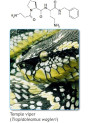
- Syn-Ake eq. 4%
- Pepha Tight 5% (Staff noted this is too high and may cause excessive tightness)
- Delentigo 5%
- Double Hyaluron Liquid 20% (contains Std/Nano Hyaluronic Acid blend)
- 2% 3-O-ethyl ascorbyl ether Vitamin C (Staff suggested Stabilized Vitamin C (AA2G) instead)
I am unsure which base would be suitable:
- Gel from Propolymer
- Gel from Aloe Vera
- Light Cream Maker
- Other options?
Could you provide a guide formulation and discuss the suitability of different bases?
Answer
Guide Formulation for Night-Time Active Serum/Cream
Based on your list of active ingredients and the feedback from the staff, here is a guide formulation for a night-time product. The choice of base primarily influences the skin feel rather than the efficacy, which depends on many factors. You can choose a base type that you prefer the feel of, such as a gel, serum, or light cream.
- Gel/Serum Base: You could create a gel or serum using a suitable thickener like Pro Polymer or other compatible gel makers. However, some pre-made gel bases, such as the Aloe Vera Gels you mentioned, list incompatibilities with ingredients like Hyaluronic Acid and Pro Polymer, making them unsuitable for a complex formula like this. If you prefer a gel or serum, building it from scratch with compatible ingredients is recommended.
- Light Cream Base: A light cream base using an emulsifier like Light Cream Maker is another option that can provide a pleasant skin feel and accommodate the water-soluble active ingredients.
Given the complexity and the number of water-soluble actives, formulating a serum or light cream from scratch allows for better control over ingredient compatibility and final product characteristics.
Here is a guide formulation structure, assuming a water-based serum or a light cream base. Please note that specific percentages for the base components (water, oils, emulsifier/thickener) will depend on the desired texture and total active ingredient percentage.
Guide Formulation (Example using a Water-Based Approach)
This formulation incorporates your desired actives, adjusted based on staff feedback and product information.
Active Ingredients:
- Alpha Arbutin: 2%
- Syn-Ake eq.: 4% (Based on product description recommending 1-4% for best efficacy)
- Pepha Tight: Use at a lower concentration than 5% as advised by staff to avoid excessive tightness. (Specific concentration depends on the supplier's recommendation for your specific Pepha Tight product).
- Delentigo: 5% (As requested, note that specific usage details for this ingredient were not available from the search results).
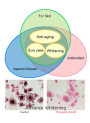
- Double Hyaluron Liquid (containing Std/Nano Hyaluronic Acid blend): 20% (This provides 1% active Hyaluronic Acid blend, based on the product being a 5% solution).
- Ascorbyl Glucoside (AA-2G Stabilized Vitamin C): 2% (As recommended by staff, within the recommended range of 2-10%).
- Licorice Extract: 0.5% (Within the recommended range of 0.5-3%).
- ActiveProtec™ OX: 0.6% (Recommended for use with Alpha Arbutin to prevent discoloration).
Base Components (Choose one approach):
- Option A: Light Cream Base
- Water: Balance
- Oil Phase (e.g., light oils, emollients): 10-15%
- Light Cream Maker: 1-1.5% (Adjust based on desired viscosity and oil percentage)
- Option B: Gel/Serum Base
- Water: Balance
- Compatible Gel Maker/Thickener (e.g., Pro Polymer or other suitable polymer): 0.5-1.5% (Adjust based on desired viscosity and thickener type)
- Option A: Light Cream Base
Other Necessary Components:
- Preservative: 0.5-1% (Choose a broad-spectrum preservative compatible with the pH and ingredients).
- pH Adjuster (e.g., Triethanolamine or Sodium Hydroxide solution to increase pH, Citric Acid solution to decrease pH).
- Fragrance (Optional): 0.1-0.5%
Formulation Notes and Procedure:
- Water Phase Preparation: Combine water and dissolve all water-soluble active ingredients (Alpha Arbutin, Syn-Ake eq., Pepha Tight, Delentigo, Double Hyaluron Liquid, Ascorbyl Glucoside, Licorice Extract, ActiveProtec™ OX). Special Note for Ascorbyl Glucoside (AA-2G): It is highly acidic when dissolved in water but is most stable at pH 6.5-6.8. Follow the product's instructions for dissolving, which may involve using a Citrate Buffer or L-Arginine to manage pH during dissolution before adding to the main water phase.
- Oil Phase Preparation (if making a cream): Combine oil phase ingredients and Light Cream Maker. Heat gently if necessary to melt solid oils/butters, then cool slightly.
- Combining Phases:
- For a cream (Option A): Slowly add the oil phase to the water phase while stirring or homogenizing until a cream forms.
- For a gel/serum (Option B): Add the compatible gel maker to the water phase according to its instructions (usually sprinkle and stir/mix until gel forms).
- Add Other Ingredients: Once the base is formed (cream or gel), add the preservative and optional fragrance.
- pH Adjustment: This is a critical step. The optimal pH for AA2G stability is 6.5-6.8. While some other actives like Alpha Arbutin, Syn-Ake, and Licorice Extract have an optimal range of 3.5-6.5, formulating at pH 6.5-6.8 will prioritize AA2G stability. Adjust the final pH of the formulation to 6.5-6.8 using a pH adjuster.
- Final Mixing: Stir gently until homogeneous. Avoid excessive high-speed mixing, especially with polymer thickeners, as it can damage the polymer structure.
Important Considerations:
- Ingredient Compatibility: Always double-check the compatibility of all chosen ingredients, especially preservatives and fragrances, with the active ingredients and the chosen base/thickener. The product descriptions provide some incompatibility information (e.g., Syn-Ake with Propylene Glycol, AA2G with Safe-B3/Zinc PCA, Aloe Vera Gels with certain thickeners).
- Stability Testing: Due to the complex mixture of active ingredients and the pH considerations, stability testing (e.g., observing changes in color, odor, texture, and pH over time and under different temperature conditions) is highly recommended to ensure the product remains effective and safe.
- Pepha Tight and Delentigo: As specific product details for these were not available from the search, ensure you follow the supplier's recommended usage rate and mixing instructions for the specific products you source.
Choosing between a cream and a gel/serum base depends purely on your preference for skin feel. A light cream might feel more nourishing for night use, while a serum could be lighter.
Related Products Mentioned
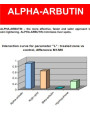
Alpha Arbutin (Switzerland)
Light Cream Maker™
Aloe Vera Gel (Heavy)
Pro Polymer™ (Gel Maker)
Double Hyaluron Liquid
Aloe Vera Gel (Lite)