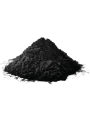
Guide to Formulating Facial Foam with Charcoal or Clay
Question
I would like to make a facial foam formulation that includes charcoal or various types of clay. Could the staff please provide guidance and suggest suitable ingredients?
Answer
Guide to Making Charcoal or Clay Facial Foam
Making facial foam containing charcoal or clay is very popular because these ingredients have properties that help absorb dirt, excess oil, and deeply cleanse pores.
Recommended Key Ingredients
From our search, we found several interesting charcoal and clay ingredients:
Charcoal / Activated Carbon Group:
- Activated Carbon: Has very high adsorption properties, commonly used in skin detox products for deep cleansing.
- Bamboo Charcoal Powder: Also has properties to absorb dirt and oil. Available in various particle sizes, from very fine (1-2 micron, 3-5 micron, 4-9 micron) to granular size (0.3-0.7 mm), which can also provide gentle exfoliation.
Clay / Kaolin Group:
- Kaolin: Or China Clay, is a high-purity natural clay with oil-absorbing properties, suitable for combination to oily skin.
- Various Colored Clays (Yellow Clay, Red Clay, Green Clay): Natural clays with different mineral compositions, offering various absorption and skin-benefiting properties. Often used in clay masks, but can be adapted for facial foam.
Application in Facial Foam Formulation
When incorporating charcoal or clay powder into a facial foam formula, here are some considerations and guidelines:
- Dispersion: Charcoal and clay powders do not dissolve in water or oil. Therefore, the powder must be evenly dispersed throughout the formula to prevent settling. These powders should be added at an appropriate stage, and mixing equipment that helps disperse powders well should be used.
- Usage Rate: The typical recommended amount for using charcoal or clay powder in facial foam is around 1-5% to achieve dirt-absorbing properties without making the foam texture too heavy or abrasive (although some types indicate usage up to 100%, which is more suitable for masks).
- Effect on Texture and Foam: Adding powder can affect the stability of the foam and the texture of the facial cleanser. It may be necessary to adjust surfactants or add thickeners/suspending agents to maintain formula stability and good foam quality.
- Particle Size: Choose the particle size of the charcoal or clay powder based on your desired outcome. If you want a facial foam focused solely on cleansing, choose powders with fine particle sizes (e.g., Bamboo Charcoal Powder 1-2 or 3-5 micron, Kaolin 300nm). If you also want exfoliating properties, you might consider using a small amount of Bamboo Charcoal Granule (0.3-0.7mm).
Conclusion
Making facial foam with charcoal or clay is achievable by selecting appropriate types of Activated Carbon, Bamboo Charcoal Powder, or Kaolin/Clays in suitable amounts (recommended 1-5%). Attention must be paid to dispersing the powder in the formula, and adjustments to surfactants or thickeners may be needed to achieve the desired texture and foam.
Related Products Mentioned
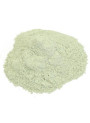
Green Clay
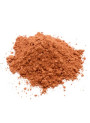
Red Clay
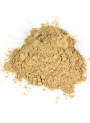
Yellow Clay
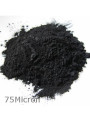
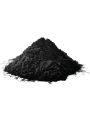
Bamboo Charcoal Powder (4-9micron, Eco)
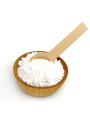
Kaolin (400nm High Whiteness)
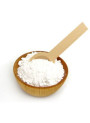
Kaolin (China Clay, 300nm)
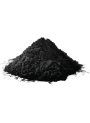
Bamboo Charcoal Powder (1-2micron)
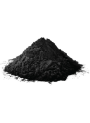
Bamboo Charcoal Powder (3-5micron)