Hair Serum Formulation for Dandruff and Oily Scalp: Review and Suspension Issue
Question
I would like to inquire about a Hair Serum formula for Dandruff, Sebderm with the following main properties:
- It is a Leave-on type for oily scalp.
- It helps reduce Dandruff, Sebderm and does not leave oiliness on the scalp after application, without needing to be rinsed off.
Ingredients:
- Zinc Pyrithione (Dandruff, Sebderm) 0.5%
- Dandruff-Guard™ (Piroctone Olamine) 0.2%
- ethanol 20%
- Zinc PCA 1%
- Pro Polymer™ (Gel Maker) ??%
- Phenoxyethanol 1%
- น้ำกลั่นเติมจนครบ 100%
Mixing Procedure:
- Dissolve Dandruff-Guard™ (Piroctone Olamine) in ethanol first, then add to the water that has been gelled with Pro Polymer™.
- Then add Zinc PCA --> Zinc Pyrithione --> Phenoxyethanol in order. Mix until combined.
Questions:
- Are there any incompatibilities or necessary adjustments in the formula and mixing procedure?
- What is the minimum percentage of Pro Polymer™ that should be used in this formula to prevent Zinc Pyrithione powder from precipitating?
- Can this formula be made into a Tonic for spraying on the scalp? Because I actually wanted to make it as a tonic formula, but the usage recommendation stated that "the formula should have sufficient viscosity to prevent Zinc Pyrithione powder from precipitating," so I had to adapt it into a Serum texture.
Thank you in advance for your answer.
Answer
Analysis of Your Hair Serum Formula
This formula is designed as a leave-on treatment for oily scalp and dandruff, utilizing key active ingredients like Zinc Pyrithione and Piroctone Olamine. Here's an analysis of your formula and mixing steps, addressing your questions:
Formula and Mixing Steps Review
- Ingredients: The selection of Zinc Pyrithione, Dandruff-Guard™ (Piroctone Olamine), and Zinc PCA is suitable for targeting dandruff and oily scalp concerns in a leave-on product. Phenoxyethanol is an appropriate preservative. Ethanol helps dissolve Piroctone Olamine.
- Mixing Steps:
- Step 1: Dissolving Dandruff-Guard™ in ethanol before adding to the water phase is correct, as Piroctone Olamine is soluble in ethanol. Forming the gel with Pro Polymer™ in water first is also the standard method.
- Step 2: Adding Zinc PCA after the gel is formed is appropriate, especially since Zinc PCA is an electrolyte that can affect the gel's viscosity.
- Adding Zinc Pyrithione: Since Zinc Pyrithione is insoluble, it needs to be properly dispersed in the formula to prevent settling. Simply "mixing until combined" might not be sufficient for long-term stability. High-speed blending is recommended to ensure even dispersion throughout the gel base.
- Potential Adjustments:
- pH: The formula does not include a pH adjustment step. Zinc PCA has optimal solubility between pH 4-6, and Zinc Pyrithione's efficacy can be influenced by pH. It is highly recommended to check the final pH of your serum and adjust it to be within the 4-6 range for optimal ingredient performance and stability.
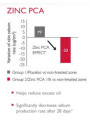
- Zinc PCA Concentration: While 1% Zinc PCA is effective for oil control, the product description suggests 0.2-0.3% for dandruff treatment in shampoos/tonics. Using 1% is acceptable for a serum targeting oily scalp, but be aware it contributes significantly to the electrolyte load affecting the gel.
Pro Polymer™ Percentage for Suspension
Zinc Pyrithione is an insoluble powder (or liquid dispersion that behaves similarly regarding suspension needs) and requires sufficient viscosity to remain suspended and prevent settling over time. Your formula also contains 1% Zinc PCA, which is an electrolyte. The description for Pro Polymer™ indicates that electrolytes can reduce the viscosity of the gel, requiring a higher concentration of Pro Polymer™ to achieve the desired thickness and stability.
To prevent 0.5% Zinc Pyrithione from precipitating in the presence of 1% Zinc PCA, you will likely need a higher percentage of Pro Polymer™ than for a standard gel. The product description suggests using 2-3% or more of Pro Polymer™ when significant electrolytes are present.
Therefore, you should start testing with at least 1.5-2% Pro Polymer™ and adjust upwards as needed to achieve a stable gel consistency that keeps the Zinc Pyrithione evenly dispersed without settling over time. The exact percentage will require testing with your specific ingredients and mixing equipment.
Suitability for a Tonic
No, this formula, as written with 0.5% Zinc Pyrithione, is not suitable for a low-viscosity tonic.
As noted earlier and in the product information, Zinc Pyrithione is insoluble. It requires a viscous base, like a serum or gel created by Pro Polymer™, to keep the particles suspended and prevent them from settling at the bottom of the container.
A tonic is a low-viscosity liquid. If you were to remove or significantly reduce the Pro Polymer™ to make a tonic, the Zinc Pyrithione particles would precipitate out of the solution, making the product ineffective and aesthetically unappealing.
To create an anti-dandruff tonic, you would typically need to use a soluble anti-dandruff active ingredient, such as Piroctone Olamine (which is included in your formula and is soluble in ethanol) or formulate with a much lower concentration of an insoluble active, or use a different suspension system designed for low-viscosity liquids, which can be challenging. Since your goal is to use 0.5% Zinc Pyrithione, a gel or serum format is necessary for stability.
In summary, your formula is a good starting point for a leave-on anti-dandruff serum. Pay close attention to the Pro Polymer™ concentration to ensure stable suspension of Zinc Pyrithione, consider adjusting the final pH, and ensure thorough dispersion of the Zinc Pyrithione during mixing.
Related Products Mentioned
Phenoxyethanol (Extra Pure)
Pro Polymer™ (Gel Maker)
Zinc PCA

Dandruff-Guard™ (Piroctone Olamine)