Hair Tonic Formulation Issues: Ingredient Compatibility and Texture
Asked by: rich999_pongtong
On: August 03, 2016
Product Type:
Cosmetics
Answered
Question
I am developing a hair tonic for oily scalp and hair loss. Is Long-Lash™ suitable for this application? I have a draft formula that includes Liquid Azelaic™, Zinc PCA, PE-1 Aqua, and Safe-B3™. I noticed precipitation when combining Liquid Azelaic™ and Zinc PCA, and the overall formula feels sticky. Could you advise on ingredient compatibility, how to fix the precipitation and stickiness issues, and whether Long-Lash™ is a cost-effective option for oily scalp hair loss compared to other ingredients?
Answer
Based on the conversation:
- Long-Lash™ (ID 490) can potentially help with hair growth, but it is generally not recommended for scalp use due to its high cost compared to other ingredients.
- Regarding your proposed oily scalp tonic formulation:
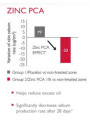
- Azelaic Acid (Liquid Azelaic™) (ID 224) and Zinc PCA (ID 252) are incompatible and should not be used together in the same formula as they can cause precipitation. You should choose only one of these ingredients.
- PE-1 Aqua (ID 856), being oil-like, requires an emulsifier to properly mix with water in a toner formulation. FloraSolve (ID 334) or FloraSolve Clear (ID 718) can be used for this purpose. A recommended ratio is 2 parts FloraSolve Clear to 1 part PE-1 Aqua.
- If the formula feels sticky, you can reduce the concentration of certain ingredients. The staff suggested reducing Safe-B3™ (ID 74) to 2-3%, PE-1 Aqua (ID 856) to 2%, and Azelaic Acid (ID 224) (if chosen) to no more than 5%.
- For hair loss primarily caused by an oily scalp, focusing on ingredients that reduce oiliness like Azelaic Acid (ID 224) (choose one), Zinc PCA (ID 252) (choose one), Licorice Extract (ID 69), and Safe-B3™ (ID 74) is likely to be more effective and cost-efficient than using Long-Lash™.
Related Products Mentioned
Safe-B3™ (Vitamin B3, Niacinamide)
Cosmetics

Zinc PCA
Cosmetics

Long-Lash™
Cosmetics

PE-1 Aqua
Cosmetics