Hair Treatment Formulation: Oils and Ingredient Proportions
Question
How to formulate a hair treatment? I want to know the difference between using Fractionated Coconut Oil and Coconut Oil. Also, please advise on the ingredient proportions and suggest additional ingredients for a treatment using the following:
- น้ำกลั่น
- ceteary alcohol
- dehyquart ac
- Tween 20
- Coconut Oil (Fractionated Coconut Oil)
- castor oil
- penthenol
- Phenoxyethanol
- Fragrance
Answer
Hair Treatment Formulation Advice
Here is some information regarding your questions about making a hair treatment:
1. Fractionated Coconut Oil vs. Coconut Oil for Hair Treatment
Regarding whether to use Fractionated Coconut Oil or regular Coconut Oil for a hair treatment, oils like these primarily provide a pleasant feel and slip during the application of the treatment. However, they are generally washed off and do not provide long-lasting conditioning effects on their own.
For a hair treatment to effectively condition the hair after rinsing, it typically requires conditioning agents that can adhere to the hair shaft. These include ingredients like silicones or cationic (positively charged) conditioners. Examples of such conditioning agents are Cetrimonium Chloride (CTAC), Behentrimonium Chloride (BTAC), GuarCat, Poly-Conditioner Pro, Silicone Hi-Cond, and SiliWater.
While Fractionated Coconut Oil or Coconut Oil can be included in your formulation to improve the texture and feel during use, the primary conditioning benefit will come from the conditioning agents.
2. Hair Treatment Formulation and Ingredients
You have a list of ingredients you plan to use:
- Distilled Water
- Cetearyl Alcohol
- Dehyquart AC (likely a cationic conditioner like CTAC)
- Tween 20 (Polysorbate 20)
- Coconut Oil (or Fractionated Coconut Oil)
- Castor Oil
- Panthenol
- Peppermint Oil
- Phenoxyethanol
- Fragrance
Here's a look at the function of each ingredient in a hair treatment context:
- Distilled Water: This is the base of your water-based formulation.
- Cetearyl Alcohol: A fatty alcohol that acts as a thickener and stabilizer for the cream texture. It also provides a conditioning feel.
- Dehyquart AC (Cetrimonium Chloride - CTAC): This is a cationic conditioning agent. It has a positive charge that helps it bind to the negatively charged surface of hair, reducing static, smoothing the hair cuticle, and improving combability. Behentrimonium Chloride (BTAC) is another highly effective cationic conditioner often used in creamy hair masks.
- Tween 20 (Polysorbate 20): A non-ionic surfactant that can function as an emulsifier or solubilizer, helping to incorporate oils and fragrances into the water phase.
- Coconut Oil / Fractionated Coconut Oil / Castor Oil: These are emollient oils that can provide moisture, shine, and slip to the hair during the treatment process. As mentioned earlier, their conditioning effect is mostly temporary as they are rinsed off.
- Panthenol: Also known as Pro-Vitamin B5, it's a humectant that attracts and holds moisture, helping to hydrate the hair and improve elasticity.
- Peppermint Oil / Fragrance: Used to add scent to the product. Peppermint Oil can also provide a cooling sensation on the scalp.
- Phenoxyethanol: A preservative necessary to prevent microbial growth and keep your product safe and stable.
While I cannot provide exact percentage recommendations as formulation requires testing, here is a general idea of how these ingredients function together:
- You will need a significant amount of Distilled Water as the base.
- Cetearyl Alcohol and the cationic conditioner (Dehyquart AC/CTAC or BTAC) will form the structural base of your cream/mask, providing thickness and conditioning.
- Oils (Coconut Oil/Fractionated Coconut Oil, Castor Oil) can be added at a percentage suitable for the desired richness and feel, often requiring an emulsifier like Tween 20 to blend smoothly into the water phase.
- Panthenol is typically used at a few percent for its moisturizing benefits.
- Phenoxyethanol should be used at the manufacturer's recommended rate (usually around 0.5-1%) to ensure preservation.
- Peppermint Oil and Fragrance are added at low percentages (typically 0.1-1%) for scent.
To create a creamy mask texture with good conditioning, incorporating a cationic conditioner like BTAC is highly recommended, as suggested by the expert. A basic structure for a creamy conditioner often involves heating the water phase and oil phase separately (containing Cetearyl Alcohol and the cationic conditioner in the water phase, and oils in the oil phase, then combining and mixing well as it cools).
Consider adding other conditioning agents like BTAC or exploring silicones like Silicone Hi-Cond or SiliWater for enhanced conditioning and slip, as these are designed to remain on the hair after rinsing.
Remember that successful formulation involves careful measurement, proper mixing techniques, and stability testing to ensure the product is safe, effective, and has the desired texture.
Related Products Mentioned
Phenoxyethanol (Extra Pure)
Cetrimonium Chloride (CTAC)
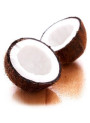
Fractionated Coconut Oil
Polysorbate 20 (Tween 20)

GuarCat™ Standard (1,000-5,000mpas)
Cetearyl Alcohol (50/50, e.q. Lanette O)
SiliWater™ (silicone dissolved in water)
Silicone Hi-Cond
Behentrimonium Chloride (BTAC)
Floral Background