Hand Cream Formulation Adjustment for Texture, Stability, and Ingredient Addition
Question
Based on the provided Hand Cream formula (Shea Butter 18%, Kukui Nut Oil 3%, Light Cream Maker 2%), I have the following questions:
- Does this formula require any adjustments (e.g., to oil/butter content, emulsifier amount) to achieve a suitable texture and good stability, particularly for daytime (fast absorption) or nighttime (good skin coating) use?
- Is it necessary to add ingredients like Ethoxydiglycol, Butylene Glycol, or 1,3-Propanediol?
- If adding ingredients from question 2 is needed, which specific ones should be added and at what percentage, and how would they affect the formula?
- If scent is desired, can it be added directly to this formula, and what is the recommended method and amount?
Answer
Thank you for your question and the Hand cream formula information. I'm glad the information about daytime and nighttime formulas from the staff was helpful.
Regarding the Hand cream formula you provided, I'd like to offer some additional advice based on your questions:
Answer for the provided Hand cream formula
Your formula includes several interesting ingredients, but slight adjustments may be needed to achieve a suitable texture and good stability.
Does this formula need any adjustments?
- Oil/Butter Content: Your formula has 18% Shea Butter and 3% Kukui Nut Oil, totaling 21%, which is quite high for a typical Hand cream. This high oil content will provide a good skin coating feel, suitable for very dry skin or nighttime use. However, if you want a faster-absorbing texture for daytime use, you may need to reduce the amount of oil/butter.
- Emulsifier Amount (Light Cream Maker): You are using 2% Light Cream Maker for a total oil phase of 21%. This might be too low to ensure long-term emulsion stability, and there is a risk of separation. It is recommended to increase the amount of Light Cream Maker to 3-4% to help emulsify the water and oil phases better and improve formula stability. Alternatively, if you aim for a lighter texture and reduce the oil content, you can use a lower percentage of emulsifier proportionally.
- Adjustment based on desired texture:
- For Daytime Formula (Fast Absorption): Reduce the amount of Shea Butter and Kukui Nut Oil, perhaps to a combined total of no more than 10-15%, and adjust the Emulsifier (Light Cream Maker) appropriately for the reduced oil content (maybe 2-3%). Increase the water and Humectant (like Methyl Gluceth-20) content.
- For Nighttime Formula (Good Skin Coating): The 21% oil/butter content provides good skin coating. However, you should increase the Emulsifier (Light Cream Maker) to 3-4% for better stability.
Does this formula need Ethoxydiglycol or Butylene Glycol or 1,3-Propanediol? and 3. If ingredients from question 2 need to be added, which ones?
- These ingredients (Ethoxydiglycol, Butylene Glycol, 1,3-Propanediol) are not strictly necessary in every formula but can help improve formula properties.
- Butylene Glycol or 1,3-Propanediol: Both act as Humectants (helping retain moisture) and Texture Enhancers, making the cream easier to spread, slightly reducing the greasiness from oils, and helping to carry some active ingredients into the skin better. If you want the cream to spread more easily and increase hydration, you can consider adding Butylene Glycol or 1,3-Propanediol (choose one) at 2-5% by reducing the water content. 1,3-Propanediol is often preferred as it is naturally derived.
- Ethoxydiglycol: This is an excellent Solvent/Carrier, often used to help dissolve active ingredients that are difficult to dissolve in water or to help carry active ingredients deeper into the skin. If the extracts you are using (สารสกัดมะหาด, Cucumber Extract, Chamomile Extract) are already well water-soluble, or if the current formula's properties are satisfactory, you may not need to add Ethoxydiglycol. However, if you want to enhance the delivery of the extracts into the skin, you can consider adding a small amount (e.g., 1-3%) by reducing the water content.
In summary, adding these ingredients is not mandatory, but adding a small amount of Butylene Glycol or 1,3-Propanediol (2-5%) can help improve the texture and hydration of the formula.
- If scent is desired, can it be added directly?
- Generally, you can add fragrance oils or essential oils to a cream formula.
- How to add: Fragrance or essential oils should typically be added towards the end of the formulation process, after the emulsion has formed and started to cool down (around 40-50°C). Stir well to incorporate.
- Caution: Some fragrances can affect the stability of the emulsion or the viscosity of the cream. It is recommended to test with a small batch first and use an appropriate amount (generally no more than 0.1-1% for Hand cream).
I hope this advice is helpful for adjusting your Hand cream formula. If you have any further questions, feel free to ask!
Related Products Mentioned
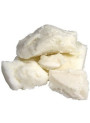
Shea Butter (Refined , Deodorised)
Ethoxydiglycol (e.q. Transcutol)
Light Cream Maker™

Cucumber Extract (France)
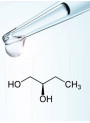
Butylene Glycol

สารสกัดมะหาด (Oxyresveratrol)
Creatine 100

Chamomile Extract (Apigenin)
Kukui Nut Oil