High Hydration Retardation HEC Grade Comparison (Natrosol 250™ HHR)

Asked by: tajka On: April 21, 2026 Product Type: Cosmetics Answered

Question

Dear, we are currently looking for a high hydration retardation hydroxyethylcellulose (HEC) and would greatly appreciate your guidance and expertise.

We came across a product from Natrosol 250™ hydroxyethylcellulose (HEC) that meets our requirements, and we are attaching their specifications for your reference. Based on this, we would like to ask whether any of the HEC grades in your portfolio could be considered comparable or suitable for similar applications.

Your recommendation would be very valuable to us, especially regarding:

  • Whether you offer a high hydration retardation type of HEC
  • Which specific grade you would suggest as the closest match to the attached specifications.

Answer

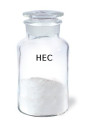
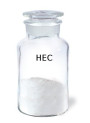
Based on the specifications provided for Natrosol 250™ HHR, we have a comparable grade in our portfolio that matches both the high-viscosity requirements and the delayed-hydration (retardation) functionality.

Recommended Match: Hydroxyethyl Cellulose (HEC) (4500mPa.s)

The closest match to the Natrosol 250 HHR (Very High Viscosity, Retarded Hydration) is our Hydroxyethyl Cellulose (HEC) (4500mPa.s).

Specification Comparison

Feature Natrosol 250 HHR Hydroxyethyl Cellulose (HEC) (4500mPa.s)
Viscosity (1% solution) 3,400 – 5,000 mPa·s 3,400 – 5,000 mPa·s
Type Designation HH (Very High) + R (Retarded) High Viscosity + Delayed Dissolution
Hydration Mechanism Surface-treated (pH/Temp sensitive) Heat (~70°C) or pH (>7) triggered
Ionic Nature Non-ionic Non-ionic

Technical Analysis of Hydration Retardation

The "R" designation in Natrosol grades refers to a surface treatment that delays hydration. This allows the powder to be dispersed in water without immediately thickening or forming "fish-eyes" (lumps).

Our Hydroxyethyl Cellulose (HEC) (4500mPa.s) provides a similar functional benefit through its dissolution requirements:

  • Dispersion: It can be dispersed in cold or room-temperature water without immediate swelling.
  • Triggered Hydration: Viscosity build is triggered by either heating the solution to approximately 70°C or by adjusting the pH to be alkaline (pH > 7) using a base like Triethanolamine. Once dissolved, the pH can be adjusted back down to your target range.

Key Benefits & Applications

As a non-ionic cellulose ether, this grade is highly versatile for various formulations:

  • Electrolyte Tolerance: Unlike carbomers, HEC maintains its viscosity in the presence of salts and electrolytes, making it ideal for shampoos, liquid soaps, and formulas with high active concentrations.
  • Shear-Thinning Flow: It exhibits pseudoplastic behavior, providing high stability at rest (to suspend particles) while spreading easily during application.
  • Film Formation: It creates a smooth, flexible film on the skin or hair, improving residence time and sensory feel.

Usage Guidance

  1. Cold Dispersion: Add the HEC powder to water at room temperature while stirring. It will disperse but not thicken immediately.
  2. Activation:
    • Option A (Heat): Heat the mixture to 70°C while stirring until the gel forms.
    • Option B (pH): Add an alkaline agent to raise the pH above 7.0. The gel will form quickly. You may then use an acid (like Citric Acid) to lower the pH to your desired final level (e.g., pH 5.5).
  3. Concentration: Typically used at 0.5% – 3.0% depending on the desired thickness.

For other viscosity requirements, we also offer Hydroxyethyl Cellulose (HEC) (2800mPa.s) and Hydroxyethyl Cellulose (HEC) (2000mPa.s) (Super Clear Gel).

Relevant References

Sources supporting the key technical claims in this answer

Final Report on the Safety Assessment of Hydroxyethylcellulose, Hydroxypropylcellulose, Methylcellulose, Hydroxypropyl Methylcellulose, and Cellulose Gum.
J Am Coll Toxicol. 1986

Final Report on the Safety Assessment of Hydroxyethylcellulose, Hydroxypropylcellulose, Methylcellulose, Hydroxypropyl Methylcellulose, and Cellulose Gum. J Am Coll Toxicol. 1986. DOI: 10.3109/10915818609141925.
DOI: 10.3109/10915818609141925
Pharmaceutical significance of cellulose: A review.
Express Polymer Letters. 2008

Kamel S, Ali N, Jahangir K, Shah SM, El-Gendy AA. Pharmaceutical significance of cellulose: A review. Express Polymer Letters. 2008.

Study of rheological behaviour of hydroxyethyl cellulose gels in the development of the composition and technology of the medicine with anti-inflammatory activity.
Pharmacia. 2019

Postoy V, Kukhtenko H, Vyshnevska L, Gladukh I, Semchenko K. Study of rheological behaviour of hydroxyethyl cellulose gels in the development of the composition and technology of the medicine with anti-inflammatory activity. Pharmacia. 2019;66(4):187–192. DOI: 10.3897/pharmacia.66.e37267.

DOI: 10.3897/pharmacia.66.e37267

Related Categories

CMC, HEC
Cosmetics > Base / Emulsifier > Thickener / Gel-Maker > Water Gel > Cellulose > CMC, HEC