High SPF Body Sunscreen Formulation Questions
Question
I am developing a high-protection body sunscreen for strong sun exposure (beach, motorcycle riding) that provides hydration, has a smooth, easy-to-spread texture, and leaves a slight white cast. I have proposed the following formula:
- Zinc Oxide 15%
- Titanium Dioxide 8%
- SPF Protect Ultra 15%
- Light Cream Maker
- Water-Capsule
- Lipid Soft Lite
- Water Lock
- B3 (Niacinamide)
- NAG (N-Acetyl Glucosamine)
Based on this formula, I have the following questions:
- Can
SPF Protect Ultrabe included in this formula? - What SPF will this formula achieve? I am aiming for around SPF 70.
- What is missing or recommended for this formula to achieve a smooth, easy-to-spread texture with a slight white cast?
- Please recommend the correct mixing procedure for this formula.
Answer
Okay, I understand you want to create a high-protection body sunscreen for strong sun exposure, like the beach or riding a motorcycle, that also provides hydration and has a smooth texture with a slight white cast. You've proposed a formula and have specific questions about it.
Based on your formula and the replies you've received, here's a breakdown of the answers to your questions:
Can SPF Protect Ultra be included in this formula?
Yes, it can be included. However, as suggested in the replies, you should consider the overall formulation strategy. SPF Protect Ultra is likely a blend of chemical filters or a broad-spectrum blend. Your formula also includes high percentages of physical filters (Titanium Dioxide and Zinc Oxide), which are the primary contributors to a white cast. Combining high percentages of both types can be challenging for formulation stability and texture. If your goal is specifically a white cast, focusing on optimizing the physical filters might be more straightforward, potentially reducing or omitting SPF Protect Ultra, or using a lower percentage.What SPF will this formula achieve? You want around 70.
It is impossible to determine the exact SPF value without laboratory testing. While high percentages of sunscreen actives (15% Zinc Oxide, 8% Titanium Dioxide, 15% SPF Protect Ultra, totaling 38% active load) can contribute to a very high SPF, achieving a specific number like SPF 70 depends heavily on how well the ingredients are dispersed, the specific type and quality of each active, and the overall formulation. A high active load like this is typical for high SPF products but makes the formula complex and potentially difficult to stabilize.What is missing or recommended for this formula? You want a smooth, easy-to-spread texture that leaves a slight white cast.
- White Cast: Your current formula with 15% Zinc Oxide and 8% Titanium Dioxide will likely result in a noticeable white cast, potentially more than just "slight," especially at a high SPF level. If you want only a slight cast, you might need to adjust the percentages of the physical filters or ensure they are extremely well-dispersed (e.g., using coated powders or specific dispersion techniques).
- Texture: Lipid Soft Lite is a good emollient for feel. To improve smoothness and ease of spreading, especially with high powder content, incorporating silicone fluids (like Dimethicone or Cyclopentasiloxane) is highly recommended. They provide slip and can help reduce the tackiness or drag often associated with high levels of physical filters.
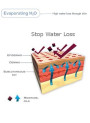
- Recommendations: As the staff member advised, the total percentage of sunscreen actives (physical filters + SPF Protect Ultra) is very high. Adding significant amounts of skin conditioning agents like B3 (Niacinamide) and NAG (N-Acetyl Glucosamine) on top of this high active load can make the formula difficult to stabilize and might negatively impact the texture. It is recommended to reduce the percentages of B3 and NAG, or potentially omit them, to simplify the formulation and improve stability and feel. Water Lock is a good addition for hydration and film-forming.
Recommend the correct mixing procedure.
Formulating a stable sunscreen with high percentages of physical filters and potentially multiple emulsifiers (Light Cream Maker and Water-Capsule, which is a W/O emulsifier) is complex and requires careful technique. A general procedure often involves:- Phase 1 (Oil/Dispersion Phase): Disperse the powder sunscreen actives (Titanium Dioxide, Zinc Oxide) thoroughly in the oil or silicone phase (Lipid Soft Lite, potentially added silicones, SPF Protect Ultra if oil-soluble). This step is crucial for achieving high SPF and a smooth texture, often requiring high shear mixing or milling.
- Phase 2 (Water Phase): Combine water and water-soluble ingredients (B3, NAG, Water Lock).
- Emulsification: Combine the phases according to the specific instructions for your emulsifiers (Light Cream Maker and Water-Capsule). This typically involves adding one phase to the other gradually while mixing with high shear (e.g., using a homogenizer or high-speed mixer) to create the emulsion.
- Cooling and Final Additions: Cool the emulsion while continuing to mix. Add heat-sensitive ingredients (like preservatives, which are essential but not listed in your formula) below a certain temperature.
Given the complexity of using two different emulsifier types and high powder loads, achieving a stable, smooth emulsion can be challenging. It is highly recommended to refer to tested example formulas provided by the supplier for the specific emulsifiers and sunscreen actives you are using, such as the example formula link provided by the staff member (topic4369.html).
In summary, your proposed formula has a very high active load which could achieve high SPF, but requires advanced formulation techniques for stability and texture. Consider reducing the conditioning agents (B3, NAG), adding silicones for feel, and paying close attention to the dispersion of physical filters and the emulsification process. Achieving SPF 70 and a specific texture/white cast level requires careful formulation and testing.
Related Products Mentioned

Safe-B3™ (Vitamin B3, Niacinamide)
GlucoBright™ (Acetyl Glucosamine)
Light Cream Maker™
WaterLock™ (Polyquaternium-51)
Zinc Oxide (Micronized)