HLB values of Sym-White & Perfect-C and formulating a Vitamin E scalp spray
Asked by: glutacareshop
On: September 23, 2016
Product Type:
Cosmetics
Answered
Question
I would like to inquire about the following:
- What are the HLB values for Sym-White™ and Perfect-C™?
- I am planning to formulate a water-based scalp spray containing 1% Vitamin E. My initial base is Water + Xanthan Gum. Is this suitable for a spray formulation?
- Can I use Glyceryl Stearate + Cetyl Alcohol as the emulsifier system for this spray?
- Besides Flora Solve, are there other alternative solubilizers/dispersants like Tween 20 or Tween 80 that can be used to incorporate 1% Vitamin E into a water base? If so, what would be a suggested starting percentage or ratio?
- Is it necessary to perform HLB calculations when formulating this type of spray?
Answer
Subject: Re: HLB value and emulsifier inquiry
Hello,
Regarding your questions:
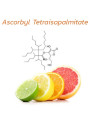
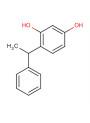
HLB value of Sym-White™ and Perfect-C™: As previously mentioned by the staff, these ingredients do not have HLB values. HLB values are typically associated with surfactants and emulsifiers, which help blend oil and water phases. Sym-White™ (Phenylethyl Resorcinol) and Perfect-C™ (Ascorbyl Tetraisopalmitate) are active ingredients, not emulsifiers, and therefore do not have an HLB value.
Scalp spray formulation with 1% Vitamin E:
- You plan to make a water-based spray with 1% Vitamin E, using a base of water + Xanthan Gum.
- Please note the staff's advice that using Xanthan Gum is not recommended for spray formulations as it can make it difficult to create a fine mist.
- For incorporating 1% Vitamin E (which is oil-soluble) into a water base, you need a solubilizer or dispersant, not a traditional emulsifier system like Glyceryl Stearate + Cetyl Alcohol. Glyceryl Stearate and Cetyl Alcohol are solid emulsifiers typically used in higher concentrations in the oil phase of creams or lotions to form stable emulsions, which is not suitable for a low-viscosity spray.
- The staff recommended using Flora Solve at approximately 3% to help disperse the 1% Vitamin E in the water base.
- Yes, you can potentially use Tween 20 or Tween 80 as alternatives to Flora Solve for cost-saving. Both are high-HLB surfactants that can act as solubilizers for small amounts of oil in water. The exact amount needed would require testing to achieve clarity and stability, but a starting point could be around 3% or a ratio of about 3 parts solubilizer to 1 part Vitamin E.
- For this type of formulation (solubilizing a small percentage of oil in a large water phase), you typically do not need to perform complex HLB calculations required for traditional emulsions with significant oil phases. The focus is on finding a suitable solubilizer and determining the effective concentration to keep the oil dispersed or solubilized in the water.
Hope this clarifies your questions.
Thank you.
Staff - MySkinRecipes
Related Products Mentioned
Vitamin E (Tocopheryl Acetate)
Cosmetics
Cetyl Alcohol
Cosmetics
Polysorbate 20 (Tween 20)
Cosmetics