Homemade Sugar Scrub and Clay Mask Formulation Questions
Question
I want to make a skin scrub and a clay mask for personal use.
For the scrub, I am interested in a sugar scrub with the following ingredients:
- Brown sugar
- Fractionated Coconut Oil
- Honey
I also want to add the following extracts:
- Apricot Kernel Oil
- WhiteCumin (Turmeric Extract)
I have some questions:
- Can the added extracts be put directly into the formula, or do they need a helper/other process first?
- The usage percentage of the extracts is given as %. How can I convert this to ml? For example, how many ml is 3% usage?
- Does the scrub need a preservative? I currently have 1,2 Hexanediol and Disodium EDTA.
For the clay mask,
I currently have Tomato Extract, Pomegranate Seed Oil, and Apricot Kernel Oil. If I mix these with red clay to make a skin mask, will it work well? Do I need to add any other substances to make them compatible or any preservative to extend the shelf life?
Thank you in advance.
Answer
Homemade Scrub and Clay Mask Formulation Advice
Here is some information regarding your homemade scrub and clay mask formulations:
Sugar Scrub
Your planned sugar scrub includes brown sugar, Fractionated Coconut Oil, honey, Apricot Kernel Oil, and WhiteCumin (Turmeric Extract).
Adding Extracts:
- Apricot Kernel Oil: This is an oil and can be mixed directly with the other oils in your scrub formulation, such as Fractionated Coconut Oil.
- WhiteCumin™ 2x (Turmeric Extract): This extract is water-soluble. Since your scrub contains honey (which has water content), you can add the WhiteCumin 2x to the honey portion before combining it with the oils and sugar. Avoid exposing it to high heat (above 40°C) if you are warming any ingredients; add it after cooling.
Converting Percentage (%) to ml:
- Cosmetic formulations are typically calculated by weight (%) for accuracy, as the density of ingredients varies. A percentage indicates the weight of an ingredient relative to the total weight of the batch (e.g., 3% of a 100g batch is 3g).
- To convert a percentage by weight to a volume in ml, you need to know the density of the specific ingredient. The formula is: Volume (ml) = (Percentage / 100) * Total Batch Weight (g) / Density (g/ml). Since densities vary, working by weight is generally more precise for formulation.
Need for Preservative:
- Yes, a preservative is necessary for your sugar scrub, especially because it contains honey. Honey, despite its properties, contains water, which can support the growth of bacteria, mold, and yeast over time. Using a preservative helps ensure the safety and shelf life of your product.
- 1,2-Hexanediol: This ingredient can act as a solvent, humectant, and a preservative booster, and it has some mild antimicrobial properties itself. It can help improve the efficacy of other preservatives or offer some protection in certain formulas, but it is often not sufficient as the sole preservative, especially in water-containing products like one with honey.
- Disodium EDTA: This is a chelating agent. It works by binding to metal ions in the water, which can help improve the stability of the product and enhance the effectiveness of preservatives. It is not a preservative itself but supports the preservation system.
- For a product containing water (from honey), it is highly recommended to use a broad-spectrum preservative system suitable for the formulation's composition and pH to prevent microbial contamination.
Clay Mask
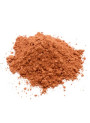
Your planned clay mask includes Tomato Extract, Pomegranate Seed Oil, Apricot Kernel Oil, and Red Clay.
Compatibility and Effectiveness:
- Mixing water-soluble ingredients like Tomato Extract with oil-soluble ingredients like Pomegranate Seed Oil and Apricot Kernel Oil, and then combining this with Red Clay (which is typically mixed with water), will likely result in separation. Oil and water phases do not naturally mix.
- While the ingredients individually offer potential skin benefits (clay for absorbing impurities, oils for moisturizing, extracts for antioxidants), combining them effectively requires additional components.
Additional Ingredients Needed:
- To create a stable clay mask that incorporates both oils and water-soluble extracts with the clay, you would typically need an emulsifier or dispersant. This ingredient helps the oil and water phases mix and stay combined, preventing separation.
- You will also need a preservative for the clay mask, as it will contain water (from mixing the clay and adding the water-soluble extract). As with the scrub, a broad-spectrum preservative is recommended for safety and shelf life.
By incorporating appropriate emulsifiers and preservatives, you can create more stable and safe homemade cosmetic products.
Related Products Mentioned
Apricot Kernel Oil (Refined)
Disodium EDTA
Red Clay