Homemade Toner Stability, Shelf Life, and Preservation
Question
I have formulated a homemade toner using the following ingredients:
- DI water
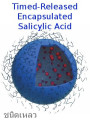
- [Product Name: Encapsulated Salicylic Acid]
- [Product Name: Calendula Extract]
- [Product Name: Licorice Extract]
- Phenoxyethanol
- Disodium EDTA
The pH of the formula is around 4-5. I mixed it by stirring and swirling in a flip-top bottle.
My questions are:
- Will adding Disodium EDTA affect the pH of the formula?
- Is it likely that the ingredients will separate?
- What is the standard shelf life for this type of product, and how can I extend it?
- Is Pentylene Glycol a better alternative to Phenoxyethanol for preservation or for reducing the overall amount of preservatives needed?
- Where is the LIKE button located?
Answer
Thank you for providing your formula and detailed mixing steps! I can help answer your follow-up questions based on the information provided and general cosmetic formulation principles.
Here are the answers to your questions:
Regarding Disodium EDTA and pH:
Adding Disodium EDTA in the small amount typically used (0.1-0.2%) will have a negligible effect on the overall pH of your formulation. It is slightly acidic, but the concentration is too low to cause a significant change. So, you don't need to worry about it affecting your pH of 4-5.
Regarding ingredient separation:
Based on the ingredients you listed (DI water, Encapsulated Salicylic Acid, Calendula Extract, Licorice Extract, Phenoxyethanol), which are generally water-soluble or designed to be dispersed in water, separation is unlikely if they were properly mixed initially. Your mixing method of stirring and swirling should be sufficient for these ingredients. However, as the staff mentioned, performing a stability test over time (even just a month) is the best way to be certain, especially for homemade products.
Regarding shelf life and extending it:
As the staff mentioned, the standard shelf life for cosmetics formulated correctly is typically 2 years from the date of production, assuming proper storage. Your pH of 4-5 is acceptable for the Calendula Extract's efficacy, but might slightly reduce its maximum potential shelf life compared to its ideal pH range, though it should still be functional.
To maximize the shelf life of your current formulation, ensure it is stored in a cool, dark place away from direct sunlight and heat. While your flip-top bottle is convenient, it does expose the product to air with each use, which can slightly reduce shelf life compared to an airless pump. The Phenoxyethanol you included is a broad-spectrum preservative that helps prevent microbial growth, which is crucial for shelf life in water-based products.
Extending the shelf life significantly beyond the standard 2 years for a homemade product is difficult without professional stability and challenge testing. The current formulation with Phenoxyethanol should provide adequate preservation for typical use within a reasonable timeframe.
Regarding Pentylene Glycol vs. Phenoxyethanol for preservation:
Pentylene Glycol is a humectant and solvent that also possesses some antimicrobial properties. It is often used in higher concentrations (typically 5-10% or more) to contribute to the self-preserving nature of a formula or to boost the efficacy of other preservatives, allowing their concentration to be reduced.
Phenoxyethanol, on the other hand, is a well-established, broad-spectrum preservative effective at lower concentrations (usually 0.5-1%).
Replacing 0.6% Phenoxyethanol with Pentylene Glycol would likely require a much higher percentage of Pentylene Glycol to achieve similar preservation efficacy, which could change the texture and feel of your toner. It's not necessarily "better" for reducing preservatives unless you are aiming for a specific type of preservation system (like a self-preserving formula using multiple ingredients with antimicrobial properties) and are willing to use Pentylene Glycol at a higher concentration. Phenoxyethanol at 0.6% is a standard and effective preservative level for your formula.
Regarding the LIKE button:
The staff mentioned that the LIKE button is located on the Facebook window at the bottom of the page.
It's great to hear that you are enjoying the feel of your homemade toner!
Related Products Mentioned

Calendula Extract (Water Soluble)
Phenoxyethanol (Extra Pure)
Disodium EDTA