Homogenizer vs. Regular Mixer for Cream Formulation and Applications
Asked by: phaggavatt
On: March 05, 2016
Product Type:
Cosmetics
Answered
Question
What is the difference between a homogenizer and a regular cream mixer, and how do they affect the resulting cream texture and stability?
Additionally, which types of cosmetics specifically require the use of a homogenizer, such as formulations containing certain types of physical sunscreen powders (e.g., Titanium Dioxide, Zinc Oxide) or non-dispersed pigment powders?
Answer
Here is an explanation regarding homogenizers and regular cream mixers:
Difference between Homogenizer and Regular Cream Mixer:
- For general cream textures, a regular mixer using a Dissolver/Disperse head can achieve results comparable to a homogenizer.
- While a homogenizer can potentially create slightly smaller particles due to higher speeds (e.g., 3000 rpm vs. 1500 rpm), this difference is typically only visible under a microscope, not by touch.
- Using a homogenizer at excessively high speeds (5000-10000 rpm) can actually make the cream thinner or less stable. This is because very high speeds can break down the structure of polymers used as cream makers or gel makers, preventing the cream from thickening properly.
Cosmetic Types Requiring a Homogenizer:
- Homogenizers are only necessary in specific situations.
- Examples include sunscreens that use older types of physical sunscreen powders (like certain Titanium Dioxide or Zinc Oxide) which are not pre-coated for easy dispersion (i.e., not EasyDisperse types).
- They may also be needed for formulas using pigment powders that are not pre-dispersed, as opposed to those that are (like the EasyMix group).
- Choosing ingredients that have been developed for easy mixing can often eliminate the need for a homogenizer.
Related Products Mentioned
Pro Polymer™ (Gel Maker)
Cosmetics
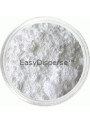
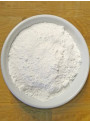
Zinc Oxide (Micronized)
Cosmetics